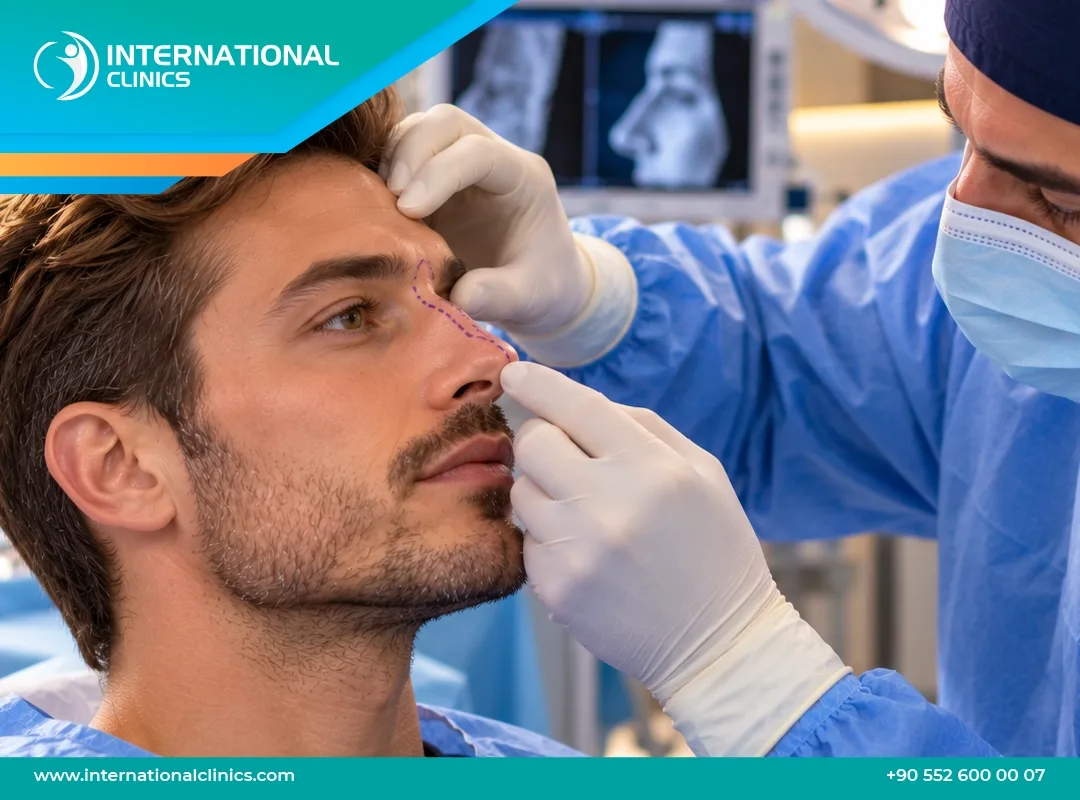
Roman rhinoplasty in Turkey is a nose job that lowers a prominent bridge with a dorsal hump (a “Roman” or aquiline profile) and, when needed, refines the tip, so that the nose sits in better balance with the face. It is done under general anaesthesia in about 1.5 to 3 hours with 1 to 2 nights in hospital; the splint stays on for about a week, and the final shape can take up to a year to settle (Sources: NHS and MedlinePlus).
Roman Rhinoplasty in Turkey is a surgical solution for reducing a prominent dorsal hump and refining the nasal profile. At International Clinics, the operation is planned around your facial proportions and your breathing, and the whole medical journey is organised for you.
What is Roman Rhinoplasty?
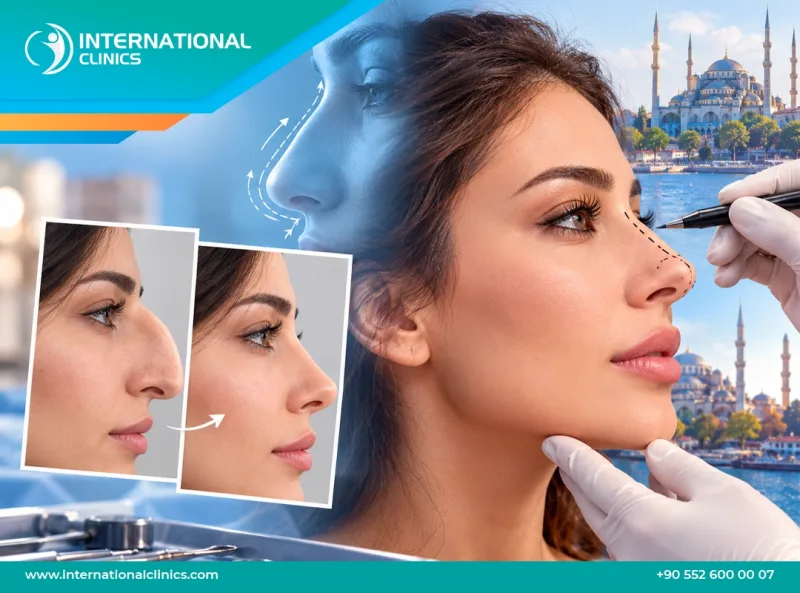
Roman rhinoplasty is rhinoplasty for a Roman nose: a high, prominent bridge with a visible hump, sometimes with a tip that points downward. Rhinoplasty can change the profile of the bridge, including humps or depressions, the size of the nose, the width of the bridge and the shape of the tip (Source: ASPS).

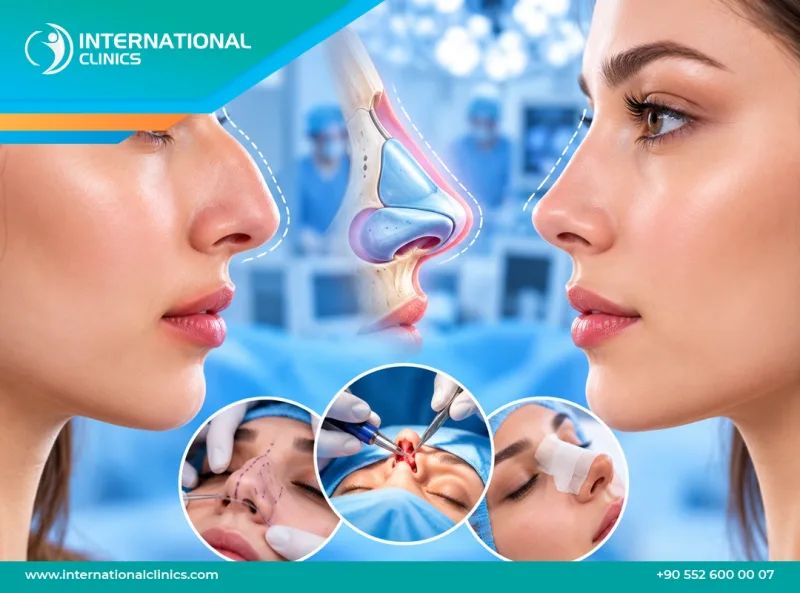
The hump is made of bone in its upper part and cartilage in its lower part. The surgeon lowers both, then usually narrows the bony vault with osteotomies (controlled bone cuts) so that the bridge does not stay flat and wide on top. Removing a hump can leave the cartilage middle of the nose with weaker support; to prevent it from collapsing inward (the “inverted V” deformity) and narrowing the airway, many surgeons place spreader grafts of cartilage along the septum (Source: Plastic Surgery, 2015).
For the difference between the two classic profiles, read our comparison of the Greek nose and the Roman nose; a strongly curved bridge is also covered in our guides to aquiline nose rhinoplasty and hawk nose rhinoplasty.
Why Choose Turkey for Roman Rhinoplasty?
Patients usually choose Turkey for Roman rhinoplasty because package prices are lower than private prices in the UK, where the NHS estimates rhinoplasty at about 4,000 to 7,000 GBP before consultations, further surgery or follow-up (Source: NHS).
The safety of the operation depends on the surgeon and the hospital you choose, not on the country.
To understand the value on offer, review these points about Roman Rhinoplasty in Turkey.
Master Surgeons: Ask about the surgeon’s specialty, board certification and how many hump reductions they perform.
Advanced Technology: The bony hump can be lowered with a rasp, an osteotome or a piezo (ultrasonic) instrument; see our guide to ultrasonic rhinoplasty.
Cost Efficiency: An all-inclusive package that states in writing what the price covers.
VIP Assistance: Multilingual coordinators and airport, hotel and hospital transfers.
Natural Aesthetics: A plan that reduces the hump without making the bridge too low or scooped for your face.
Luxury Facilities: Surgery in a hospital, with an overnight stay for monitoring.
Recovery Vacation: A calm stay for healing: the NHS advises avoiding alcohol, sun, sightseeing and swimming straight after surgery (Source: NHS).
Post-Op Care: Online follow-up after you return to your home country.
Checking these points helps you decide whether Roman Rhinoplasty in Turkey fits your plans.
Before you book, the NHS advises asking what training and qualifications the surgeon has, how many similar procedures they have done, where follow-up will take place and what happens if there is a complication, and having two consultations with the surgeon before surgery (our guide on how to choose the best rhinoplasty surgeon in Turkey lists more questions) (Source: NHS).
Ideal Candidates for the Procedure
A good candidate for Roman rhinoplasty is a healthy person whose nose has finished growing, who is bothered by a hump on the bridge and who has realistic expectations. For cosmetic rhinoplasty, many surgeons wait until the nasal bone has finished growing, around 15 to 16 for girls and somewhat later for boys (Source: MedlinePlus).
To be considered for Roman Rhinoplasty in Turkey, candidates should meet these criteria.
Facial Maturity: Nasal growth completed, usually from the mid-to-late teens.
Overall Health: No uncontrolled medical conditions.
Realistic Expectations: Understanding that no face is perfectly symmetrical and that the aim is balance, not perfection (Source: ASPS).

Prominent Hump: A visible bump on the bridge that you want to lower.
Breathing Issues: A deviated septum or other blockage, which can be corrected in the same operation (Source: ASPS).
Skin Elasticity: Thick or thin skin affects how well the skin re-drapes and how visible small irregularities are.
Non-Smoker Status: Willing to stop smoking before and after surgery to support healing.
Sinus Health: No active nasal or sinus infection at the time of surgery.
Meeting these conditions makes Roman Rhinoplasty in Turkey safer and more predictable.
Surgical Steps for Roman Rhinoplasty in Turkey
Roman rhinoplasty is done under general anaesthesia and usually takes about 1.5 to 3 hours; a dressing and an external splint are applied at the end, and the splint stays on for about 7 days (Source: NHS).

Your Roman Rhinoplasty in Turkey follows these clinical phases.
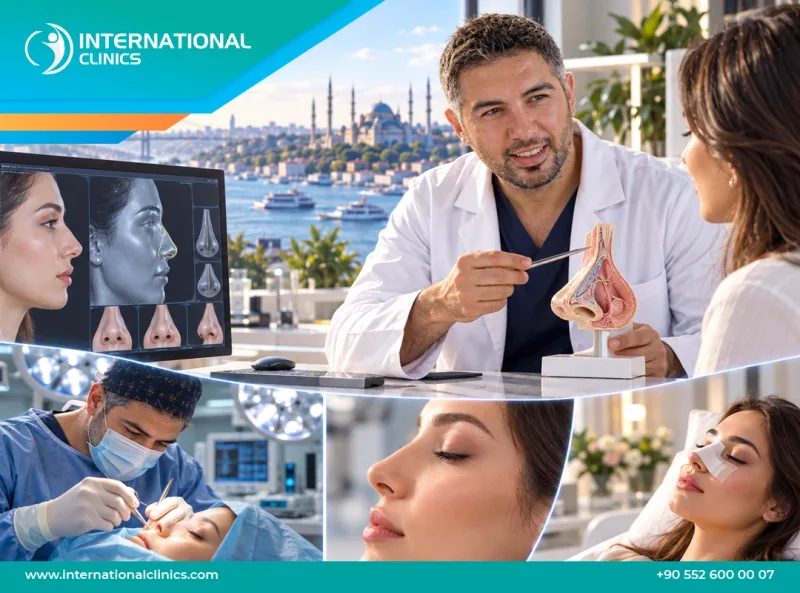
Initial Consultation: Examination of the nose, the skin, the septum and your breathing, with photographs to plan the new profile.
Pre-Op Screening: Blood tests and a physical examination before surgery.
General Anesthesia: Rhinoplasty is usually done under general anaesthesia; smaller procedures can be done under local anaesthesia with sedation (Source: MedlinePlus).
Incision Placement: A closed approach uses incisions inside the nostrils; an open approach adds a small cut across the skin between the nostrils.
Hump Reduction: The cartilage and bony parts of the hump are lowered, then osteotomies narrow the bony bridge.
Cartilage Reshaping: Spreader grafts or flaps can support the middle of the nose after the hump is removed, and the tip is refined if needed (Source: Plastic Surgery, 2015).
Suture Closure: The incisions are closed; external stitches are usually removed after about a week (Source: NHS).
Splint Application: A splint is taped over the nose for about 7 days; nasal packing, if used, is usually removed after 3 to 5 days (Sources: NHS and MedlinePlus).
Following this protocol helps your Roman Rhinoplasty in Turkey heal predictably.
Detailed Cost Breakdown of Roman Rhinoplasty in Turkey
The International Clinics package price for Roman Rhinoplasty in Turkey is 2,500 EUR. The final quote is confirmed after the surgeon has reviewed your photos, because it depends on whether only the hump is lowered or the tip and the septum are also corrected. For other price levels, see our rhinoplasty cost in Turkey guide.
To clarify your financial planning, here is the standard package inclusion for Roman Rhinoplasty in Turkey.
| Package Inclusion | Service Details and Comprehensive Coverage |
| Medical Diagnostics | Laboratory blood tests, ECG and the pre-operative examinations the surgeon requests. |
| Surgical Procedure | Surgeon and anaesthetist fees and the operating room. |
| Luxury Accommodation | Hotel nights near the hospital during the first recovery days. |
| VIP Transportation | Private transfers between the airport, your hotel and the hospital. |
| Medications & Splints | Post-operative medicines prescribed by the surgeon and the external nasal splint. |
| Aftercare Consultations | Check-ups in Istanbul, including splint removal, and remote follow-up after you return home. |
Flights are not included in any package. Also budget for possible extra hotel nights and for follow-up at home: the NHS notes that travel insurance normally does not cover complications of surgery (Source: NHS).
Pros and Cons of Roman Rhinoplasty
The main benefit of Roman rhinoplasty is a straighter, lower bridge that suits the face, sometimes with better breathing; the main drawbacks are swelling, a recovery of a few weeks, up to a year before the final shape and a small chance of needing a revision.

Weigh these factors before scheduling your Roman Rhinoplasty in Turkey.
| Advantages (The Benefits) | Disadvantages (The Risks and Challenges) |
| Facial Harmony: A smoother, lower bridge in proportion with the rest of the face. | Temporary Swelling: Soreness, swelling and bruising around the eyes for up to 3 weeks. |
| Functional Improvement: A deviated septum or other structural blockage can be corrected at the same time. | Extended Recovery: Up to 2 weeks off work and no strenuous exercise or contact sports for 4 to 6 weeks. |
| Boosted Confidence: Many people feel more comfortable with their profile once the hump is gone. | Delayed Results: The final shape of the nose can take up to a year to appear. |
| Permanent Outcome: The bone and cartilage changes are long-lasting, although the nose keeps ageing with the face. | Anesthesia Risks: Reactions to anaesthesia, bleeding, infection and breathing problems, as with any surgery. |
| Financial Savings: A package price that is usually lower than private prices in the UK. | Revision Possibility: Published revision rates after primary rhinoplasty are about 5% to 15%. |
The swelling, time off work and exercise figures in the table come from the NHS, and the one-year timeline from MedlinePlus (Sources: NHS and MedlinePlus).
Published revision rates after primary rhinoplasty are generally 5% to 15%; in a series of 732 closed rhinoplasties, 62 patients (8.6%) had a revision (Source: PRS Global Open, 2018).
Risks of Hump Reduction
The risks listed by the ASPS include anaesthesia reactions, numbness or pain in the skin, trouble breathing through the nose, infection, a rare hole in the septum, slow healing or scarring, skin discoloration and swelling, the possibility of another operation and a nose that does not look the way you wanted (Source: ASPS).
Specific to hump removal, taking down too much or leaving the middle of the nose without support can cause contour irregularities or a pinched middle third that blocks breathing; MedlinePlus also lists loss of nasal support, contour deformities and worse breathing among the procedure’s risks (Source: MedlinePlus).
Recovery Timeline After Roman Rhinoplasty in Turkey
Some people return to work and light activity around three weeks, most see a clear difference after about a month, and wait up to a year for the final contour. The dressing and splint usually stay on for one week, and bruising under the eyes typically lasts a week or two (Source: ASPS).

Track your healing after Roman Rhinoplasty in Turkey through these milestones.
The First Day: Rest with your head raised; expect a blocked nose and breathing through your mouth for about a week, light nosebleeds for the first few days and a stiff, numb nose (Source: NHS).
Week One: The external splint and stitches are removed at the one-week check-up; do not blow your nose during this week (Source: NHS Cambridge University Hospitals).
Week Two: Bruising fades; take at least two weeks off work and avoid crowds and people with colds (Source: NHS Cambridge University Hospitals).
Month One: Most patients see initial results after about a month (Source: ASPS).
Month Three: Most of the swelling has improved by 2 to 3 months (Source: MedlinePlus).
Month Six: Soft-tissue swelling, especially at the tip, keeps settling; it can come and go and be worse in the morning.
One Year: Full recovery takes about a year, and the final result may take that long to appear (Source: MedlinePlus).
Ongoing Care: Protect your nose from knocks and contact sports, which should be avoided for six weeks (Source: NHS Cambridge University Hospitals).
Following this timeline gives your Roman Rhinoplasty in Turkey the best chance of a smooth recovery.
When Can You Fly Home After Roman Rhinoplasty?
Plan to stay in Istanbul until the splint is removed, which is usually about a week. The NHS advises avoiding flying for 7 to 10 days after facial cosmetic procedures because of the risk of blood clots (Source: NHS).
The septorhinoplasty leaflet of an NHS hospital is stricter and advises avoiding flying for two weeks after surgery, so confirm the date with your surgeon (Source: NHS Cambridge University Hospitals).
Real Patient Stories
Patient stories show what the journey looks like, but they are not a promise of your own result. Instead of anonymous quotes, this page shows a real patient video from International Clinics and our rhinoplasty recovery photos day by day.
When you look at before-and-after photos of hump reductions, compare pictures taken from the same side angle and in the same light, ask how long after surgery they were taken, and ask whether the tip or the septum was also operated on. The NHS recommends asking the surgeon to show before-and-after pictures of their own work (Source: NHS).
Services and Guarantees at International Clinics
Booking your Roman Rhinoplasty in Turkey with International Clinics means the operation, the hospital stay and the travel logistics are organised in one package, so you can focus on recovery. No clinic can guarantee a cosmetic result; what a clinic can put in writing is what the package includes and how a revision is handled.
These services are included when you book your Roman Rhinoplasty in Turkey with us.
Free Consultation: A no-obligation online assessment of your photos and medical history.

VIP Transfers: Private transport between the airport, the hotel and the hospital.
Premium Lodging: A hotel near the hospital during your recovery days.
Personal Translator: An interpreter who speaks your language.
Pre-Surgical Labs: The blood tests and examinations needed before surgery.
Nursing Support: Nursing care and monitoring during your hospital stay.
Quality Warranty: A written treatment plan that states what the package covers and how follow-up and any revision are handled.
Tourism Integration: Light walks are fine, but leave sightseeing, sun and swimming until your surgeon allows them (Source: NHS).
These services make your Roman Rhinoplasty in Turkey simpler to organise.
Expert Pro-Tips
These practical tips support healing after Roman Rhinoplasty in Turkey; your surgeon’s own instructions always come first.
Follow these guidelines to protect your Roman Rhinoplasty in Turkey outcome.
Elevate Always: Sleep with your head raised on pillows in the first days to limit swelling.
Skip the Gym: Avoid strenuous exercise and contact sports for 4 to 6 weeks (Source: NHS).
Ice Smartly: Cold packs on the cheeks and around the eyes, never pressing on the splint.
Ditch the Glasses: Ask your surgeon when glasses can rest on your nose again and how to support them until then.
Chew Softly: Choose easy-to-eat meals while your nose is blocked and you breathe through your mouth.
Stop Smoking: Do not smoke, and avoid smoky places while you heal (Source: NHS Cambridge University Hospitals).
Take Your Meds: Take the medicines your surgeon prescribes exactly as instructed, and sneeze with your mouth open (Source: NHS Cambridge University Hospitals).
Be Patient: Swelling can come and go during the first year, so judge the final contour only after it has settled.
Applying these tips helps your Roman Rhinoplasty in Turkey heal well.
Conclusion
Roman Rhinoplasty in Turkey (Roman Rhinoplasty) lowers a prominent bridge with a hump and, when needed, refines the tip and corrects breathing problems. It is real surgery under general anaesthesia, with a splint for a week, about two weeks off work and up to a year before the final shape, and a small chance of revision. The International Clinics package is 2,500 EUR, confirmed after an assessment. To find out whether hump reduction suits your face, contact International Clinics for a free online consultation.
Medical review and disclaimer:
This article was reviewed by a specialist physician contracted with International Clinics. It is general health information, not a substitute for medical advice, and results vary between individuals.