- Nose Job Turkey Price and Whats Included
- What Can a Nose Job Change?
- Types of Nose Job: Open, Closed and Other Approaches
- Rhinoplasty vs septoplasty
- Who Is a Good Candidate for a Nose Job?
- How Expensive Is a Nose Job in Turkey?
- What affects the price of a nose job in Turkey?
- Is It Safe to Have a Nose Job in Turkey?
- Common side effects vs complications
- Choosing a Surgeon for a Nose Job in Turkey
- What to Check Before Booking a Nose Job Package
- What Happens During Nose Job Surgery?
- Can You Fly After a Nose Job?
- Turkey Nose Job Recovery Timeline
- Swelling stages after a nose job
- Aftercare tips for the first weeks
- Is a Nose Job Painful, and When Can You Return to Normal Life?
- When Will You See Nose Job Results, and Do They Last?
- How Long Should You Stay in Turkey for a Nose Job?
- Nose Job in Turkey vs the UK: What Is Different?
- Is Turkey the Best Place for Rhinoplasty?
- Sources
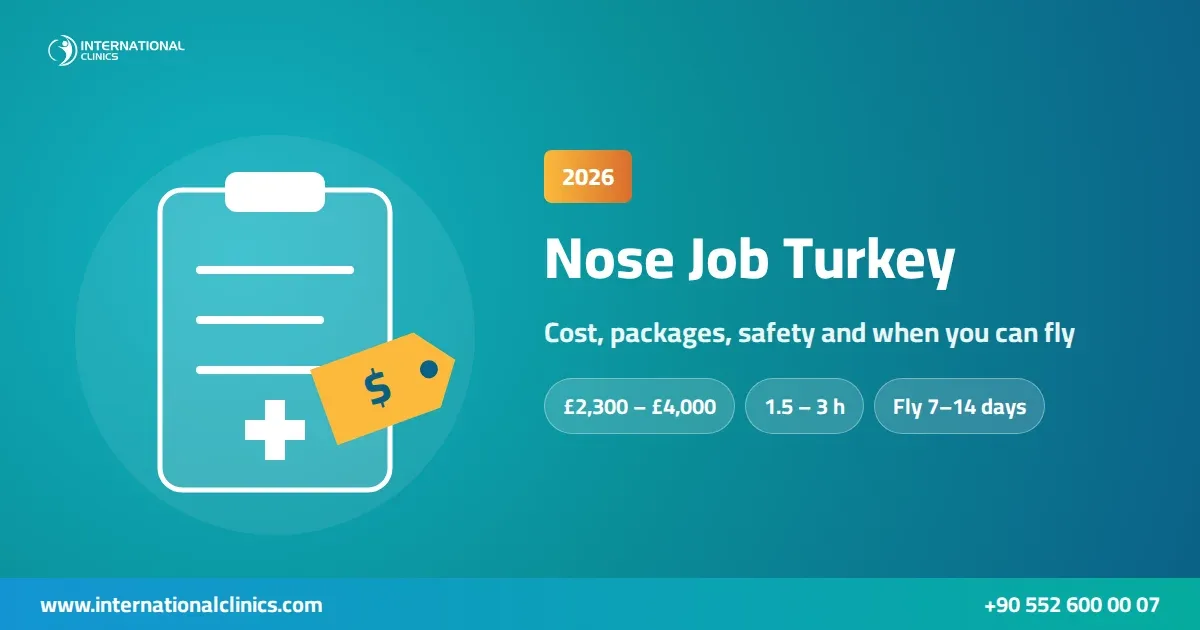
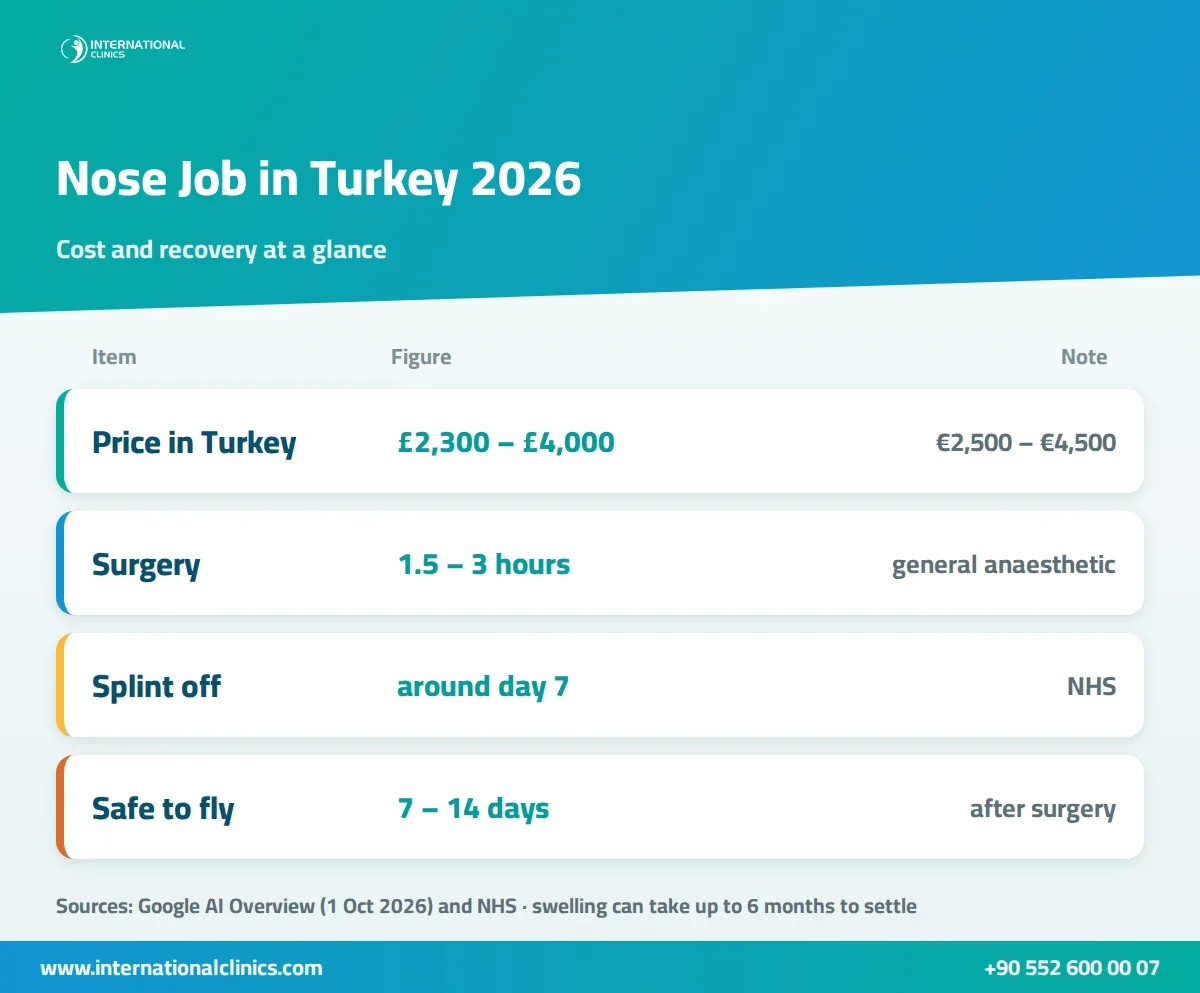
A nose job in Turkey (rhinoplasty) typically costs between £2,300 and £4,000 (€2,500 to €4,500), often 50% to 75% cheaper than the same procedure in the UK or US. Surgery takes 1.5 to 3 hours under general anaesthetic, the splint usually comes off after about a week, and most people can fly home 7 to 14 days after the operation.
Nose Job Turkey Price and Whats Included
Rhinoplasty reshapes the nose for cosmetic or breathing reasons. Turkey is a common destination because packages combine surgery, hospital stay, hotel and transfers at a lower price than UK clinics.
| Item | Typical figure |
|---|---|
| Nose job price in Turkey | £2,300 – £4,000 (€2,500 – €4,500) |
| Saving vs UK or US | 50% – 75% |
| Surgery length | 1.5 – 3 hours, general anaesthetic |
| Hospital stay | 1 – 2 nights |
| Hotel nights in packages | 5 – 7 nights |
| Splint removal | Around day 7 |
| Safe to fly | 7 – 14 days after surgery |
What Can a Nose Job Change?
A nose job can make the nose smaller or larger, change its shape, and open blocked nasal passages. Cleveland Clinic says rhinoplasty can correct a nose that looks bulbous, upturned, hooked or droopy, remove bumps or dips on the bridge, reshape nostrils that are too wide or too small, and correct a deviated septum. The NHS describes three broad approaches:
- Nose reduction: removing some of the cartilage and bone.
- Nose augmentation: building the nose up with grafts, such as cartilage from the ears or bone from the hips, elbow or skull.
- Reshaping: breaking the nasal bone and rearranging the cartilage, including the nostrils.
The skin over the nose then shrinks or expands to the new shape.
Types of Nose Job: Open, Closed and Other Approaches
| Type | What it involves | Typical use |
|---|---|---|
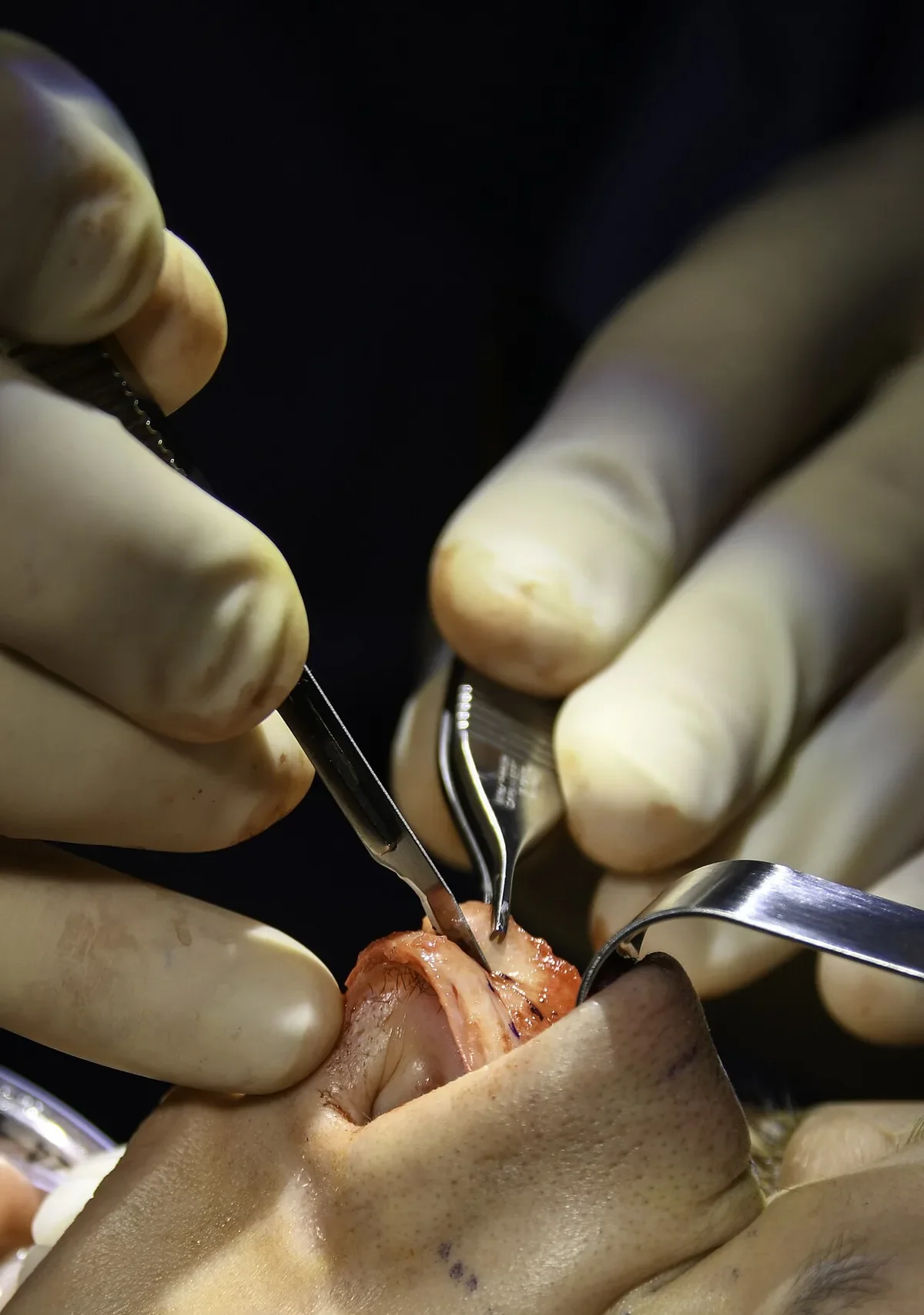
| Open rhinoplasty | A cut across the skin between the nostrils, so the surgeon can see the bone and cartilage clearly | Major reshaping |
| Closed rhinoplasty | Tiny cuts inside the nostrils; no visible scars | Smaller changes; not always possible |
| Functional rhinoplasty | Restores nasal form and breathing | After injury or disease, or to correct a deviated septum |
| Secondary (revision) rhinoplasty | Corrects problems after a previous nose job | Often more complex to perform |
| Non-surgical (filler) rhinoplasty | Dermal fillers temporarily smooth dips and bumps | Small changes, such as lifting a droopy tip |
Sources: NHS and Cleveland Clinic. Your surgeon will recommend an approach after examining your nose and discussing your goals.
Rhinoplasty vs septoplasty
Rhinoplasty changes the appearance and structure of the nose, while septoplasty repairs the nasal septum, the internal wall that can affect breathing when it is bent. Cleveland Clinic notes both can be done in the same operation to improve both the look and the function of the nose.
Who Is a Good Candidate for a Nose Job?
Cleveland Clinic says a good candidate for rhinoplasty should:
- Have finished growing and be in good physical health.
- Not smoke.
- Understand the limits of nose surgery and have reasonable goals.
- Want the operation for their own reasons, not because someone else thinks they would look better.
The NHS adds that you should be sure about why you want nose reshaping, speak to your GP first and take time to think about your decision.
How Expensive Is a Nose Job in Turkey?
A nose job in Turkey typically costs £2,300 to £4,000 (€2,500 to €4,500). Packages usually include the operation and surgeons fees, a 1 to 2 night hospital stay, 5 to 7 hotel nights, airport transfers, a translator or coordinator, and aftercare including cast removal around day 7. For more on pricing, see cosmetic nose surgery cost in Turkey and rhinoplasty costs in Istanbul.
What affects the price of a nose job in Turkey?
Quotes within the £2,300 to £4,000 range differ mainly because of how complex the operation is. Factors that can move a quote up or down include:
- Open or closed approach: open rhinoplasty is used for major reshaping.
- Grafts: making the nose larger can involve taking cartilage from the ears or bone from elsewhere, which adds surgical steps.
- Breathing correction: combining a cosmetic nose job with septoplasty adds functional work.
- Revision surgery: Cleveland Clinic notes that correcting a previous rhinoplasty is often more complex.
- The surgeon and hospital: experience, facility and the number of hospital and hotel nights included.
Ask for the quote to state the approach, whether grafts or septoplasty are planned, and what happens if the plan changes during surgery.
Is It Safe to Have a Nose Job in Turkey?
A nose job in Turkey can be a reasonable choice with a qualified surgeon in an accredited hospital, but it is still surgery with risks wherever it is done. The NHS says nose reshaping can occasionally cause permanent breathing difficulty, damage to the cartilage wall between the nostrils, an altered sense of smell and heavy nosebleeds, alongside general surgical risks such as bleeding, blood clots, infection and allergic reaction to the anaesthetic.
"The results cannot be guaranteed, there are risks to consider, and it can be expensive."
— NHS, Nose reshaping (rhinoplasty).
How to judge a surgeon is covered in best rhinoplasty surgeon in Turkey.
Common side effects vs complications
Some effects are expected after any nose job. The NHS lists breathing through your mouth for a week or so, a stiff and numb nose, soreness, swelling and bruising around the eyes that can last 3 weeks, and light nosebleeds for the first few days. Complications are less common; besides those above, Cleveland Clinic lists a hole in the nasal septum, poor wound healing or scarring, skin discoloration, an unsatisfactory appearance and the need for additional surgery, and notes that about 15% of people need a revision to make small changes after the first operation.
Cleveland Clinic advises contacting your surgeon if you have difficulty breathing, nausea or vomiting, signs of infection such as fever or yellow discharge, severe pain or a nosebleed that will not stop.
Choosing a Surgeon for a Nose Job in Turkey
Choose the surgeon before the package. NHS guidance on cosmetic surgery abroad says standards and qualifications vary between countries, so find out how surgeons and clinics are regulated in the country you choose, and ask the surgeon:
- What training and qualifications do you have, and which professional organisations do you belong to?
- How long have you been practising, and how many nose operations like mine have you done?
- How many of those operations had complications, and what is your patient satisfaction rate?
- What follow-up should I expect if something goes wrong?
- Do you speak a language I understand, so you can explain the procedure and answer my questions?
The NHS recommends 2 consultations with the treating surgeon before surgery, which gives you a cooling-off period, and says the surgeon should show before-and-after pictures of their own work. Cleveland Clinic suggests bringing a list of your medicines and supplements, and photos of how you would like your nose to look.
What to Check Before Booking a Nose Job Package
- Meet the surgeon, not only sales staff: the NHS advises against paying for a hospital you have never seen or a surgeon you have not met.
- Insurance: ask what the clinics or surgeons insurance covers; the NHS warns that travel insurance does not normally cover you if something goes wrong in surgery.
- Emergencies: find out how you would get home in an emergency and what it would cost.
- Aftercare: ask what happens if there are complications, where follow-up appointments will be, and how easily you could travel back if you needed more surgery.
- The written price: confirm what is included, from the hospital nights to splint removal.
What Happens During Nose Job Surgery?
A nose job is usually done under general anaesthetic and takes 1.5 to 3 hours. Cleveland Clinic outlines the main steps:
- The surgeon makes incisions inside the nostrils (closed), sometimes with a cut across the base of the nose (open).
- The skin is lifted off the nasal bones and cartilage.
- Bone and cartilage are reduced, added to or rearranged to create the new shape or fix a deviated septum.
- The skin is laid back over the new framework and secured with small stitches.
Afterwards you wear a dressing and a splint taped over the nose. If gauze packing is placed inside the nose, Cleveland Clinic says it is usually removed within 24 to 48 hours, according to your surgeons instructions.
Can You Fly After a Nose Job?
You can usually fly 7 to 14 days after a nose job, once your surgeon removes the splint and clears you to travel:
- First 48 to 72 hours: avoid all flying, the period with the highest risk of sudden bleeding.
- Short-haul flights (under 4 hours): wait 7 to 10 days if recovery is going well.
- Long-haul flights (6+ hours): wait 10 to 14 days.
The reason for waiting is safety: the NHS says air travel and major surgery both increase the risk of a blood clot, which can be life threatening, and recommends not flying for 7 to 10 days after facial cosmetic procedures. Follow your own surgeons advice on the exact date.
Turkey Nose Job Recovery Timeline
- After about a week: stitches can be removed and the splint may come off.
- Up to 2 weeks: the NHS says you may need up to 2 weeks off work.
- Several months: it may be several months before you see the full effect, and up to 6 months for swelling to go completely.
Swelling stages after a nose job
Swelling settles in stages rather than all at once:
- Weeks 1 to 3: the NHS says bruising, swelling and redness may have faded by about 3 weeks, and you may be able to swim.
- Weeks 4 to 6: the nose still looks and feels bigger than normal, and the NHS says you should be able to resume strenuous exercise.
- Around 3 months: Cleveland Clinic says about 90% of the swelling has gone.
- Up to a year: mild swelling, especially in the morning, can remain; Cleveland Clinic notes the full result shows once it has gone completely.
Cleveland Clinic also notes that uneven swelling on one side in the first weeks is common and part of normal healing, not a sign of a mistake.
Aftercare tips for the first weeks
- Keep your head raised on pillows when resting, especially for the first couple of days.
- Do not blow your nose or pick at crusts before the splint is removed, and sneeze through your mouth.
- Avoid hot baths and keep the splint dry.
- Use cool compresses on the cheeks or under the eyes, not on the nose itself.
- Avoid heavy lifting, strenuous exercise and contact sports for 4 to 6 weeks.
- Take care that glasses or sunglasses do not press on the bridge of your nose, and limit sun exposure.
These tips combine NHS and Cleveland Clinic advice; your surgeons instructions come first.
A photo guide is in rhinoplasty recovery photos day by day.
Is a Nose Job Painful, and When Can You Return to Normal Life?
Most people have mild to moderate pain or discomfort rather than severe pain. Cleveland Clinic says it should ease or go away within a few days to a week, and over-the-counter pain relief can be used as your surgeon directs; the NHS notes you will be given painkillers after the operation. Breathing through the nose can be difficult for about a week while the splint and swelling are in place.
- Work or study: Cleveland Clinic says most people return in 1 to 2 weeks, and the NHS says you may need up to 2 weeks off.
- Swimming: possibly from about 3 weeks, according to the NHS.
- Exercise and lifting: avoid strenuous exercise and heavy lifting for 4 to 6 weeks.
When Will You See Nose Job Results, and Do They Last?
You will see a difference when the splint comes off after about a week, but the final shape takes much longer. Cleveland Clinic says it can take up to a year for the nose to fully settle, and that rhinoplasty is a permanent change whose results last a lifetime. Some people choose a second, smaller operation after full healing to adjust the result, which is why a surgeons follow-up policy matters.
How Long Should You Stay in Turkey for a Nose Job?
Plan to stay at least until the splint is removed and your surgeon clears you to fly, which usually means 7 to 14 days in total. A typical package covers a 1 to 2 night hospital stay followed by 5 to 7 hotel nights, so check whether a longer stay is needed for a long-haul flight home. Do not plan a holiday straight after surgery: the NHS says you need to rest, and should not drink alcohol, lie in the sun, go sightseeing or go in the water. You may also need up to 2 weeks off work after you get home.
Nose Job in Turkey vs the UK: What Is Different?
The operation is the same; the differences are price, regulation and follow-up. A nose job in Turkey typically costs 50% to 75% less. The NHS says nose reshaping is not usually available on the NHS for cosmetic reasons, though it may be if it is needed to help you breathe, so most UK patients pay privately either way. In England, the NHS advises checking that the clinic is registered with the Care Quality Commission and the surgeon with the General Medical Council; abroad, you need to find out how surgeons and clinics are regulated in that country. The biggest practical difference is aftercare: the NHS notes that a UK surgeon is responsible for follow-up treatment if complications happen, while overseas clinics may not provide follow-up, or not to the same standard.
Is Turkey the Best Place for Rhinoplasty?
Turkey is popular for rhinoplasty mainly because of price and packages, but the best place is wherever you find a qualified surgeon whose results match your goals and who can support you during recovery. Compare techniques in rhinoplasty in Turkey and preservation rhinoplasty in Turkey.
Sources
- NHS — Nose reshaping (rhinoplasty), nhs.uk.
- NHS — Cosmetic surgery abroad, nhs.uk.
- Cleveland Clinic — Rhinoplasty, my.clevelandclinic.org.
Cartilage being refined through an open rhinoplasty approach, the technique used in many nose job operations. Photo: Richard Balikian MD, CC BY 4.0, via Wikimedia Commons.