
In this article from our «You Ask, We Answer» series, we have gathered the questions people search for most about rhinoplasty in Turkey, selected from real search data, and answered them from our experience accompanying patients, relying on medical sources where needed. The list opens with the five most important questions, and most answers are followed by a link to our detailed article on the topic. To see rhinoplasty surgeons and their prices, visit our rhinoplasty page.
The Five Most Important Questions About Rhinoplasty in Turkey
1. How much does rhinoplasty cost in Turkey?
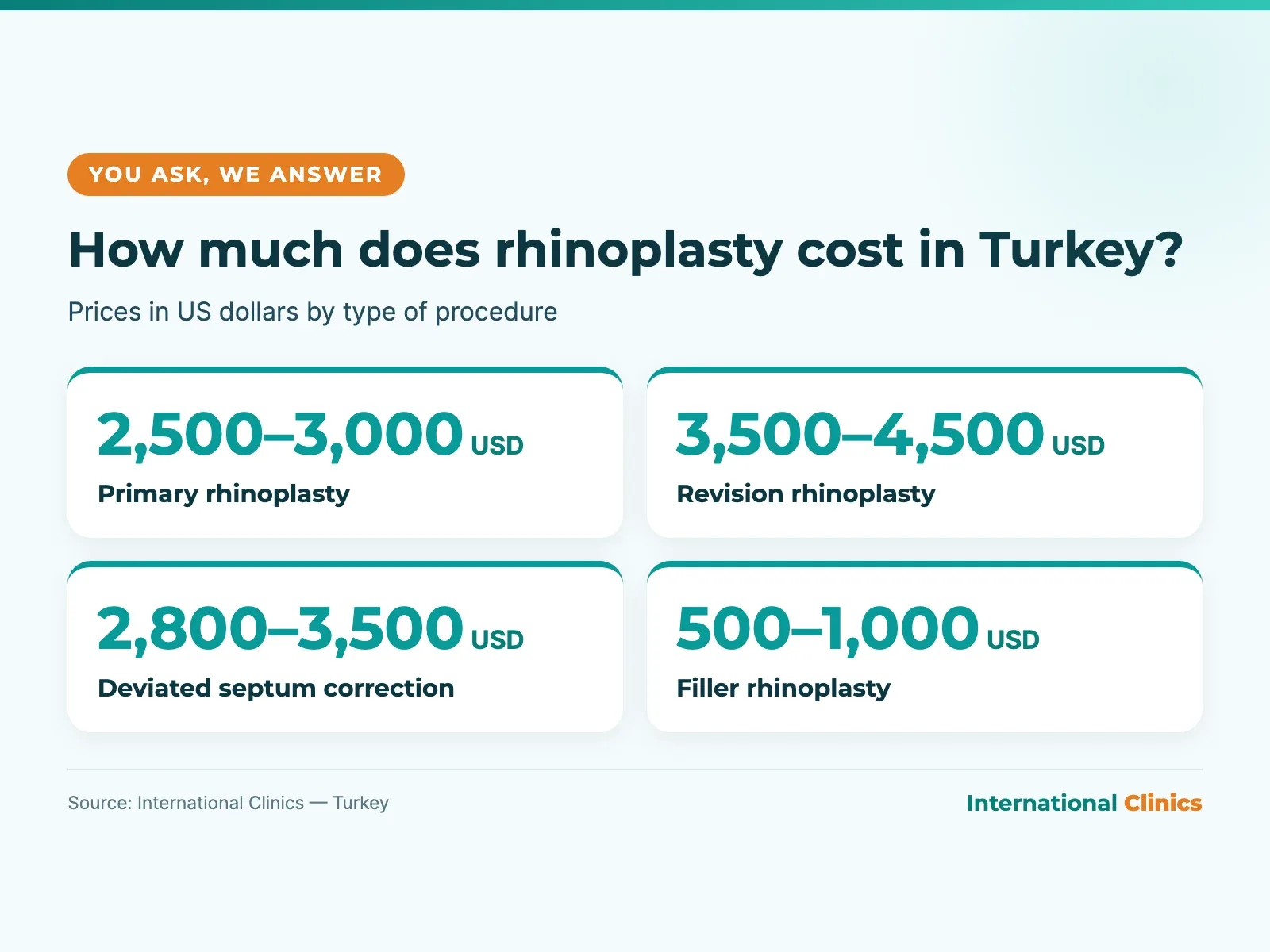
Through International Clinics, rhinoplasty in Turkey costs between $2,500 and $4,500, depending on the type of procedure and how complex the case is (Source: International Clinics — Turkey).
| Procedure | Price (USD) |
|---|---|
| Primary rhinoplasty (first surgery) | 2,500–3,000 |
| Revision rhinoplasty (after a previous surgery) | 3,500–4,500 |
| Deviated septum correction | 2,800–3,500 |
| Nose reduction | About 3,500 |
| Filler rhinoplasty (non-surgical) | 500–1,000 |
For comparison, the American Society of Plastic Surgeons puts the average surgeon’s fee alone in the United States at about $7,637, excluding anesthesia and operating room costs (Source: ASPS). In the United Kingdom, the cost ranges from £4,000 to £7,000 (Source: NHS).
For more details, see our article: Rhinoplasty cost in Turkey.
2. How long is the recovery after rhinoplasty?
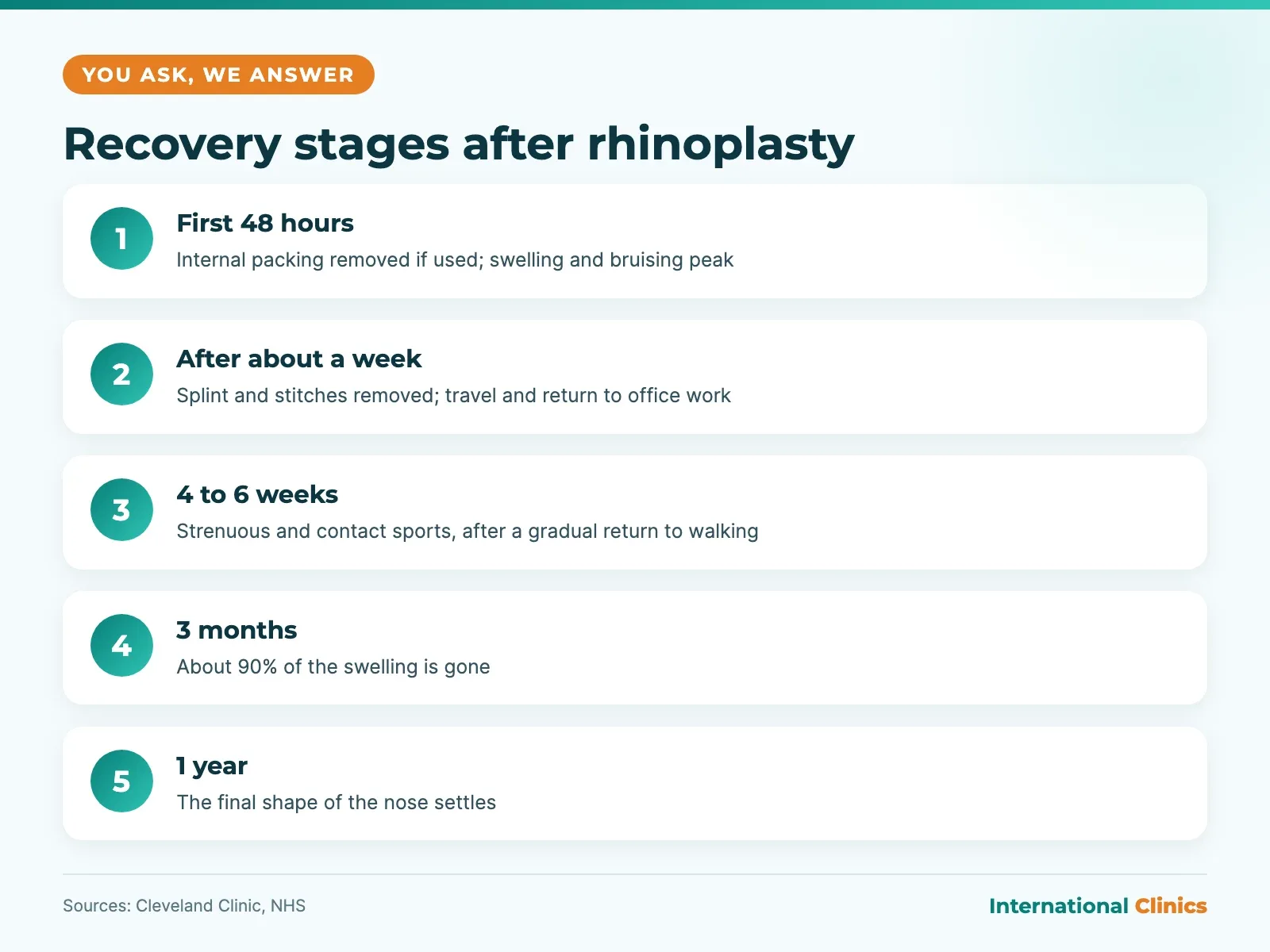
Most patients return to work or school after one to two weeks. About 90% of the swelling goes down within three months, while the nose needs about a year to settle into its final shape (Source: Cleveland Clinic).
| Stage | What usually happens |
|---|---|
| First 48 hours | Internal packing, if used, is removed; swelling and bruising around the eyes peak |
| After about one week | The splint and non-dissolvable stitches are removed; the patient can travel and return to office work |
| 4 to 6 weeks | Return to strenuous exercise and contact sports, after light activities such as walking have been resumed gradually |
| 3 months | Most of the swelling has gone and the new shape is clearly visible |
| 1 year | The final shape settles; mild swelling at the nasal tip may persist until then |
The UK’s National Health Service advises avoiding strenuous exercise and contact sports for 4 to 6 weeks (Source: NHS).
For more details, see our article: Rhinoplasty recovery day by day, with photos.
3. Is rhinoplasty painful?
You feel no pain during the surgery, because it is performed under anesthesia. Afterwards, the pain is mild to moderate and eases within a few days to a week (Source: Cleveland Clinic). Most patients describe what they feel after surgery as congestion and heaviness in the nose rather than pain, and it is relieved with the painkillers the doctor prescribes.
4. Is rhinoplasty dangerous? What are the risks?
Rhinoplasty is a common and generally safe operation when performed by a specialist surgeon in a well-equipped hospital. Like any surgery, however, it carries risks, and the most common ones are temporary and resolve as you heal (Sources: Cleveland Clinic, MedlinePlus).
| Risk | What you should know |
|---|---|
| Nosebleeds | May occur in the first few days and are usually minor |
| Infection | Rare; the risk drops when you follow the care instructions and take antibiotics if prescribed |
| Breathing difficulty | Usually temporary because of swelling, but it can sometimes persist and need treatment |
| Asymmetry or shape irregularities | May need correction once healing is complete |
| Change in sense of smell | A complication listed in the medical literature |
| Septal perforation | A rare complication |
About 15% of patients need a revision surgery for minor adjustments after the first operation (Source: Cleveland Clinic).
5. When will I see the final result of rhinoplasty?
The new shape becomes clearly visible after about three months, once most of the swelling has gone, but the final result is not complete until about a year later, and it may take longer in people with thick skin (Sources: Cleveland Clinic, MedlinePlus). That is why the success of the surgery should not be judged from photos taken in the first weeks.
For more details, see our article: How the nose changes after rhinoplasty, in photos.
Before Surgery: Candidacy and Preparation
6. Who is a good candidate for rhinoplasty, and from what age can it be done?
A good candidate has finished growing, is in good general health and has realistic expectations (Source: Cleveland Clinic). Surgeons prefer to wait until the nasal bone has stopped growing, which is around age 15 to 16 in girls and slightly later in boys (Source: MedlinePlus).
For more details, see our article: Teenage rhinoplasty in Turkey.
7. What is the difference between open and closed rhinoplasty?
The surgeon chooses the technique according to how much change is needed, not according to the patient’s preference alone. The open technique is used for extensive reshaping, and the closed technique for simpler adjustments (Source: Cleveland Clinic).
| Aspect | Open rhinoplasty | Closed rhinoplasty |
|---|---|---|
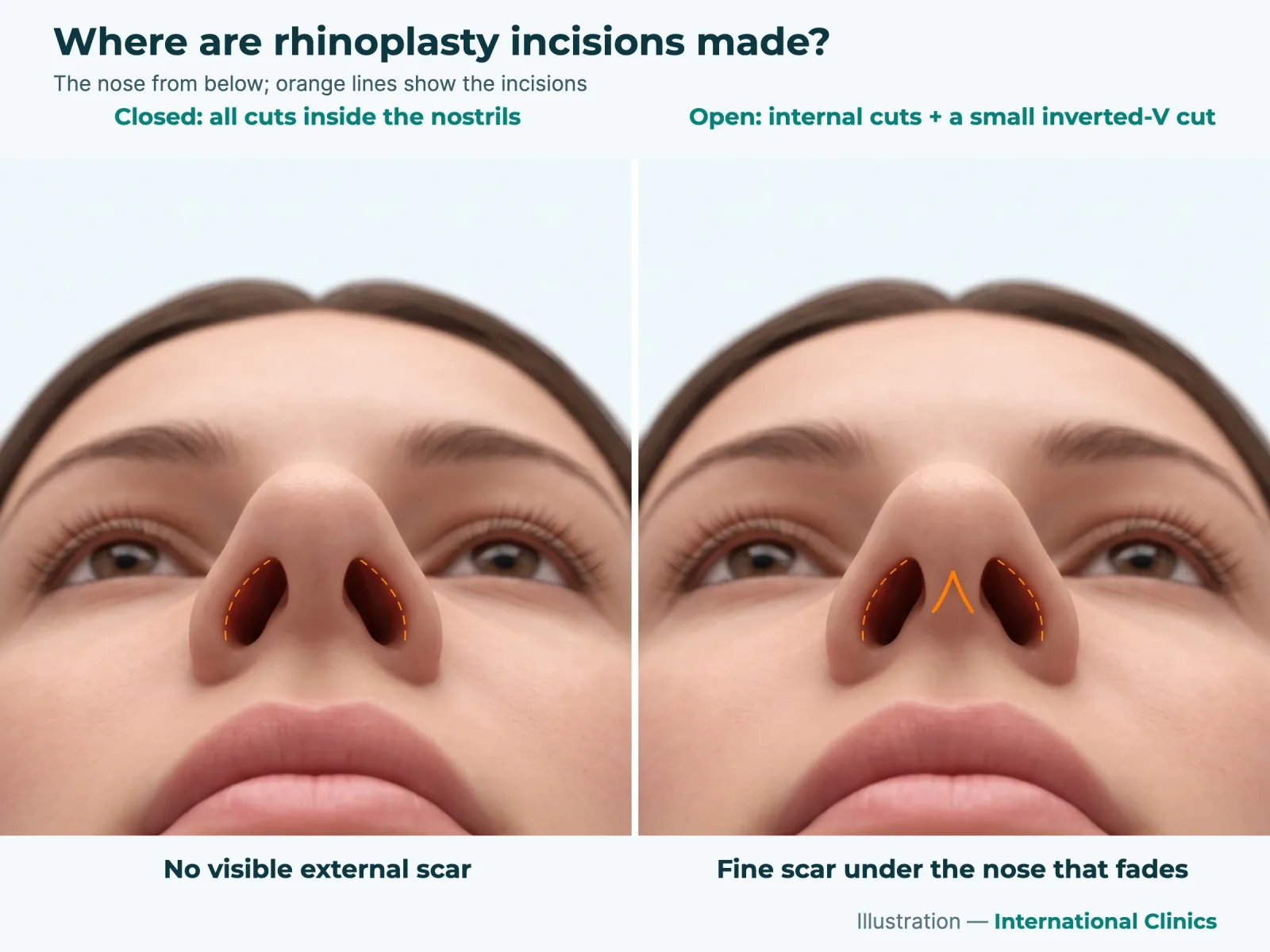
| Incision | A small incision across the columella (the strip of skin between the nostrils), plus internal incisions | Incisions inside the nose only |
| Scar | A fine scar under the nose that fades over time | No visible scar |
| Best for | Complex cases, nasal tip work and revision surgeries | Hump reduction and limited adjustments |
| Swelling | Slightly more, and takes longer to go down | Usually less |
For more details, see our article: Open vs. closed rhinoplasty.
8. Can rhinoplasty be done on a thick-skinned nose?
Yes, but it calls for a surgeon experienced with this type of nose, because thick skin hides the detail of the cartilage underneath and slows down the resolution of swelling. As a result, the outcome in a thick-skinned nose takes longer to show, and it takes patience of a year or more before it can be judged.
9. Can a deviated septum be corrected during the same rhinoplasty?
Yes. The two procedures are often combined in a single operation known as functional rhinoplasty (septorhinoplasty), which improves both breathing and appearance with one anesthesia and one recovery period. Septum correction alone costs between $2,800 and $3,500, and when it is combined with rhinoplasty the patient receives a single quote for both procedures (Source: International Clinics — Turkey).
For more details, see our article: Septorhinoplasty: correcting the septum and reshaping the nose.
10. Is there a non-surgical nose job?
Yes, using filler injections, known as non-surgical rhinoplasty. It can camouflage a small hump or lift the nasal tip slightly, but it does not make the nose smaller, does not treat breathing problems, and its results are temporary.
| Aspect | Surgical rhinoplasty | Filler rhinoplasty |
|---|---|---|
| Price in Turkey | $2,500–4,500 | $500–1,000 |
| Reduction and breathing treatment | Possible | Not possible |
| How long results last | Usually permanent | Temporary; needs repeating |
| Recovery | One to two weeks before returning to work | Back to daily life the same day in most cases |
Prices in the table (Source: International Clinics — Turkey).
For more details, see our article: Non-surgical nose job.
11. How should I prepare for rhinoplasty? Do I need to stop smoking?
You will be asked to have basic blood tests and any other examinations the doctor requests, and to tell the doctor about every medication and supplement you take. Smoking must be stopped at least two to three weeks before surgery and avoided for the same period afterwards, because it slows healing (Source: MedlinePlus).
12. How do I choose a rhinoplasty surgeon in Turkey?
Check the surgeon’s specialty and experience in rhinoplasty specifically, ask for before-and-after photos of cases similar to yours, and make sure the operation will take place in a licensed hospital. International Clinics is not a medical center; we are the link between you and the right treatment. We have contracted with surgeons and hospitals that meet the highest quality standards, and we recommend the surgeon best suited to your case after reviewing your photos.
For more details, see our article: How to choose the best rhinoplasty surgeon in Turkey.
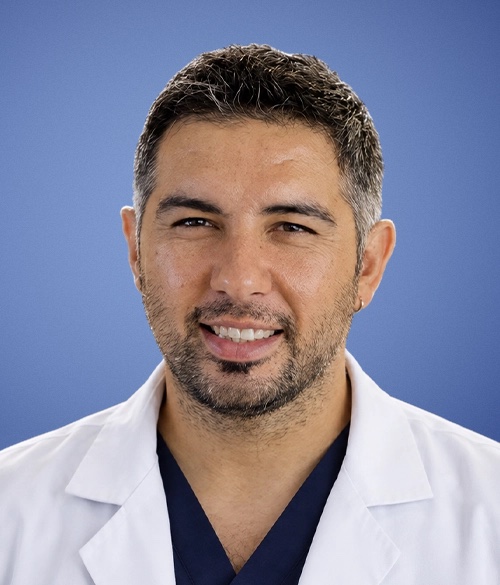
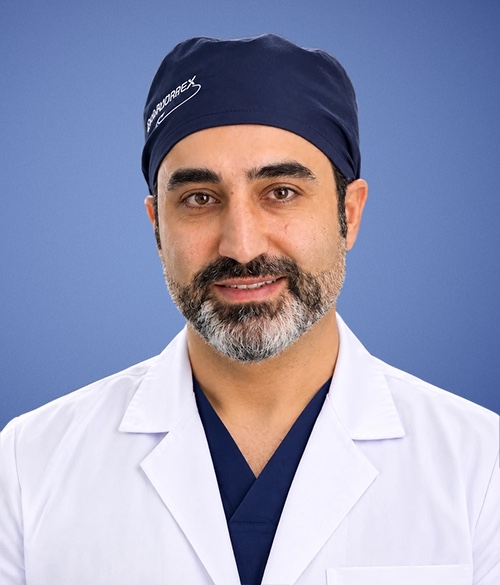
13. Who is the best rhinoplasty surgeon in Turkey?
No single surgeon is the best for every patient. The right one for you is the surgeon who has mastered the procedure you need: nose reduction, tip refinement, septum correction combined with rhinoplasty, or revision surgery. Rhinoplasty is not limited to plastic surgeons either: many of the most skilled practitioners are ear, nose and throat (ENT) surgeons who have specialized in cosmetic nasal surgery, combining an improved appearance with preserved breathing. So choose your surgeon based on their experience in rhinoplasty specifically and on previous cases similar to yours, not on their title alone.
To compare the rhinoplasty surgeons we work with and their prices, visit our rhinoplasty page.

14. What is the best hospital for rhinoplasty in Turkey?
In Turkey, rhinoplasty is performed in private hospitals licensed by the Turkish Ministry of Health, many of which hold Joint Commission International (JCI) accreditation. The right hospital for you is the one where your surgeon works, with a well-equipped anesthesia and care team and a department that welcomes and accompanies international patients. In most cases, the hospital is decided after the doctor is chosen, because the surgeon operates at the hospital where he or she practices.
The Surgery and Your Stay in Turkey
15. How is rhinoplasty performed?
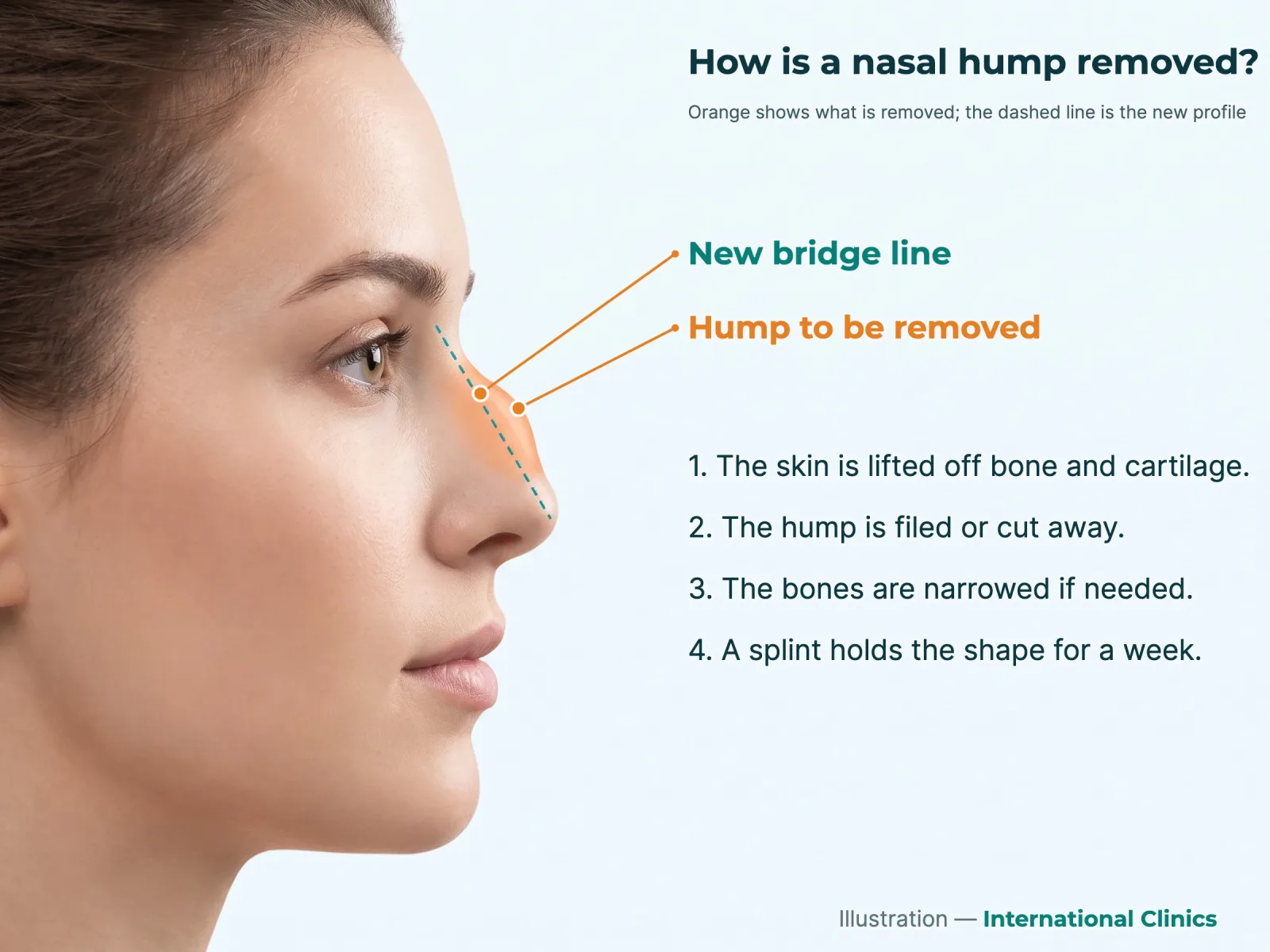
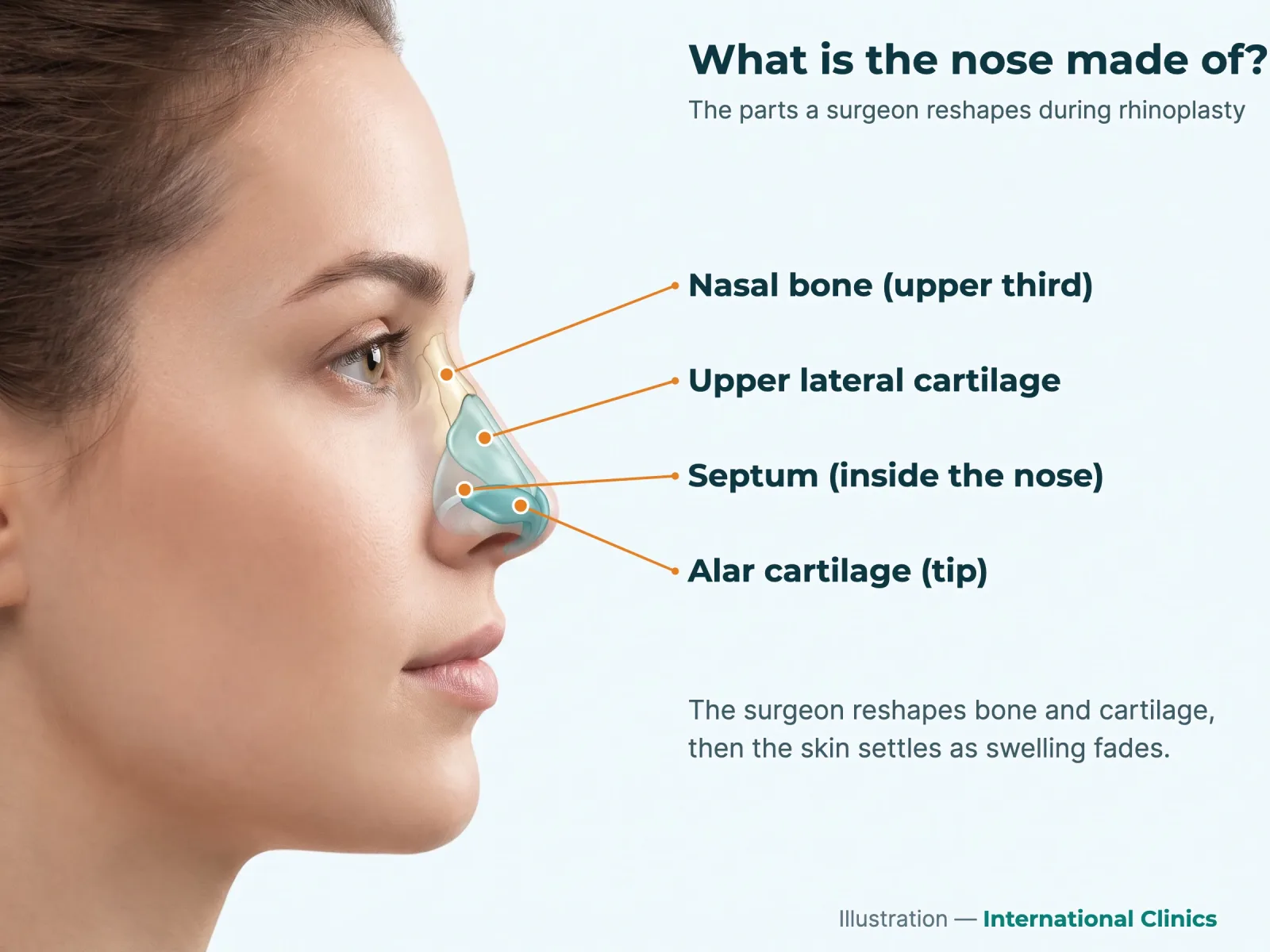
The surgery is usually performed under general anesthesia, or in some cases under local anesthesia with intravenous sedation (Source: Cleveland Clinic). The surgeon makes incisions inside the nose, adding a small incision underneath it in open rhinoplasty, and then reshapes the bone and cartilage: removing a hump, narrowing the bone, refining the tip or straightening the septum. Finally, the incisions are stitched, a splint is placed on the nose, and internal packing or splints may be inserted.
For more details, see our article: Types of rhinoplasty and the latest techniques.
16. How long does rhinoplasty take?
The operation takes one to three hours (Sources: Cleveland Clinic, MedlinePlus), and it may take longer in revision surgeries or when rhinoplasty is combined with septum correction. Patients usually spend one or two nights in hospital (Source: NHS).
17. How many days do I need to stay in Turkey, and when can I fly?
We recommend staying in Turkey for 7 to 10 days, that is, until the splint is removed and the surgeon is satisfied with the result at the follow-up visit. After that, most patients can fly home, while follow-up continues remotely through photos they send to our team.
For more details, see our article: Rhinoplasty in Turkey.
18. Do you have a video explaining rhinoplasty?
Yes. This 3D animation from International Clinics explains the steps of rhinoplasty and what the surgeon changes in the bone and cartilage, in about a minute and a half.
For more details, see our article: Types of rhinoplasty.
19. Do you have a video of someone who has had rhinoplasty?
Yes. In these two videos, two patients talk about their experience with rhinoplasty in Istanbul.
After Surgery: Daily Care
20. When are the nasal splint and stitches removed?
The splint stays on for about a week, sometimes up to two weeks (Sources: NHS, Cleveland Clinic). Stitches are removed after about a week unless they are dissolvable and need no removal (Source: NHS). Internal packing, if used, is usually removed after one to two days (Source: Cleveland Clinic).
21. When do swelling and bruising go away after rhinoplasty?
Bruising around the eyes fades within a few weeks. The nose stays noticeably swollen for 4 to 6 weeks, about 90% of the swelling is gone after three months, and mild swelling may last up to a year (Source: Cleveland Clinic). Swelling is usually worse in the morning during the first year (Source: ASPS).
For more details, see our article: How the nose changes after rhinoplasty.
22. When can I shower after the surgery?
You can wash your body one or two days after surgery, keeping the splint completely dry and not directing water at your face. A full shower and washing your hair freely should wait until the splint has been removed, and it is best to avoid very hot water and saunas in the first weeks because they increase swelling.
23. How should I sleep after rhinoplasty?
Sleep on your back with your head raised on two pillows for at least the first two weeks; this reduces swelling and protects the nose from pressure. Avoid sleeping on your face or side until your surgeon allows it.
24. When can I go back to work and exercise?
Most patients return to work or school after one to two weeks (Source: Cleveland Clinic). Light exercise such as walking is resumed gradually, while strenuous exercise, contact sports and weightlifting are postponed for 4 to 6 weeks (Sources: NHS, Cleveland Clinic).
25. When can I wear glasses and makeup?
Avoid putting pressure on the bridge of your nose with prescription glasses or sunglasses during recovery (Source: Cleveland Clinic). In the first weeks, many patients wear contact lenses or tape their glasses to the forehead. Makeup can be applied to the face away from the nose after a few days, and on the nose once the splint has been removed and the skin has healed, with your surgeon’s approval.
26. When can I smoke after rhinoplasty?
Smoking is not advised until at least two to three weeks after surgery (Source: MedlinePlus), and it is best to stay away from it for as long as possible, because it reduces blood flow to the tissues, delays healing and increases the risk of complications.
27. When do breathing, smell and taste return to normal?
In the first few days, you breathe through your mouth because of the swelling, the splint and any packing. Nasal breathing then returns gradually once they are removed, and improves further as the swelling goes down over the following weeks. Smell and taste are temporarily weakened during the same period and usually return; a permanent change in the sense of smell is a complication listed in the medical literature, but it is uncommon (Source: Cleveland Clinic).
For more details, see our article: Rhinoplasty vs. septoplasty: treating a deviated septum.
Results and Revision Surgery
28. Are rhinoplasty results permanent?
Yes, the results of surgical rhinoplasty are usually considered permanent, because the surgeon reshapes the bone and cartilage themselves. However, the nose changes slightly with age, like the rest of the face, and some patients may need a minor adjustment once healing is complete (Source: Cleveland Clinic).
29. How do I know my rhinoplasty was successful?
Signs of success in the first months include comfortable breathing through the nose once the swelling has gone, a nose in harmony with your facial features, and bruising and swelling that fade gradually without increasing pain. A fever, heavy bleeding, or pain that gets worse instead of better calls for contacting your doctor immediately.
For more details, see our article: Signs of a successful rhinoplasty and the stages of change.
30. What if I don’t like the result? When can revision surgery be done?
It is advisable to wait about a year for the final shape to settle before judging the result or considering a second operation, unless your doctor advises otherwise. About 15% of patients need a revision surgery for minor adjustments (Source: Cleveland Clinic). Revision rhinoplasty costs between $3,500 and $4,500, because it is more complex than the first operation (Source: International Clinics — Turkey).
For more details, see our article: Revision rhinoplasty.
31. Is rhinoplasty different for men?
The surgical principles are the same, but the aesthetic goal differs: in men, the surgeon preserves a strong, straight nasal bridge and a less upturned tip angle, so that the nose does not look feminine. Men’s nasal skin is also usually thicker, so the swelling takes longer to go down.
For more details, see our article: Male rhinoplasty.
Have a question you did not find answered here? Send photos of your nose to the International Clinics team, and we will present your case to a specialist surgeon among our contracted doctors, who will suggest the right procedure and give you a price.
Medical review and disclaimer:
This article was reviewed by a specialist doctor from among the doctors contracted with International Clinics. The information provided is intended for general health education and is not a substitute for consulting a specialist doctor. Results and medical recommendations may vary from person to person depending on their health condition.

