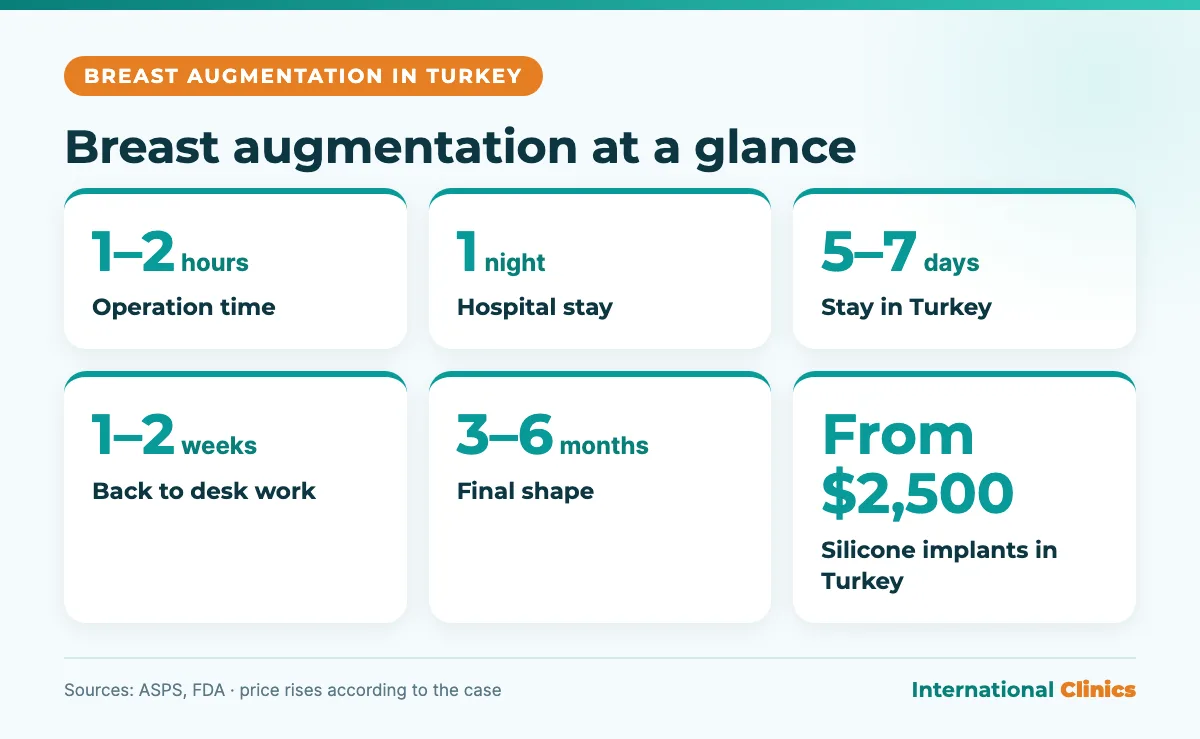
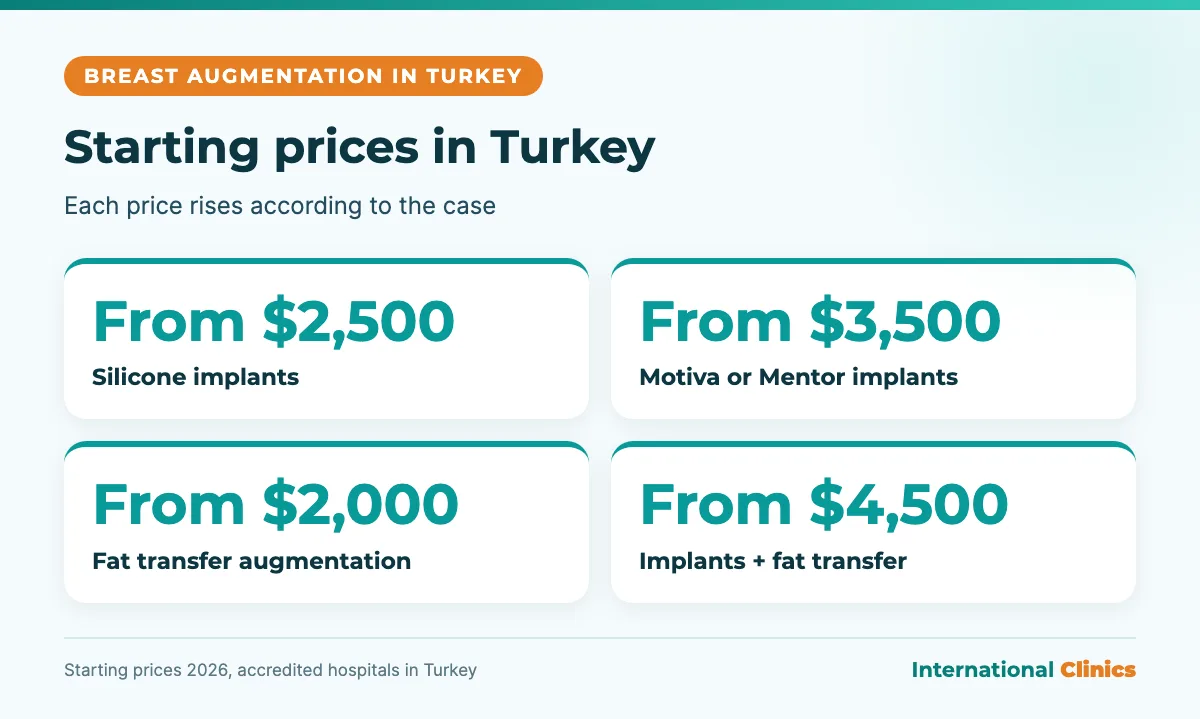
Breast augmentation in Turkey (often called a boob job or breast enlargement) increases breast size and improves shape with silicone implants, your own fat, or both. It is done under general anaesthesia in about 1–2 hours, usually with one night in hospital, and most international patients fly home after 5–7 days. In Turkey, breast augmentation with silicone implants starts from $2,500, with premium Motiva or Mentor implants from $3,500, fat transfer augmentation from $2,000 and implants combined with fat transfer from $4,500. Each price rises according to the case. The most important choices are the surgeon, the accredited hospital and the implant type, size and placement that suit your body.
This guide explains how breast augmentation is done, the implant and technique options, how to choose a surgeon and hospital in Turkey, what the package includes, recovery and risks. For a detailed price comparison with the UK and other countries, see our boob job cost in Turkey guide.
What Is Breast Augmentation?
Breast augmentation (augmentation mammoplasty) is a cosmetic operation that increases the volume of the breasts, restores fullness lost after pregnancy, breastfeeding or weight loss, and improves symmetry between the two sides. It is one of the most common cosmetic operations in the world. The American Society of Plastic Surgeons lists breast augmentation among the top cosmetic surgical procedures every year.
The operation can use:
- Breast implants: silicone gel or saline shells placed behind the breast tissue or the chest muscle.
- Fat transfer: your own fat, taken by liposuction from the abdomen, flanks or thighs, purified and injected into the breasts.
- Composite (hybrid) augmentation: an implant plus a layer of fat to soften the edges and give a more natural shape.
Who Is a Good Candidate?
- Women aged 18 or over (22 or over for silicone implants in the United States) with fully developed breasts.
- Women who feel their breasts are small, uneven, or have lost volume after pregnancy, breastfeeding or weight loss.
- Good general health, a stable weight and a normal breast examination or screening for your age.
- Non-smokers, or those willing to stop at least 4 weeks before and after surgery.
- Realistic expectations about size, shape and the need for possible future surgery.
If the breasts also sag and the nipples point downward, a breast lift, alone or combined with implants, may be needed for a good result.
Breast Implant Options in Turkey
Implant Fill: Silicone or Saline
Most breast augmentations in Turkey use cohesive silicone gel implants, which feel closer to natural breast tissue. Saline implants are filled with salt water and can be adjusted during surgery, but they are more likely to show rippling, especially in slim women. Highly cohesive "gummy bear" implants hold their shape even if the shell is damaged.
Implant Shape: Round or Anatomical (Teardrop)
Round implants give more fullness in the upper breast and look the same if they rotate. Anatomical or teardrop implants are fuller at the bottom and taper at the top for a more natural slope, but they cost more and must not rotate.
Implant Brands
Accredited hospitals in Turkey use FDA- or CE-approved implants from established brands such as Motiva, Mentor, Allergan (Natrelle), Polytech and GC Aesthetics. Ask for the brand, model, size and serial numbers before surgery, and keep the implant card you receive afterwards; you will need it for future check-ups.
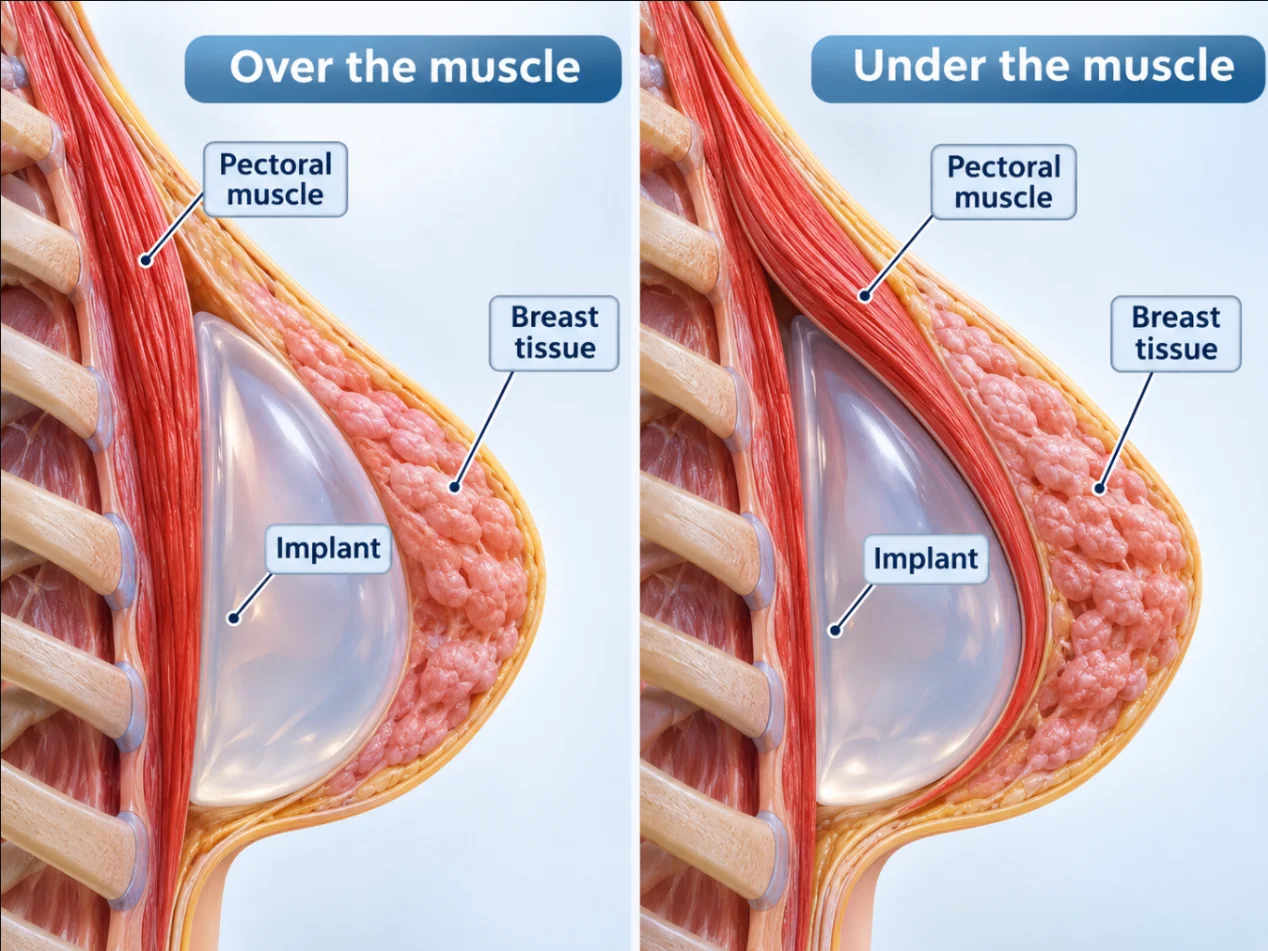
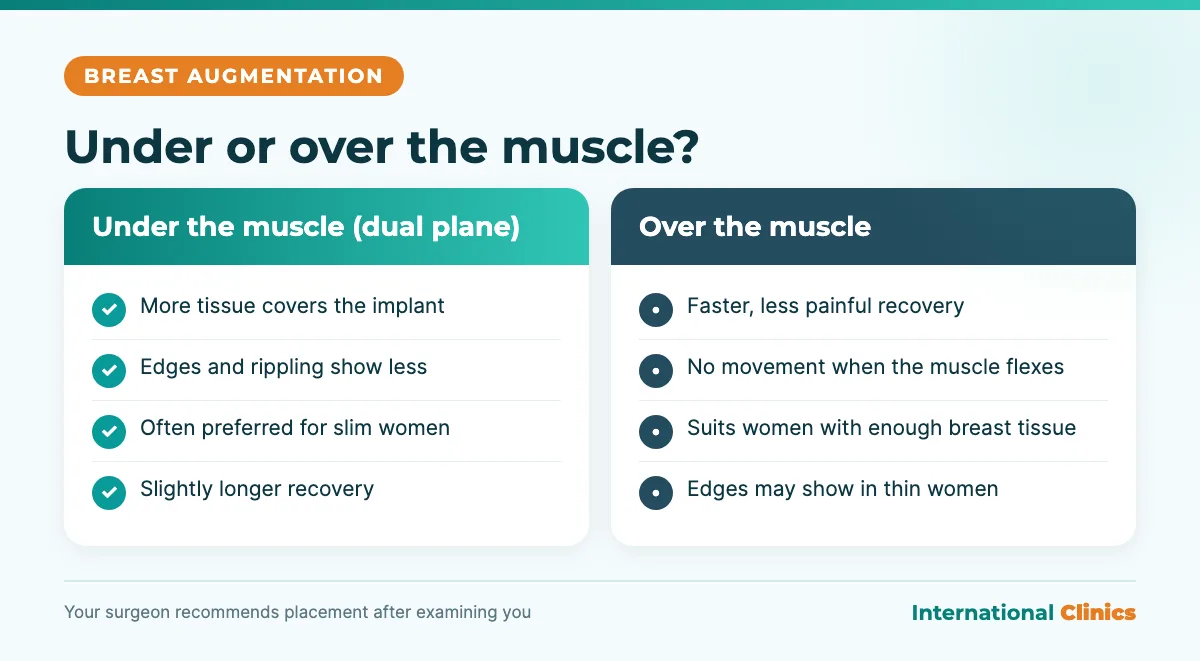
Implant Placement
- Under the muscle (submuscular or dual plane): more tissue covers the implant, so the edges show less; often preferred for slim women.
- Over the muscle (subglandular): faster recovery and no movement of the implant when the chest muscle contracts; suits women with enough breast tissue.
Incision Options
- Inframammary: in the fold under the breast; the most common and most precise.
- Periareolar: at the edge of the areola; the scar blends with the colour change.
- Transaxillary: in the armpit, with no scar on the breast itself.
How to Choose the Right Implant Size
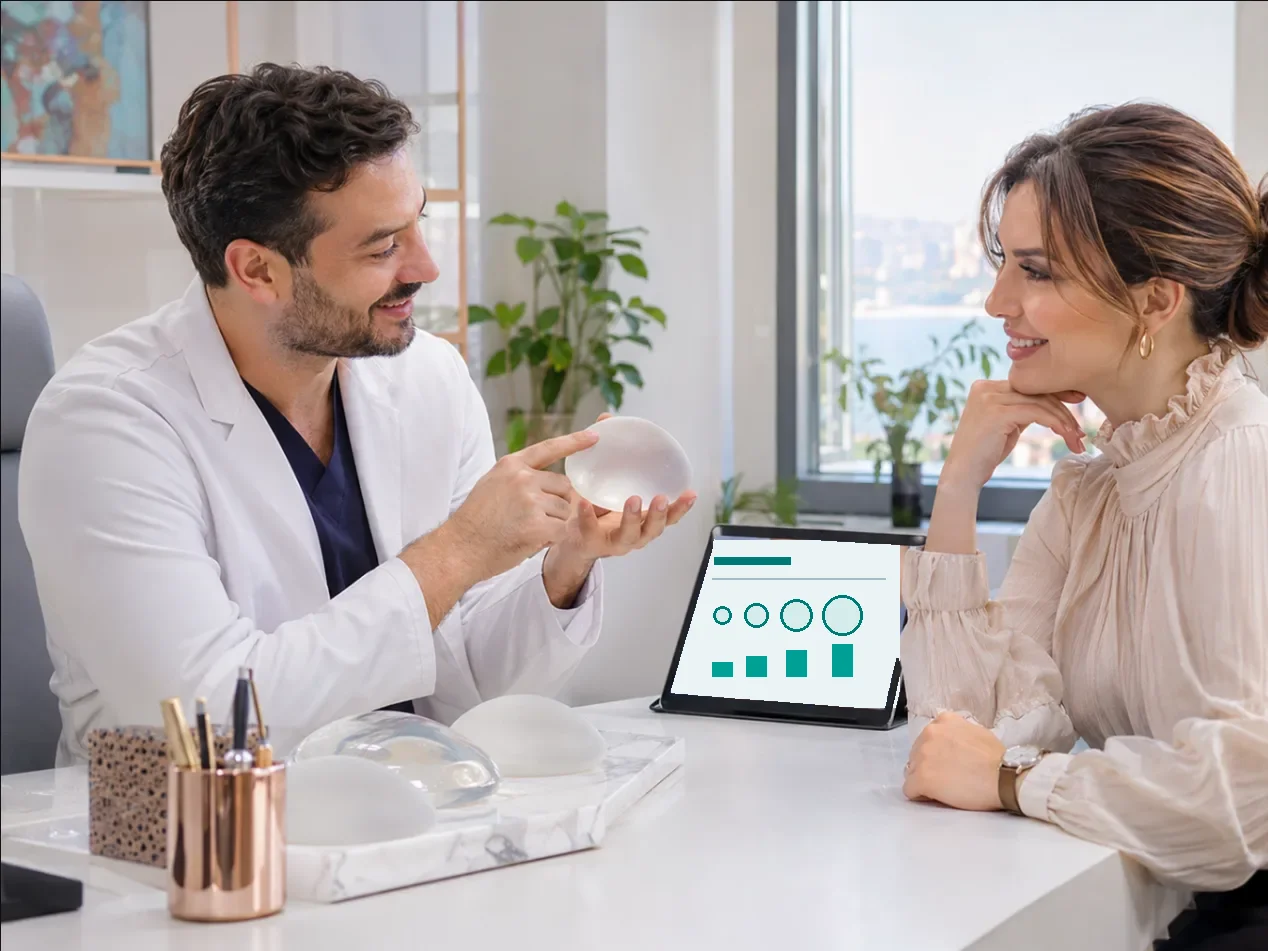
Implant size is measured in cubic centimetres (cc), not cup size, because cup sizes differ between brands and countries. As a rough guide, about 150–200 cc adds one cup size in a woman of average build, but the right size depends mostly on your body. Surgeons consider:
- Breast base width: the implant should not be wider than your natural breast.
- Skin and tissue thickness: thin tissue covers a large implant poorly and makes rippling more likely.
- Chest width, height and shoulders: the same implant looks different on different frames.
- Your lifestyle: very large implants can cause back pain, sagging over time and limits on sport.
Bring photos of results you like, but let the surgeon guide you to a size your tissues can support. Trying sizers in a bra during the consultation is a simple way to see the difference.
Breast Augmentation With Fat Transfer
Fat transfer breast augmentation uses your own fat instead of an implant. It gives a soft, natural result and slims the donor areas at the same time, but it increases the cup size only modestly, usually by about half to one cup size, and part of the injected fat is absorbed in the first months. It suits women who want a small, natural increase and have enough fat to harvest. In Turkey it starts from $2,000. Read more in our guide to fat transfer breast augmentation.
How Is Breast Augmentation Performed?
- Consultation and planning: the surgeon examines you, measures the chest and breast width, and helps you choose the implant type, size, profile and placement. Some clinics use 3D simulation.
- Tests: blood tests, an ECG, and a breast ultrasound or mammogram depending on your age.
- Anaesthesia: the operation is done under general anaesthesia.
- Incision and pocket: the surgeon makes the incision and creates a pocket over or under the chest muscle.
- Implant placement: the implant is inserted, centred and checked for symmetry with you in a sitting position.
- Closure: the incisions are closed in layers, and a surgical bra is fitted.
The operation usually takes about 1–2 hours, and most patients stay one night in hospital.
How to Choose a Breast Augmentation Surgeon in Turkey
- Choose a board-certified plastic, reconstructive and aesthetic surgeon who performs breast surgery regularly.
- Look at the surgeons before-and-after photos of patients with a body similar to yours.
- Make sure you meet the surgeon in person before surgery, and that the surgeon, not an assistant, performs the operation.
- Ask how many breast augmentations the surgeon performs each year, and how complications and revisions are handled.
- Check that the surgeon operates in a Ministry of Health-licensed hospital, ideally with international accreditation such as JCI.
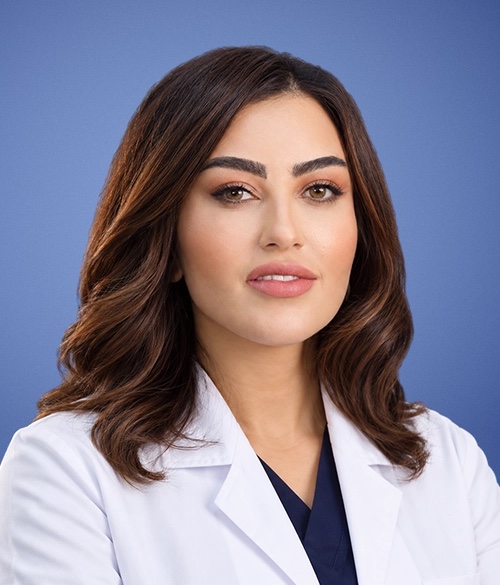
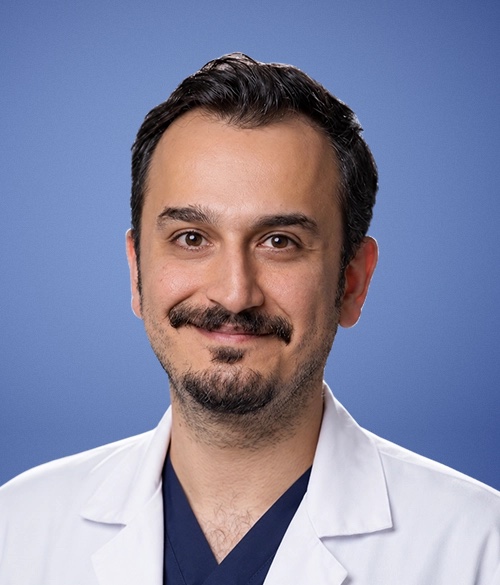
The doctors below are experienced plastic surgeons who perform breast augmentation in Istanbul:

Hospitals for Breast Augmentation in Turkey
Breast augmentation should be performed in a fully equipped hospital, not an office clinic. A good hospital has a modern operating theatre, an experienced anaesthesia team, an intensive care unit for emergencies, and international patient services such as interpreters and transfers. Turkish hospitals that treat international patients are licensed by the Ministry of Health and many hold JCI accreditation. Among the hospitals contracted with us in Istanbul:
Breast Augmentation Cost in Turkey
| Procedure | Starting price in Turkey |
|---|---|
| Breast augmentation with silicone implants | From $2,500 |
| Breast augmentation with Motiva or Mentor implants | From $3,500 |
| Fat transfer breast augmentation | From $2,000 |
| Implants combined with fat transfer | From $4,500 |
Each price rises according to the case, the implant brand and type, the surgeon and the hospital. By comparison, the average surgeons fee alone for breast augmentation in the United States is about $4,875 according to the American Society of Plastic Surgeons, before anaesthesia, hospital and implant costs. For a full comparison with UK and US prices, see boob job cost in Turkey.
What Is Included in a Breast Augmentation Package?
- Consultation with the plastic surgeon and pre-operative tests
- The operation, anaesthesia and the implants chosen
- One night in hospital, medicines and a surgical bra
- Hotel accommodation and airport–hotel–hospital transfers
- An interpreter or patient coordinator
- Post-operative check-ups in Turkey and follow-up for one year after surgery
International Clinics is the link between patients and accredited hospitals and experienced plastic surgeons in Turkey, and arranges a free remote consultation so the surgeon can review your photos and suggest an implant plan before you travel.
Recovery After Breast Augmentation
- Days 1–3: tightness, swelling and soreness, controlled with pain medicine; walk from the first day.
- Days 5–7: check-up with the surgeon; most patients fly home.
- Weeks 1–2: return to desk work; wear the surgical bra day and night.
- Weeks 4–6: gradual return to exercise; avoid lifting heavy weights and sleeping on your front.
- Months 3–6: implants settle into position ("drop and fluff") and the final shape appears.
Scars are red at first and fade over 12–18 months. Silicone gel and sun protection help them heal well.

Risks of Breast Augmentation
Breast augmentation is generally safe when done by a qualified surgeon in an accredited hospital, but possible risks include bleeding, infection, changes in nipple sensation, asymmetry, implant rupture or leakage, rippling and capsular contracture (scar tissue tightening around the implant). Implants are not lifetime devices, and some women need further surgery later. The FDA also notes rare risks such as breast implant-associated anaplastic large cell lymphoma (BIA-ALCL), mainly linked to textured implants, and symptoms some patients describe as breast implant illness. Your surgeon should explain these risks and the type of implant used.
If you later decide to remove your implants, see our guide to breast implant removal.
Breast Implants, Breastfeeding and Mammograms
Many women breastfeed successfully after breast augmentation, especially when the implant is placed under the muscle through an inframammary incision, which avoids cutting the milk ducts. Periareolar incisions carry a slightly higher risk of affecting breastfeeding and nipple sensation. Implants can make mammograms a little harder to read, so always tell the radiographer you have implants: special views (displacement views) are used, and ultrasound or MRI can be added when needed. The FDA recommends periodic imaging to check silicone implants for silent rupture.
Combining Breast Augmentation With Other Procedures
- Breast lift with implants (augmentation-mastopexy): for breasts that have lost volume and also sag.
- Mommy makeover: breast surgery combined with a tummy tuck and liposuction after pregnancy.
- Liposuction with fat transfer: slims the waist or thighs while adding volume to the breasts.
Combining procedures means one anaesthetic and one recovery period, but it lengthens the operation, so your surgeon decides whether it is safe for you.
Before and After: What to Expect
Right after surgery, the breasts look high, tight and swollen. Over the next 3–6 months the implants settle lower, the lower breast softens and the shape becomes more natural. Final results are usually judged after about 6 months, and scars keep fading for up to 18 months. Before-and-after photos taken in the first weeks therefore do not yet show the final result.
Why Choose Turkey for Breast Augmentation?
- Lower cost: packages often cost much less than surgery alone in the UK or US.
- Experienced surgeons: many Turkish plastic surgeons perform breast surgery daily for international patients.
- Accredited hospitals: modern private hospitals licensed by the Ministry of Health, many with JCI accreditation.
- All-inclusive packages: hotel, transfers and an interpreter organised for you.
- Short waiting times: surgery can usually be planned within weeks.
The Bottom Line
Breast augmentation in Turkey combines experienced plastic surgeons, accredited hospitals and starting prices from $2,500 with silicone implants. The best result comes from choosing a qualified surgeon who examines you, the right implant type, size and placement for your body, and a hospital with full safety standards, followed by careful recovery and regular check-ups.