- Why Should You Undergo Body Sculpting in Turkey?
- What Exactly is Body Sculpting?
- Types of the Procedure
- Non-surgical body sculpting
- Cryolipolysis
- Laser Fat Reduction
- Ultrasound Fat Reduction
- Deoxycholic Acid Injections
- Muscle Stimulation
- Surgical body sculpting
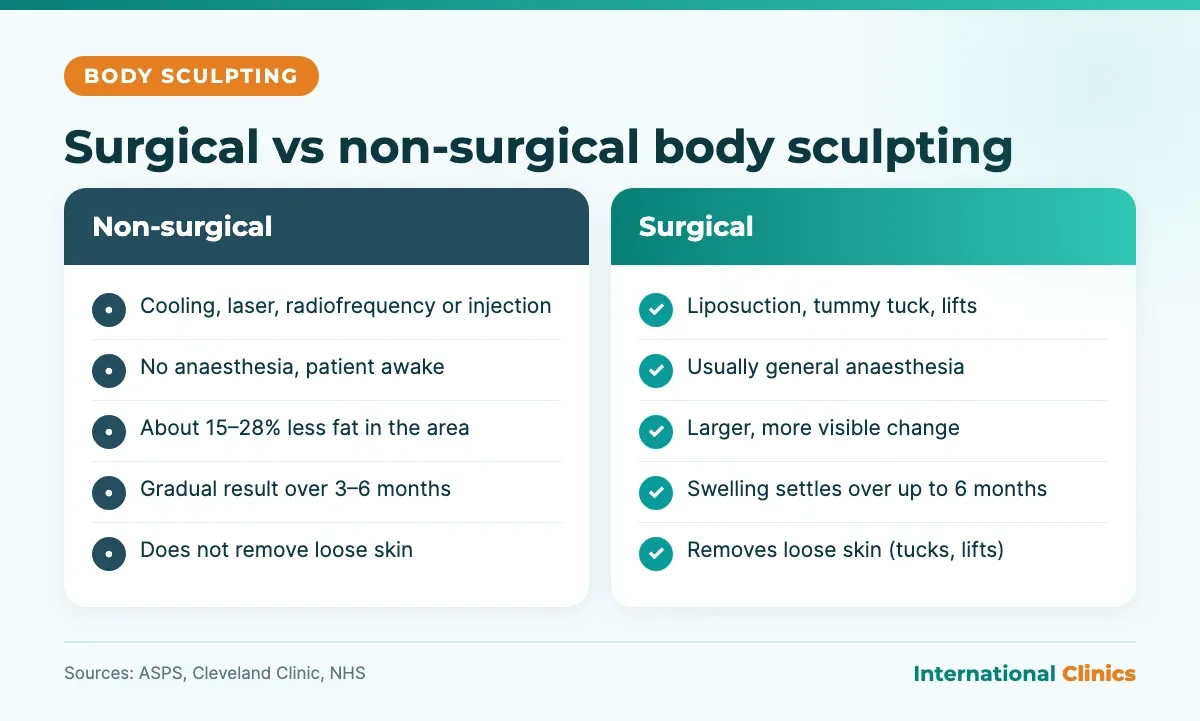
- Surgical vs non-surgical body sculpting at a glance
- Benefits of Non-surgical Body Sculpting
- Risks of Body Contouring
- Risks of non-surgical body sculpting
- Risks of surgical body sculpting
- Cost of Body Sculpting in Turkey
- How International Clinics Can Help You?
Body sculpting in Turkey, in short: body sculpting (body contouring or body shaping) reshapes areas of stubborn fat or loose skin, either with surgery such as liposuction, a tummy tuck or lifts, or with non-surgical treatments that use cold, heat, laser or an injected medicine; it is not a weight-loss treatment (Sources: ASPS and ASPS).
At International Clinics in Istanbul, liposuction costs $2,250 to $5,000 (approx. £1,700 to £3,750) depending on the technique and the number of areas, and a tummy tuck costs $2,500 to $8,000 (approx. £1,900 to £6,000) depending on the type and on combined procedures; the final price is confirmed after the surgeon reviews your photos.
If you plan to visit Turkey in the future and want to try one of the fat reduction methods available in Turkish clinics, body sculpting or contouring is worth considering.
Why Should You Undergo Body Sculpting in Turkey?
Body sculpting is a popular kind of plastic surgery in Turkey for people who want a firmer, more defined shape. Below you will find why people choose Turkey for this procedure, which technologies are available for body sculpting, and the costs, benefits and risks of each option.
Many people choose body sculpting in Turkey because it usually costs less than in Western Europe, the UK or the US, and because Turkey has a large health-tourism sector with packages for international patients.
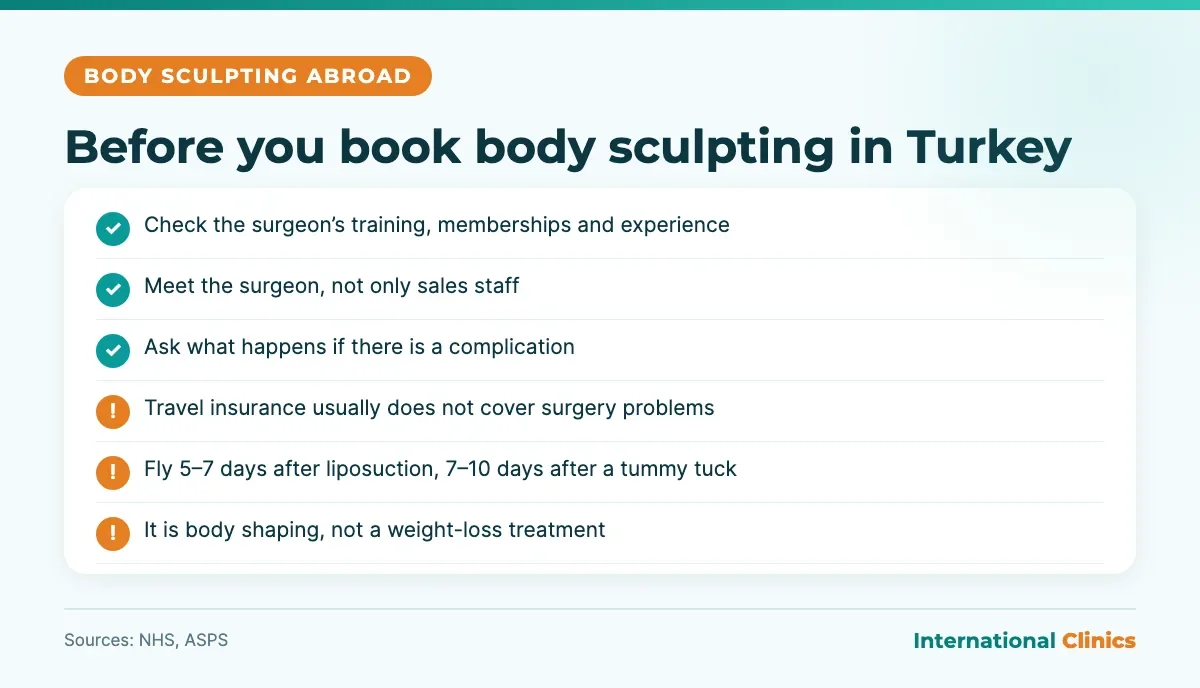
Price is not the only factor, though. Before booking anywhere, check how surgeons and clinics are regulated, ask about the surgeon’s training, professional organisations and how many similar procedures they have done, and meet the surgeon rather than only sales staff (Source: NHS).
Body sculpting packages in Turkish clinics often include the hospital, the hotel and transfers. Ask what happens if a complication occurs, where follow-up takes place and whether insurance covers you, because travel insurance usually does not cover problems arising from surgery (Source: NHS).
In sum, you may begin to think about coming to Turkey to undergo body sculpting for the following advantages:
- Lower-cost treatments than in many Western countries
- Package services for international patients (hospital, hotel, transfers)
- Diversity of techniques for body sculpting, including surgical and nonsurgical techniques
- Diversity of body sculpting procedures, such as thigh lift, arm lift, back lift, etc
- An opportunity to discover Turkey’s popular tourist attractions
- Welcoming and warm culture
- Extra services offered by clinics (hospitality, escort, etc.)

What Exactly is Body Sculpting?
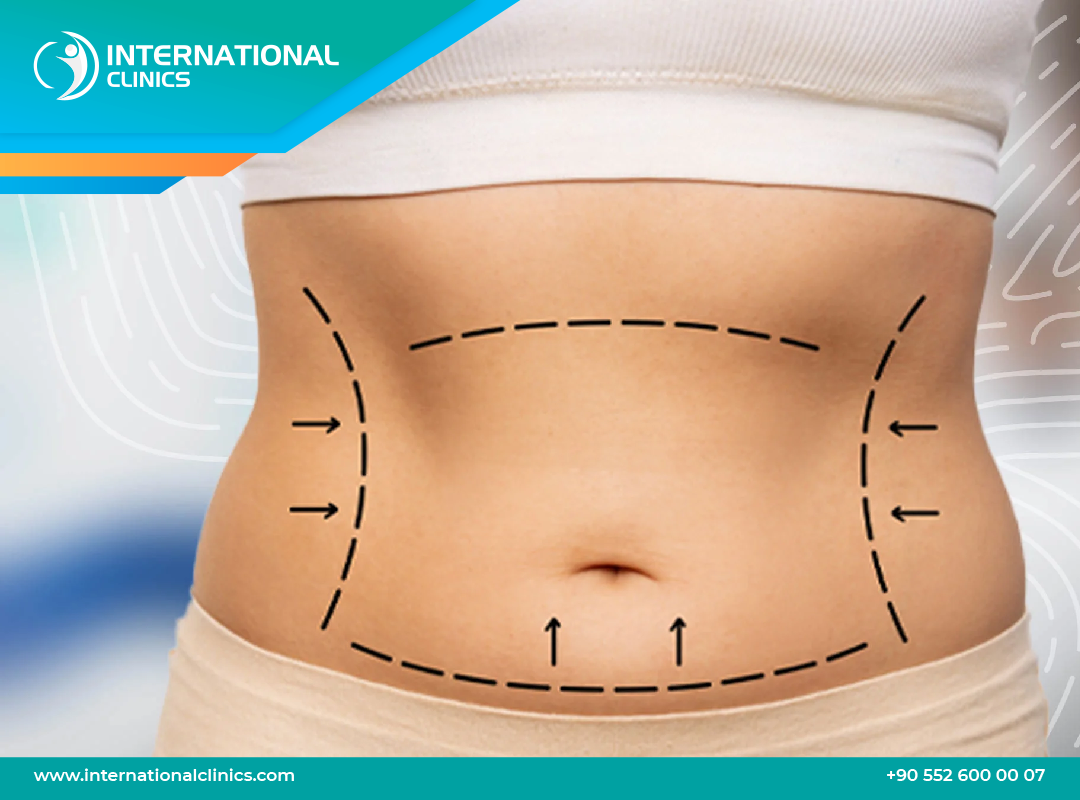
Body sculpting or contouring aims to reshape the body and tighten the skin by eliminating fat in certain parts of your body. To reach this goal, doctors can rely on nonsurgical techniques, such as lipolysis, which involves the use of cold, heat, lasers or an injected medication (Source: ASPS).
They can also rely on surgical interventions, such as liposuction, tucks, and lifts. Though surgery is riskier and requires a longer recovery phase, its results are more obvious; non-surgical methods are not a replacement for liposuction, but an option for people who are unwilling or unable to have surgery (Source: ASPS).
Body sculpting tries to remodel or reshape a body part by eliminating any extra fat and skin tissues and recontouring the region. But it does not normally aid in weight loss: liposuction is not a treatment for obesity or a substitute for diet and exercise, and it does not treat cellulite (Source: ASPS).
For an overview of every technique, see our guide to body contouring methods.
Related Article:
- Larsa Pippen Before and After Plastic Surgery
- Nausea After Liposuction
- Endoscopic Sleeve Gastroplasty: Make Safe & Affordable choice
- Mommy Makeover Cost: Contour Your Body Without breaking the Ban

Types of the Procedure
Body sculpting is perfect for people who have reached their ideal weight but still have persistent fat pockets in certain regions. This usually refers to stubborn fat that doesn’t go away with diet and exercise.
The best candidates are close to a healthy weight: liposuction works best in people who are not overweight and have firm, elastic skin, and fat freezing is not intended for people with obesity (Sources: NHS and Cleveland Clinic).
To make things easier, we can explain the different types of body sculpting as follows:
Non-surgical body sculpting
Non-surgical or noninvasive body sculpting machines and techniques may need more than one session, and the change is gradual. Patients who are pregnant or breastfeeding should not have any of these treatments (Source: ASPS).
As mentioned before, lipolysis is the main non-surgical body-shaping technique. However, it involves many methods and technologies:
Cryolipolysis
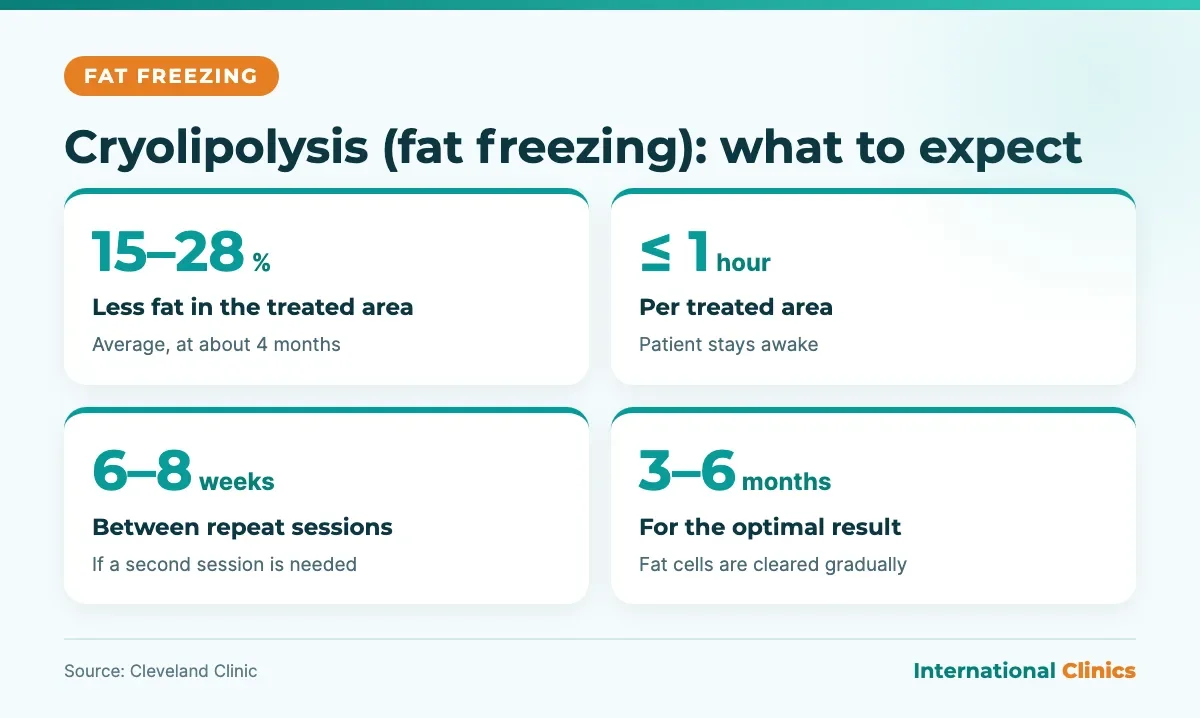
Cryolipolysis (also known as CoolSculpting®) involves cooling fat cells to about 30–39°F (−1 to 4°C) so that the body clears them gradually, while a gel pad protects the skin. Studies show an average fat reduction of 15–28% in the treated area at about four months; the first changes appear after about three weeks and the optimal result takes three to six months (Source: Cleveland Clinic).
An applicator suctions up the fat in regions such as the abdomen, flanks, thighs, upper arms, back, under the buttocks or under the chin, and a session lasts up to one hour per area; repeat sessions are spaced at least six to eight weeks apart. Patients may feel pulling, aching, stinging or numbness for days to weeks, and a rare side effect called paradoxical adipose hyperplasia makes the treated fat grow larger instead of smaller (Source: Cleveland Clinic).
Learn more about this technique by clicking here, and for the love handles see CoolSculpting flanks.
Laser Fat Reduction
Heat can also be used to reshape the body. In laser lipolysis, a device such as SculpSure® heats fat cells under the skin to damage them; radiofrequency devices such as Vanquish use heat in the same way (Source: ASPS).
As with cooling, the damaged fat cells are cleared by the body over the following weeks, so the result is gradual. The patient may feel warmth or minor discomfort during the procedure. Ask your doctor how many sessions you need and what result to expect for your area.
Discover:
Celebrities With Gynecomastia: In Hollywood, Bollywood, and Bodybuilding
Full Body Skin Removal Surgery Cost: What to Expect in 2026?
Ultrasound Fat Reduction
Ultrasound uses highly delicate sonic waves and vibrations to break down fat cells, allowing your body to flush the undesirable fat pockets.
Devices such as UltraShape and Liposonix use focused ultrasound for this purpose; ultrasound is one of the non-surgical fat-reduction methods listed by plastic surgeons, alongside cooling, laser, radiofrequency and injections (Source: ASPS).
During the body contouring procedure, you might feel some heat and discomfort.
Deoxycholic Acid Injections
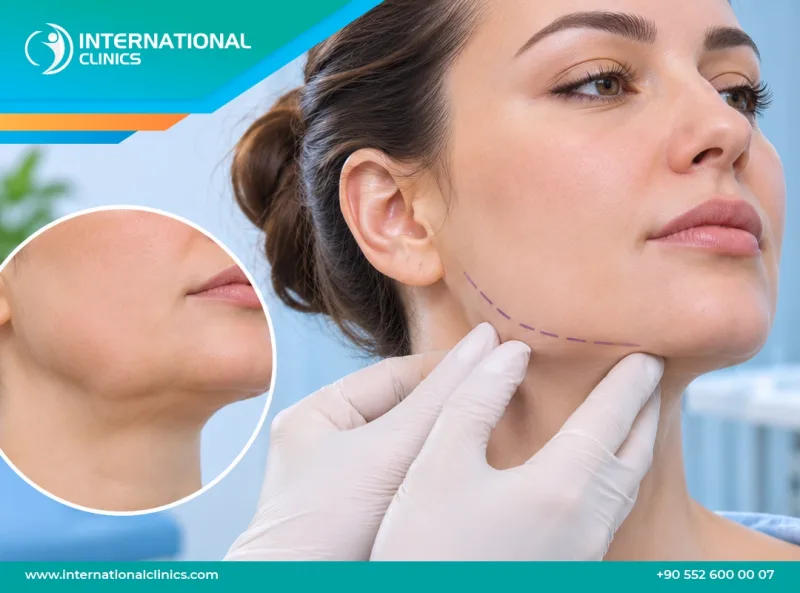
Deoxycholic acid is a bile acid that exists naturally in the body and aids in the breakdown of fat during digestion. Kybella® (deoxycholic acid) injection was approved in 2015 to improve moderate-to-severe fullness from fat under the chin in adults, and a generic deoxycholic acid injection is also approved (Source: FDA).
Doctors usually inject the acid after numbing the skin, and they should only target the region under the chin: the FDA does not recommend it for fat elsewhere, and it has received reports of serious problems after use in other areas, including vision problems near the eyes, nerve and muscle damage and facial weakness (Source: FDA).
You may experience some pain, swelling, bruising, and numbness after the procedure; for a surgical option under the chin, see submental liposuction.
Muscle Stimulation
This method is marketed for toning the arm or abdominal muscles. Muscle stimulation devices use electrical or electromagnetic energy to make muscles contract repeatedly, a little like an intense workout.
Products such as CoolTone® are sold for muscle toning rather than fat removal. They are not among the main fat-reduction methods listed by plastic surgeons (cooling, heat, laser and injection), so ask for the evidence for any device before paying for a course of sessions (Source: ASPS).
Surgical body sculpting
To perform surgical body sculpting, doctors can choose multiple methods and techniques, depending on the targeted area. These techniques include:
- Lifts and tucks: These procedures can eliminate excess fat and extra skin in the abdomen, breast, and even the face areas. Examples include a tummy tuck, breast lift, facelift, and double chin surgery.
- Liposuction: Liposuction removes fat deposits from specific areas of the body, such as the abdomen, waist, back, hips, thighs, arms, chin and neck; it can be combined with a tummy tuck, breast reduction or facelift (Source: ASPS).
After major weight loss, loose skin rather than fat is usually the problem, so lifts are needed: see arm lift in Turkey and the cost of full body skin removal in the links below.
Surgical vs non-surgical body sculpting at a glance
| Non-surgical (cooling, laser, RF, injection) | Surgical (liposuction, tummy tuck, lifts) | |
|---|---|---|
| Anaesthesia | None; patient awake | Usually general anaesthesia |
| Session or operation | Up to about 1 hour per area | About 1 to 3 hours for liposuction |
| Result | About 15–28% less fat in the treated area, gradual over 3–6 months | Larger change; final shape once swelling settles, up to 6 months |
| Recovery | Done in a clinic, no hospital stay; temporary soreness, swelling or numbness | Compression garment for several weeks; strenuous activity after 10–12 weeks |
| Loose skin | Not removed | Removed by tucks and lifts |
The figures in this table come from patient information on fat freezing and on liposuction (Sources: Cleveland Clinic and NHS).
Benefits of Non-surgical Body Sculpting
If you choose a non-surgical body shaping method, it is less invasive and brings additional benefits, such as:
- Doesnt require general anesthesia or incisions
- Very rare to leave any scars.
- Does not need much time.
- Its side effects (pain, stinging, redness, swelling, bruising, numbness) are usually temporary, although rare complications exist (Source: Cleveland Clinic).
- It produces good outcomes but at a slow pace.
- The results can last, especially if you keep a stable weight.

Risks of Body Contouring
Procedures such as liposuction, facelifts and tummy tucks are surgeries, and like all surgeries, they carry risks that you need to be aware of. After liposuction, bruising and swelling can last up to six months and numbness six to eight weeks; risks include lumpy or uneven results, bleeding under the skin, blood clots, infection, organ damage during surgery and, sometimes, the need for a further operation (Source: NHS).
Whatever method you choose for body sculpting, it is critical to be aware of the risks and side effects. Don’t forget to pick a treatment clinic that has a good reputation and employs certified professionals.
If you travel, wait five to seven days before flying after liposuction, and seven to ten days after a tummy tuck, because flying soon after major surgery raises the risk of a blood clot (Source: NHS).
Risks of non-surgical body sculpting
- Unsatisfactory results that require more sessions
- Paradoxical adipose hyperplasia after fat freezing: rare enlargement of the treated fat (Source: Cleveland Clinic)
- Skin rash or redness
- Pain or soreness
- Swelling or puffiness
Risks of surgical body sculpting
- Asymmetrical areas that don’t look the same
- Formation of blood clots
- Anesthesia complications, such as nausea and trouble in consciousness
- Damage to nerves or internal organs
- Damage to blood vessels or muscles
- Hair disappearance near incisions
- Formation of pockets of blood under the skin.
- Difficult healing of incisions
- Bleeding or infection
- Prolonged pain or swelling
- Skin irregularities or discoloration of the skin
- Formation of scars
- Unsatisfactory results that require more surgeries

Cost of Body Sculpting in Turkey
The body sculpting price in Turkey depends on the method, the number of areas and whether skin must be removed. Plastic surgery prices in Turkey depend on many factors, so the final quote is given after the surgeon reviews your photos.
At International Clinics, liposuction costs $2,250 to $5,000 (approx. £1,700 to £3,750) (traditional $2,250 to $3,100, approx. £1,700 to £2,350; VASER $2,800 to $3,900, approx. £2,100 to £2,950; high-definition $3,350 to $5,000, approx. £2,500 to £3,750); see liposuction surgery prices in Turkey. A tummy tuck costs $2,500 to $8,000 (approx. £1,900 to £6,000) depending on the type and any combined procedure; see tummy tuck cost in Turkey. For more combinations, read body contouring cost.
For comparison, liposuction in the UK costs about £3,000 to £8,500, depending on the provider and the areas treated, and cosmetic liposuction is not normally available on the NHS (Source: NHS).

How International Clinics Can Help You?
International Clinics might be already on your list if you’re searching for trusted and credible clinics to undergo body sculpting in Turkey. Our plastic surgeons review your photos, explain which surgical or non-surgical option fits your body and goals, and give you a written quote before you travel.
Send us your photos and questions to start planning your body sculpting in Turkey.
Read more:
How to Avoid Loose Skin After Weight Loss: Best solutions for Tight Skin
Is Oatmeal Good for Weight Loss?
Butt Fillers: Types, Costs, and Effectiveness
Medical review and disclaimer:
This article was reviewed by a specialist physician contracted with International Clinics. It is general health information, not a substitute for medical advice, and results vary between individuals.