In this article from our «You Ask, We Answer» series, we have gathered the questions people search for most about the Brazilian butt lift (BBL) in Turkey. We chose the questions from real search data, then answered them from our experience accompanying patients, relying on medical sources where needed. The list opens with the five most important questions, and most answers are followed by a link to our detailed article on the subject. To see the doctors we work with, visit our Brazilian butt lift page.
The Five Most Important Questions About the Brazilian Butt Lift
1. How much does a Brazilian butt lift cost in Turkey?
With International Clinics, a Brazilian butt lift (BBL) in Turkey starts from €3,000 (about $3,350) for the standard technique combining liposuction and fat transfer, and rises depending on the case or the patient's choices. With the VASER technique, the price starts from €3,500 (Source: International Clinics — Turkey).
| Procedure | Price starts from |
|---|---|
| Standard BBL (liposuction and fat transfer) | €3,000 |
| VASER BBL | €3,500 |
For comparison, the average surgeon's fee alone for buttock fat grafting in the United States is $7,264, excluding anesthesia and hospital fees (Source: American Society of Plastic Surgeons (ASPS)).

For more details, see our article: Brazilian butt lift in Turkey.
2. What is a Brazilian butt lift (BBL)?
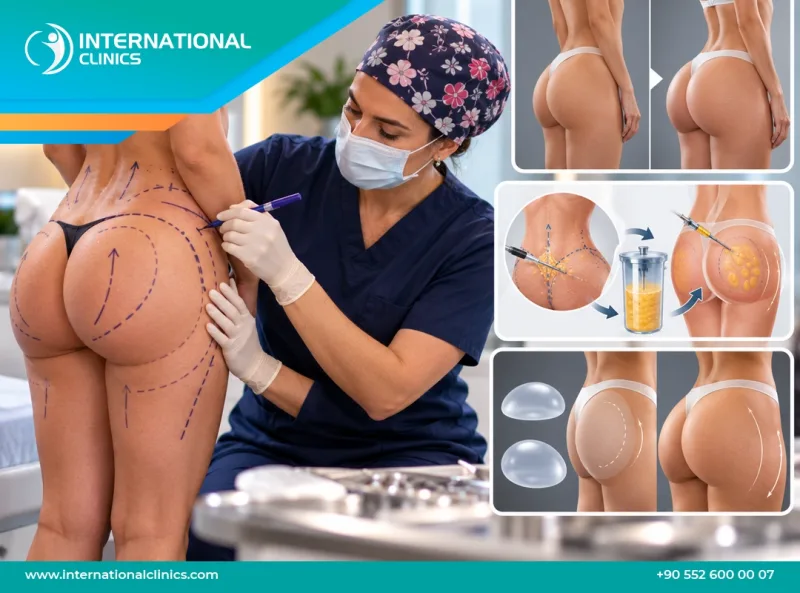
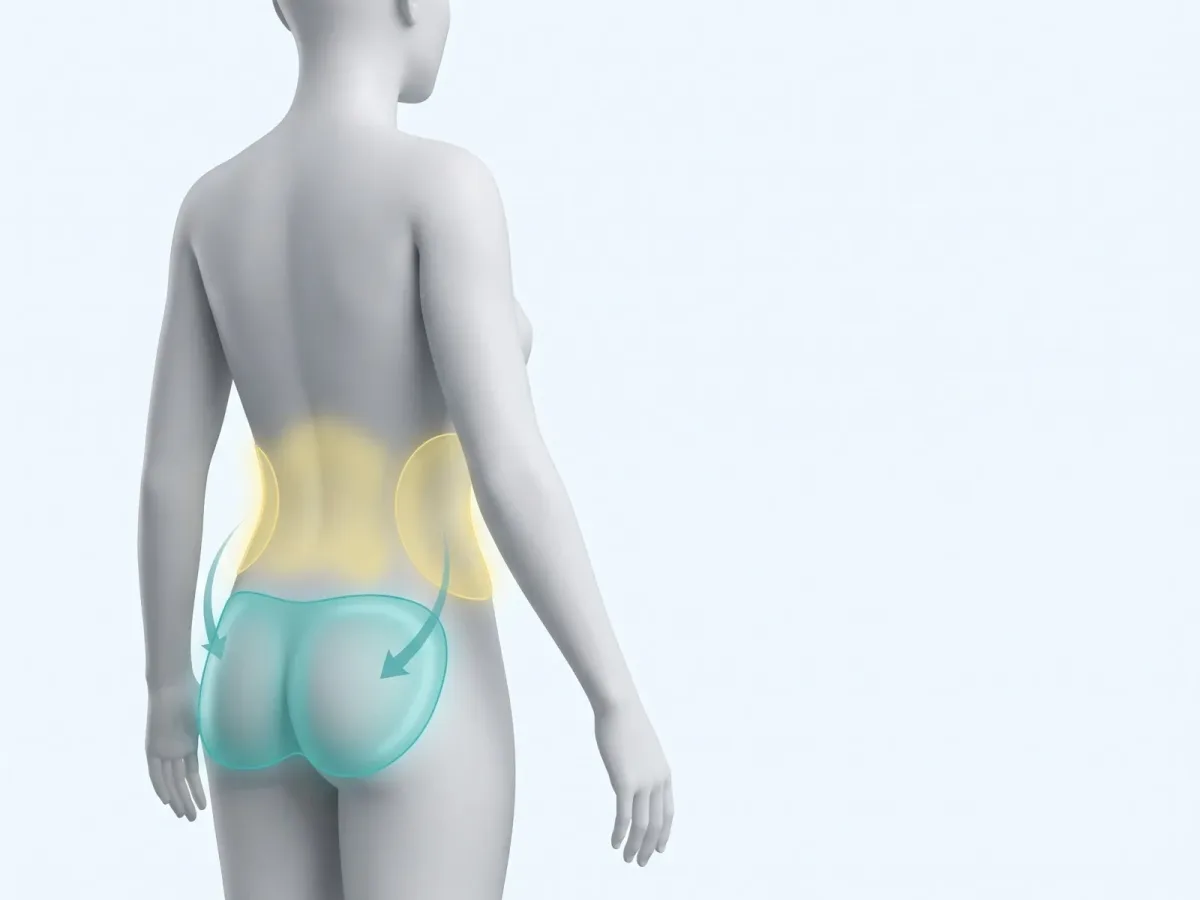
A Brazilian butt lift is a cosmetic operation in which fat is removed by liposuction from areas such as the abdomen, waist, back and thighs, then purified and injected into the buttocks to add volume and improve their roundness. The operation therefore combines contouring of the treated areas with buttock enlargement using the patient's own fat, without implants (Source: Cleveland Clinic).

3. What does a Brazilian butt look like?
A Brazilian butt is full, round and lifted, with most of its fullness in the upper part, paired with a slim waist that sharpens the contrast with the hips and a clear curve in the lower back. The surgeon aims for a result that suits your height and pelvic width: the goal is not the largest possible size but a harmonious shape.
4. Is a Brazilian butt lift dangerous?
This was once among the riskiest cosmetic operations, mainly because fat was injected into the gluteal muscles near large veins, where it can enter the bloodstream and travel to the lungs (fat embolism). Plastic surgery societies therefore advised injecting fat under the skin only and never into the muscle (Source: Joint safety statement of plastic surgery societies on gluteal fat grafting). When an experienced surgeon follows this rule in a well-equipped hospital, the risk becomes much lower.
5. When will I see the results of a Brazilian butt lift?
The buttocks look bigger right after surgery, but part of that volume is swelling. The body absorbs some of the transferred fat in the first months, and the rest settles. The final result usually becomes clear after 3 to 6 months, so the shape should not be judged before then.

Before the Operation
6. Who is a good candidate for a Brazilian butt lift?
A good candidate is a fully grown adult in good general health, with realistic expectations and enough excess fat elsewhere on the body to transfer to the buttocks (Source: Cleveland Clinic). Ideally, the weight is stable and the patient does not smoke, or stops smoking several weeks before surgery.
7. Can a slim person have a BBL?
If you do not have enough fat to transfer, you may not be a candidate for this operation, and buttock (silicone) implants may suit you better (Source: Cleveland Clinic). In some cases a "skinny BBL" can be performed with a smaller amount of fat to improve the shape rather than greatly enlarge it; the surgeon decides this on examination.
8. What is the difference between a Brazilian butt lift and buttock implants?
| Comparison | Brazilian butt lift | Silicone implants |
|---|---|---|
| Material | The patient's own fat | A solid silicone implant |
| Suits | People with excess fat | Slim people or those wanting more volume |
| Extra benefit | Contouring of the liposuction areas | Stable volume that is not absorbed |
| Scar | Very small openings | A larger incision in the buttock crease |
Injecting liquid silicone or other substances into the buttocks, however, is not permitted and causes serious complications: the U.S. Food and Drug Administration has not approved any injectable filler for buttock augmentation (Source: U.S. Food and Drug Administration (FDA)).
For more details, see our article: Butt implants vs. BBL.
9. Are there non-surgical alternatives to a Brazilian butt lift?
There are alternatives with limited effect, such as exercises that strengthen the gluteal muscles and lift their shape slightly, and some approved filler injections for a small, temporary improvement. Drinks, creams, oils and herbs that promise a bigger butt have no scientific evidence behind them. A true BBL result cannot be achieved without surgery.
For more details, see our article: Non-surgical BBL.
10. How do I prepare for a Brazilian butt lift?
- Send photos of your body from the front, back and sides to the medical consultant, with your height, weight and any illnesses or medications.
- Stop smoking several weeks before surgery.
- Do not stop any medication on your own; follow the surgeon's instructions.
- Get a special BBL pillow and a compression garment ready, and arrange about two weeks off.
The Operation
11. How is a Brazilian butt lift performed?
The operation has three stages: the surgeon removes fat by liposuction from areas such as the abdomen, waist, back and thighs; the fat is purified; then it is injected in small amounts into the fat layer under the skin of the buttocks only, not into the muscle (Source: Joint safety statement of plastic surgery societies on gluteal fat grafting). Afterwards, the liposuction areas are wrapped in compression dressings to reduce bleeding and swelling (Source: Cleveland Clinic).
12. Is the operation painful? What kind of anesthesia is used?
The operation is usually performed under general anesthesia, so the patient feels nothing during it. Afterwards, pain is felt more in the liposuction areas than in the buttocks; it eases within one to two weeks and is controlled with painkillers (Source: Cleveland Clinic).
13. What is the difference between a standard BBL and a VASER BBL?
The difference lies in how the fat is removed: the standard technique uses a conventional cannula, while VASER uses ultrasound to break up the fat before suctioning it, which helps achieve more precise contouring of the waist and abdomen. The standard technique starts from €3,000 and VASER from €3,500; the surgeon will suggest what best suits your body.
14. How much fat is transferred to the buttocks?
The amount varies from patient to patient according to body size, available fat and the desired shape, and the surgeon determines it on examination. The rule is that the safe amount is what the buttock tissues can take without excessive pressure, because over-injection increases fat absorption and the risk of complications.
After the Operation and Results
15. When can I sit after a Brazilian butt lift?
The patient should not sit on the buttocks or sleep on the back for at least two weeks, but stand or sleep on the stomach or sides instead. After a few weeks, short periods of sitting on a special pressure-relieving pillow are allowed, and sitting without it should wait about 8 weeks (Source: Cleveland Clinic).
16. How long is the recovery after a Brazilian butt lift?
| Stage | What happens |
|---|---|
| Weeks one and two | Pain, swelling and bruising in the liposuction areas; light walking is required from day one |
| After two weeks | Pain eases and many return to light work, sitting on the special pillow |
| Up to about 8 weeks | Wearing the compression garment and sitting on the pillow |
| 3 to 6 months | Swelling subsides and the final result settles |
(Source: Cleveland Clinic, American Society of Plastic Surgeons (ASPS))
17. How long do BBL results last? Does the fat dissolve?
Part of the transferred fat is absorbed in the first months, but the fat that survives in its new place stays for many years, and the result can last more than ten years (Source: Cleveland Clinic). This fat, however, responds to your weight like the rest of your body fat, so keeping a stable weight is the most important way to preserve the result.
18. When can I return to exercise?
Walking is required from day one to prevent blood clots. Strenuous exercise, especially glute workouts, usually has to wait several weeks and should only start with the surgeon's approval.
Risks
19. What are the risks of a Brazilian butt lift?
Risks of buttock cosmetic surgery include (Source: American Society of Plastic Surgeons (ASPS)):
| Risk | What to know |
|---|---|
| Fat embolism | The most serious complication, greatly reduced by injecting fat under the skin only |
| Venous blood clots | Reduced by early walking and the prevention your doctor prescribes |
| Fluid collection (seroma) | May need to be drained |
| Death of part of the transferred fat (fat necrosis) | May appear as firm lumps |
| Asymmetry | May require a revision operation |
| Infection, changes in sensation and skin discoloration | Possible complications, as with any surgery |
20. What are the signs of a failed Brazilian butt lift?
Signs that call for a visit to your surgeon include a clear, persistent difference between the two sides after the swelling has gone, firm lumps, skin rippling, or loss of most of the added volume. The result should not be judged before 3 to 6 months.
Sudden shortness of breath, chest pain, or a swollen, painful leg after surgery, however, is an emergency that requires going to the emergency department immediately.
For more details, see our article: Bad BBL: signs and how to fix it.
Video
21. Do you have a video explaining the Brazilian butt lift?
Yes. This video from International Clinics shows the Brazilian butt lift procedure.
22. Do you have a video of someone who had a Brazilian butt lift?
Yes. In these two short videos from International Clinics, two patients share their Brazilian butt lift experience in Istanbul, from arriving at the airport to their stay and the operation.
Brazilian Butt Lift in Turkey
23. Why do so many people choose Turkey for a Brazilian butt lift?
Because costs in Turkey are much lower than in Europe and America, with high quality: the hospitals we work with hold international accreditations and are registered with Health Türkiye, the official medical tourism program, and the surgeons have long experience in body contouring and fat transfer. International Clinics is the link between you and the best doctors and hospitals contracted with us in Turkey.

24. How many days do I need to stay in Turkey after a Brazilian butt lift?
A stay of 7 to 10 days is usually enough, until the first follow-up visit and the surgeon confirms the wounds are healing well. On the flight home you will need the special pillow and should walk down the aisle from time to time, because sitting for long periods after surgery increases the risk of blood clots (Source: NHS).
25. What does International Clinics offer Brazilian butt lift patients?
Your journey begins with a free remote consultation with medical consultants who speak your language: you send your photos, your case is presented to the right doctor, and you then receive a clear quote showing what it includes. After you return home, your follow-up continues for a full year.
26. Who is the best doctor for a Brazilian butt lift in Turkey?
No single doctor is "the best" for every patient. The right doctor for you is a plastic surgeon experienced in body contouring and fat transfer, who injects fat under the skin only and shows you real photos of cases similar to yours. Among the experienced doctors contracted with us for this operation:



27. What is the best hospital for a Brazilian butt lift in Turkey?
The best hospital for you is the internationally accredited hospital where your surgeon works, with an intensive care unit and an experienced anesthesia team, because this operation cannot be performed safely in a small clinic. Among the hospitals contracted with us in Istanbul:
Medical review and disclaimer:
This article was reviewed by a specialist physician contracted with International Clinics. It is general health information, not a substitute for medical advice, and results vary between individuals.