
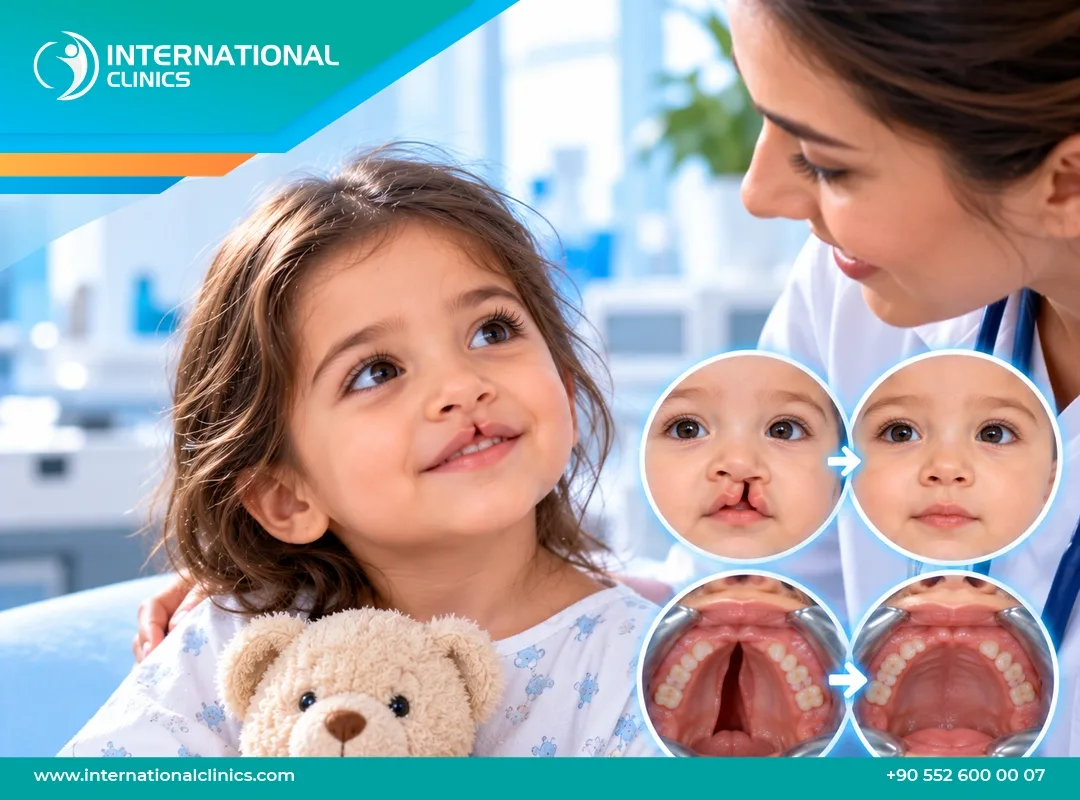
Cleft lip surgery (cleft lip repair) is usually done between 3 and 6 months of age under general anaesthetic. It takes 1 to 2 hours, and most babies stay in hospital for 1 to 2 days. Cleft palate surgery usually follows at 6 to 12 months and is recommended before 18 months. Later operations, if needed, include an alveolar bone graft at 8 to 12 years and nose or jaw surgery from the teenage years onwards. (Sources: NHS and CDC)
This guide is for parents preparing for their childs operation and for adults considering secondary surgery: when and how each operation is done, recovery week by week, feeding, real numbers for complications and results, and how to choose the best center for cleft lip and palate treatment in Turkey using criteria you can check yourself.
Key facts: cleft lip and palate treatment at a glance
- Lip repair: usually at 3 to 6 months, under general anaesthetic; the operation takes 1 to 2 hours and the hospital stay is 1 to 2 days. (Source: NHS)
- Palate repair: usually at 6 to 12 months; the operation takes about 2 hours, the stay is 1 to 3 days and the scar is inside the mouth. (Source: NHS)
- Later: speech surgery at around 5 years in some children, a bone graft at 8 to 12 years and braces at 12 to 15 years. (Sources: Cleveland Clinic and NHS)
- Scar: no lip repair is scar-free, but the scar fades and becomes less noticeable as the child grows. (Sources: NHS and Cleveland Clinic)
- Team: care is best delivered by a multidisciplinary cleft team. (Source: ACPA)
- Outlook: most children treated at the right time grow up to have completely normal lives. (Source: NHS)
Cleft lip and palate in brief
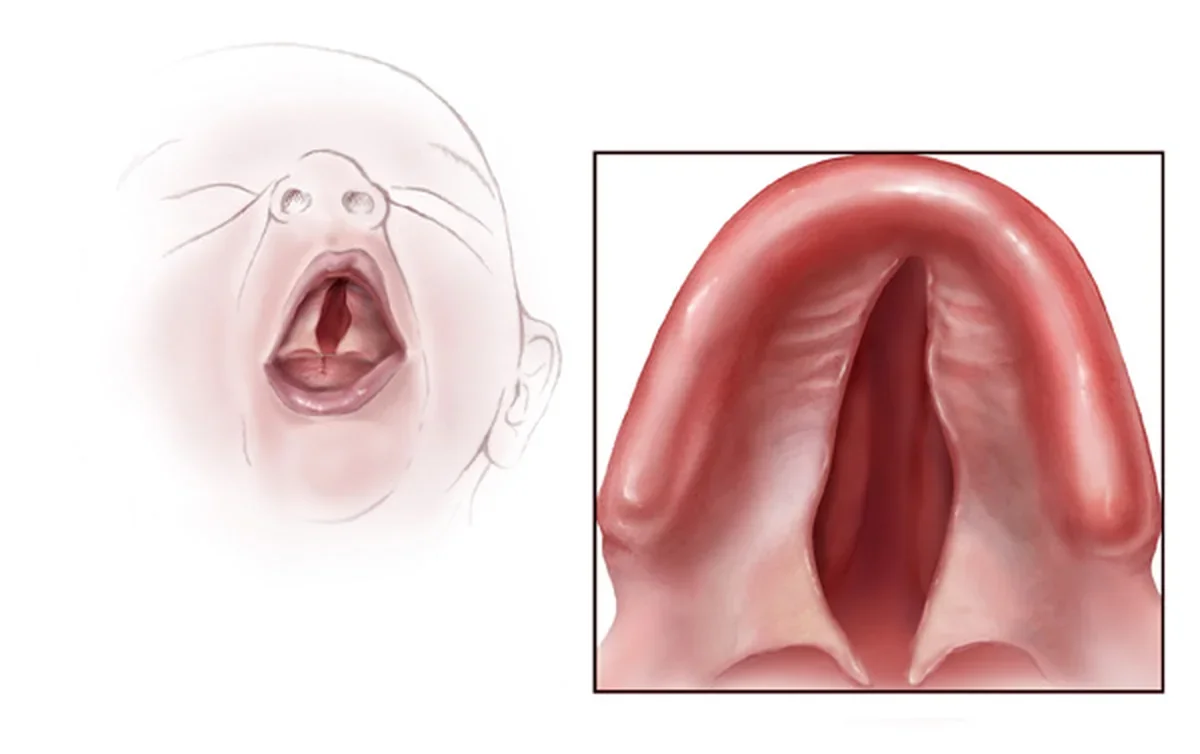
A cleft lip is a gap in the upper lip, from a small notch to a split reaching the nose; a cleft palate is a gap in the roof of the mouth, and a baby can have one or both. They form when the tissues do not join completely between the 4th and 9th weeks of pregnancy. In the United States about 1 in 1,031 babies is born with a cleft lip with or without a cleft palate, and about 1 in 1,563 with a cleft palate alone. (Source: CDC)
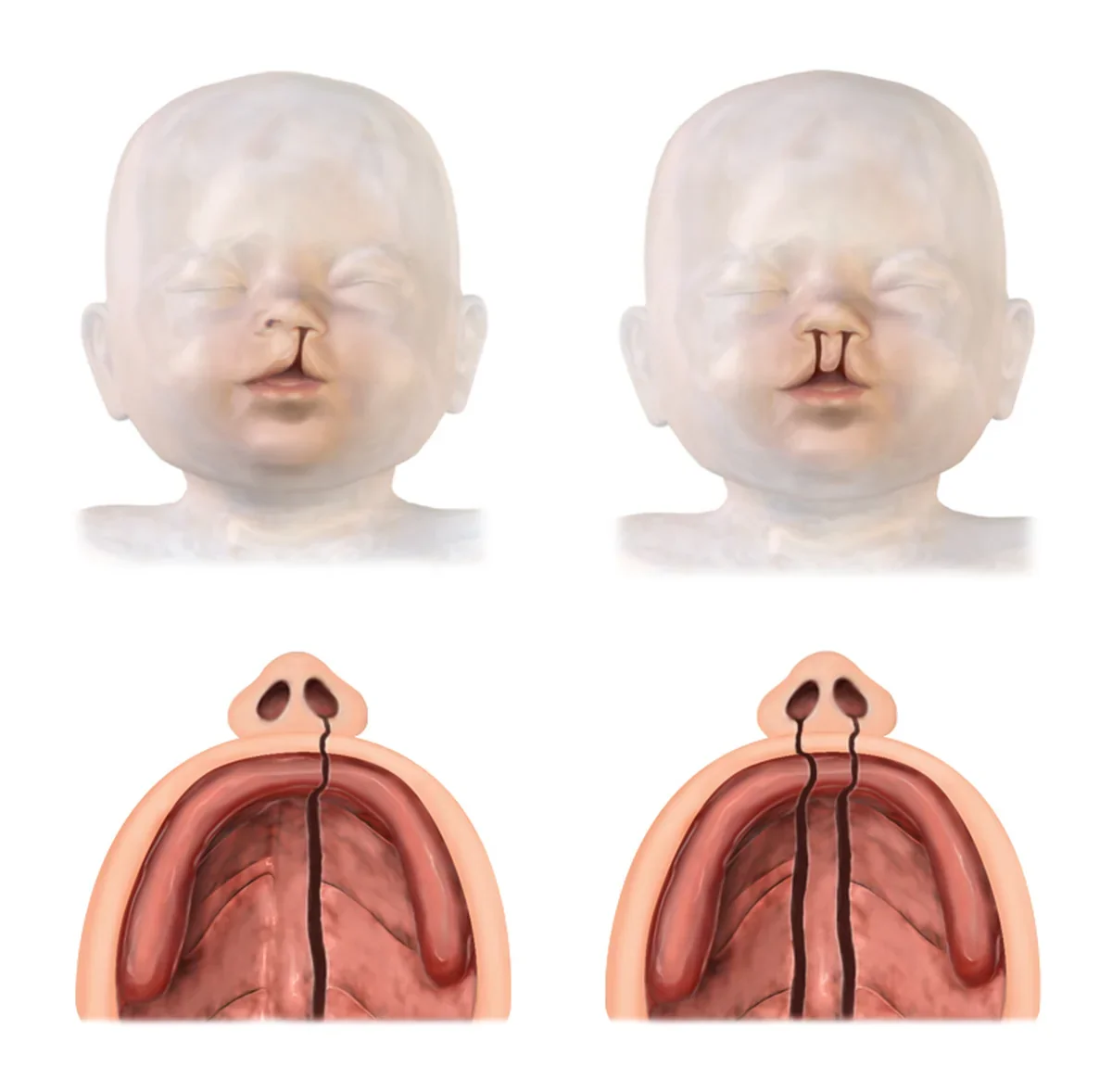
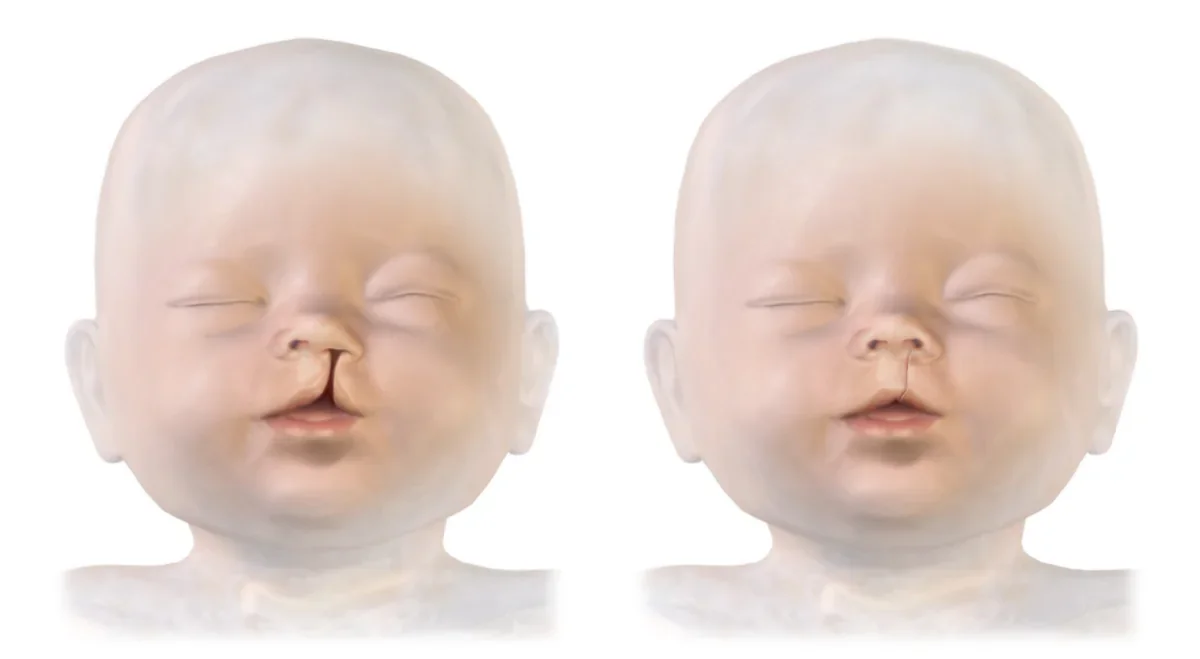
A cleft can be on one side (unilateral) or both sides (bilateral), and complete or incomplete. A submucous cleft palate is covered by the lining of the roof of the mouth, so it may not be noticed until later in life. (Sources: NHS and CDC)
The cause is unknown for most babies and is thought to combine genes and other factors; smoking in pregnancy, diabetes before pregnancy and some epilepsy medicines raise the risk. If a parent or a previous child had a cleft, the chance of another baby with a cleft is around 2 to 8%. (Sources: CDC and NHS)
Many cleft lips are found on the routine scan at around 20 weeks of pregnancy; a cleft palate alone is much harder to see on ultrasound and is usually found at the newborn examination. (Source: NHS)
Cleft lip and palate surgery timeline by age
Not every child needs every step below: the plan depends on the type and size of the cleft and any associated conditions, and the cleft team sets the timing. (Sources: AAP and CDC)

| Age | Procedure | Aim |
|---|---|---|
| First week | Cleft team visit, feeding support; lip taping or nasoalveolar moulding | Feeding, weight gain, narrowing the gap |
| 3 to 6 months | Cleft lip repair (cheiloplasty) | Close the lip and improve the shape of the nose |
| 6 to 18 months | Cleft palate repair (palatoplasty) | Close the roof of the mouth and rebuild the muscles for speech |
| 18 months, 3 and 5 years | Speech assessments, hearing tests, ear tubes if needed | Find and treat speech and hearing problems early |
| Around 5 years | Speech surgery if needed | Reduce nasal speech and air escaping through the nose |
| 6 to 7 years | Palate expansion with an orthodontic appliance if needed | Prepare the jaw for the bone graft |
| 8 to 12 years | Alveolar bone graft (gum line) | Support the permanent teeth and stabilise the jaw |
| 12 to 15 years | Orthodontic treatment (braces) | Align the teeth and prepare for jaw surgery if needed |
| Teenage years and beyond | Rhinoplasty, jaw surgery, scar revision if needed | Improve appearance, breathing and the bite, with follow-up to about age 21 |
Ages vary between sources: palate repair at 6 to 12 months (NHS), 9 to 14 months (American Academy of Pediatrics) or within 18 months (CDC), and the bone graft at 6 to 10 or 8 to 12 years. (Sources: NHS, AAP, CDC and Cleveland Clinic)
Before cleft lip and palate surgery: assessment and preparation
The first cleft team visit
The American Academy of Pediatrics advises that a newborn with a cleft sees the cleft team within a week of leaving hospital, to check feeding and growth, screen for other problems and plan the next steps. (Source: AAP)
Lip taping and nasoalveolar moulding (NAM)
Before lip surgery, the team may use lip taping, a nasal elevator or a nasoalveolar moulding (NAM) device that gradually repositions the lip and gum tissue. (Source: Cleveland Clinic)
NAM usually starts in the first days after birth and continues until the lip repair at around 3 months; it needs an experienced team and committed parents. (Source: Arch Craniofac Surg)
Getting ready for the day of surgery
- Your child will usually have a pre-admission appointment in the month before the operation; bring their health record. (Source: Great Ormond Street Hospital)
- Keep your baby away from anyone with a cold, flu or other infection in the weeks before surgery, as illness can lead to postponement. (Source: Great Ormond Street Hospital)
- Do not put moisturiser or petroleum jelly on the lips on the day of surgery, and follow the anaesthetists fasting instructions exactly. (Source: Great Ormond Street Hospital)
- Arrange accommodation and care for siblings in advance, and ask what the hospital supplies (nappies, formula). (Source: ACPA)
- On the day, the surgeon and anaesthetist examine your child, you sign the consent form, and you can usually stay with your child until they go into the operating room. (Source: ASPS)
Anaesthesia and your babys safety
Both lip and palate repair are done under general anaesthetic, given by an anaesthetist who specialises in babies and children. One parent can usually stay until the baby is asleep. A breathing tube is then placed in the airway and a cannula in a vein for fluids during and after the operation. (Sources: Great Ormond Street Hospital and Great Ormond Street Hospital)
Anaesthetic complications are very rare, and an antibiotic and tranexamic acid (to reduce bleeding) are usually given. Cleveland Clinic describes the risks of cleft surgery as low: bleeding, infection and damage to nerves or tissues. (Sources: Great Ormond Street Hospital, Great Ormond Street Hospital and Cleveland Clinic)
Cleft lip repair surgery (cheiloplasty)
How is cleft lip surgery done?
The surgeon rebuilds the lip and nose, sometimes under an operating microscope, and may repair the front of the palate at the same time. The wound is closed with dissolvable or removable stitches. (Sources: Great Ormond Street Hospital and ASPS)
Several well-known techniques are used for a one-sided (unilateral) cleft lip: (Source: Arch Craniofac Surg)
- Millard rotation-advancement: rotates the inner segment and advances the outer one, preserving Cupids bow and the philtrum. (Source: Arch Craniofac Surg)
- Fisher anatomical subunit repair: incisions follow the facial subunits, planned with caliper measurements. (Source: Arch Craniofac Surg)
- Tennison-Randall: a triangular flap borrowed from the outer side corrects a short inner segment. (Source: Arch Craniofac Surg)
- Extended Mohler: a modification of the Millard approach that mirrors the philtral length of the normal side on both segments. (Source: Arch Craniofac Surg)
Many surgeons now also reposition the nasal cartilages during the lip repair (primary cleft rhinoplasty). What matters most is the surgeons experience with their technique and their results in similar cases. (Source: Arch Craniofac Surg)
Cleft palate repair surgery (palatoplasty)
How is cleft palate surgery done?
Palate repair closes the opening between mouth and nose for speech and swallowing and reduces middle-ear fluid. A key step is rejoining the soft palate muscles, which close off the nose during speech. (Sources: Cleveland Clinic and Great Ormond Street Hospital)
Recognised palate repair techniques include: (Source: Plast Reconstr Surg Glob Open)
- Von Langenbeck: two flaps moved to the midline close the hard palate without tension. (Source: Plast Reconstr Surg Glob Open)
- Bardach two-flap: flaps sutured to the gum margins minimise exposed bone. (Source: Plast Reconstr Surg Glob Open)
- Veau-Wardill-Kilner: a V-Y pushback lengthens the soft palate. (Source: Plast Reconstr Surg Glob Open)
- Furlow double-opposing Z-plasty: mirrored Z-flaps create a muscle sling and lengthen the soft palate. (Source: Plast Reconstr Surg Glob Open)
- Intravelar veloplasty / Sommerlad: the soft palate muscles are re-oriented from oblique to transverse. (Source: Plast Reconstr Surg Glob Open)
- Buccal flaps: cheek-lining flaps allow tension-free closure and lengthen the palate. (Source: Plast Reconstr Surg Glob Open)
Cleft lip repair vs cleft palate repair

| Cleft lip repair | Cleft palate repair | |
|---|---|---|
| Usual age | 3 to 6 months | 6 to 12 months, and before 18 months |
| Aim | Close the lip and improve the nose | Close the roof of the mouth and repair the palate muscles for speech |
| Operation time | 1 to 2 hours | About 2 hours, up to 4 |
| Hospital stay | 1 or 2 nights | 1 to 3 nights, usually 2 |
| Stitches | Dissolvable, or removed after 5 to 7 days | Dissolve within 2 to 3 weeks |
| Scar | On the lip; takes 2 years or longer to settle | Inside the mouth, not visible |
| Food afterwards | Feed as soon as awake, as before surgery | Milk and purée; no hard foods for 2 weeks |
| First wound check | About 1 week | About 5 days |
These figures are typical of published guidance; each teams protocol may differ slightly, so ask your surgeon for a written plan for your child. (Sources: NHS, Great Ormond Street Hospital and Great Ormond Street Hospital)
Cleft lip surgery recovery week by week
Most babies heal without problems. Here is what to expect in general; your surgeons instructions always come first. (Source: MedlinePlus)

Days 1 and 2: in hospital
The mouth will be sore after surgery, so the nurses give pain relief, especially before feeds. Some bleeding, swelling and bruising of the lip are normal and usually settle within the first few days. After palate repair, oxygen levels are monitored, and some bleeding, mostly from the nose, is common in the first hours and rarely needs treatment. (Sources: Great Ormond Street Hospital and Great Ormond Street Hospital)
Your child usually goes home after one or two nights, once breathing and swallowing are fine, with instructions on wound care and warning signs. (Sources: ASPS and Great Ormond Street Hospital)
Week 1
- Give regular pain relief (paracetamol or ibuprofen as prescribed), ideally 30 minutes before feeds. (Source: Great Ormond Street Hospital)
- Rinse the mouth with cooled boiled water after feeds and medicine, and keep the lip clean and free of scabs. (Source: Great Ormond Street Hospital)
- No dummy, and no fingers or toys in the mouth. (Source: Great Ormond Street Hospital)
- Non-dissolvable lip stitches come out at 5 to 7 days under mild sedation or a short anaesthetic; otherwise the wound is checked at about one week. (Source: Great Ormond Street Hospital)
- After palate repair, raise the head of the cot and hold your baby upright to reduce swelling; the wound is checked at about 5 days. (Source: Great Ormond Street Hospital)
Week 2
Continue regular pain relief, mouth rinsing and no dummy until at least the end of week 2, unless the surgeon says otherwise; after palate repair, no hard foods for two weeks. (Sources: Great Ormond Street Hospital and Great Ormond Street Hospital)
Weeks 3 and 4
Palate stitches usually dissolve within two to three weeks; keep cleaning the mouth until they have gone. Lip swelling may take a few weeks to settle completely, and your baby gradually returns to their usual feeding pattern. (Sources: Great Ormond Street Hospital and Great Ormond Street Hospital)
From month 3 to year 2
A follow-up appointment is usually booked about three months after lip repair and three to four months after palate repair; the lip scar takes longer to mature, as the next section explains. (Sources: Great Ormond Street Hospital and Great Ormond Street Hospital)
Feeding your baby before and after cleft surgery
Before surgery
Most babies with a cleft lip alone can breastfeed or use a regular bottle. Babies with a cleft palate usually have a weak suck and need a special bottle, with support from a lactation consultant or cleft nurse. (Source: AAP)
Otherwise, expressed breast milk can be given by spoon, cup, bottle or syringe. See your doctor if your baby is not gaining weight. (Sources: Cleveland Clinic and MedlinePlus)
After lip repair
Your baby can feed as soon as they wake from the anaesthetic, although the first feed may be difficult because the lip is still numb. Breastfeeding support can continue after surgery. (Sources: Great Ormond Street Hospital and Cleveland Clinic)
After palate repair
Start with milk and purée; cereals mixed with milk help keep fluid intake up, and hard foods are avoided for two weeks. If your baby refuses the bottle, fluids can be given by spoon, syringe or beaker, and a nasogastric tube may be used for the first few feeds if needed. (Source: Great Ormond Street Hospital)
Cleft lip scar care
A scar is unavoidable after lip repair, but it is small and pink at first and becomes less noticeable as the child grows. There is no truly scar-free cleft lip surgery, and any promise of one is not accurate. (Sources: Cleveland Clinic and NHS)
- With dissolvable stitches you may be asked to massage the area to help them break down; only start massage when the team tells you to. (Source: Great Ormond Street Hospital)
- Be patient: the scar starts thick, short and lumpy, then softens, lengthens and fades, and takes two years or longer to settle. (Source: Great Ormond Street Hospital)
- If the scar stays noticeable or uneven, or the lip needs further correction, it can be revised with later surgery. (Sources: MedlinePlus and Great Ormond Street Hospital)
Risks of cleft lip and palate surgery, in numbers
Cleft surgery is usually successful and its risks are low, but here are the possible complications and how often studies report them. (Source: Cleveland Clinic)
Early complications
- Infection: uncommon; an antibiotic is given during or after the operation. (Sources: Great Ormond Street Hospital and Great Ormond Street Hospital)
- Bleeding: some bleeding is normal in the first hours, mostly from the nose after palate repair, and rarely needs further treatment. (Source: Great Ormond Street Hospital)
- Breathing: internal swelling can cause temporary breathing difficulty; rarely, a temporary nasal tube is needed. (Sources: Great Ormond Street Hospital and Great Ormond Street Hospital)
- Wound breakdown: the repair may come apart, or the lip may need further correction with another operation. (Source: Great Ormond Street Hospital)
Oronasal fistula after palate repair
A fistula is a small hole that remains between the mouth and nose after palate repair. It sometimes closes without treatment, but further surgery is sometimes needed. (Source: Great Ormond Street Hospital)
A systematic review of 223 publications covering 71,238 patients found median reported fistula rates of 4.9% in studies from the 2000s, 6.7% in the 2010s and 10.7% in the 2020s. Rates vary widely between centres, so ask your surgeon for their own figure. (Source: Cleft Palate Craniofac J)
Further surgery to improve speech
Some children need a second operation because the palate does not fully close off the nose during speech (velopharyngeal insufficiency). Cleveland Clinic states that up to 40% of children with a cleft palate will need further surgery to improve their speech, usually at around age 5. (Source: Cleveland Clinic)
A recent systematic review of 58 studies and 16,725 patients found a weighted mean rate of speech surgery of 17.5%, with a wide range between studies (0% to 59%); rates were higher in bilateral clefts. (Source: Plast Reconstr Surg Glob Open)
Another analysis of 54 studies found that 19% needed speech-correcting surgery after a straight-line soft palate repair, compared with 6% after the Furlow technique and 7% after buccal flaps. Ask your surgeon which technique they use, and why. (Source: Clin Oral Investig)
Alveolar bone graft failure
In a systematic review of alveolar bone grafts using bone from the hip, failure rates ranged from 1% to 45.1% depending on the study and how failure was defined. Failure was linked to older age at grafting, poor oral hygiene and the canine or lateral incisor having already erupted, so grafting is ideally done before these teeth come through, typically at ages 9 to 11. (Source: Front Oral Health)
Cleft lip and palate treatment results: what to expect before and after
The American Society of Plastic Surgeons describes the outcome after surgery and supporting therapies as usually excellent; with early intervention, children are expected to develop a normal ability to eat safely, speak and breathe. (Source: ASPS)
Most treated children grow up to have completely normal lives, and most have no other serious medical problems. Treatment can take years and several operations, and some children feel self-conscious about the lip or scar, so psychological support matters. (Sources: NHS and Cleveland Clinic)
In cleft lip before and after photos, the final appearance depends on how severe the original cleft was. Ask the surgeon for photos of similar cases they treated, and remember that an early scar is not its final look. (Sources: MedlinePlus and Great Ormond Street Hospital)
Speech, hearing and teeth after the first operations
Speech therapy and speech surgery
A speech and language therapist assesses your child at 18 months, 3 years and 5 years and follows them until fully grown; a thin nasal camera may be used at 4 to 5 years before any speech surgery is decided. (Sources: NHS and Cleveland Clinic)
Some speech difficulties can persist after surgery because of problems with the palate muscles, and speech therapy helps children overcome them. (Source: MedlinePlus)
Hearing and ear tubes (grommets)
Children with a cleft palate are prone to glue ear, fluid behind the eardrum that can affect hearing. Hearing may improve after palate repair; if not, grommets drain the fluid, and hearing aids are sometimes advised. (Sources: NHS and Cleveland Clinic)
Some children have ear tubes placed during the lip surgery itself. Hearing tests should start early and be repeated regularly. (Source: MedlinePlus)
Orthodontics and the alveolar bone graft
If the cleft involves the gum line, a bone graft fills the gap to support the permanent teeth. Palate expansion is often needed around age 6 or 7, and braces follow once the permanent teeth are through. (Sources: Cleveland Clinic and NHS)
Rhinoplasty and jaw surgery in the teenage years
Later, operations may improve the lip and nose, close remaining mouth-to-nose openings, improve breathing, or straighten the jaw with orthognathic surgery after orthodontic preparation. Read more about reconstructive rhinoplasty in Turkey and teenage rhinoplasty in Turkey. (Sources: Cleveland Clinic and NHS)
Your childs cleft care team
The best cleft care comes from specialists working together, from before birth through childhood and sometimes into early adulthood: plastic or maxillofacial surgeons, speech-language pathologists, audiologists, ENT specialists, paediatric dentists, orthodontists and prosthodontists, paediatricians, geneticists, specialist nurses and nutritionists, psychologists and social workers. (Sources: ACPA and AAP)
In the UK, patients attend regular appointments at a cleft centre until around age 21, which shows that treatment is a long-term plan rather than a single operation. (Source: NHS)
Cleft lip and palate surgery for adults and secondary surgery
Adults born with a cleft can improve their result with secondary surgery, such as lip scar revision, rhinoplasty to improve the shape of the nose or breathing, jaw surgery if the upper jaw is set back, and closure of a remaining fistula. Read more about facial reconstructive surgery in Turkey. (Sources: Cleveland Clinic and NHS)
A cleft never repaired in childhood can still be repaired, and surgery is worthwhile, though results are less ideal. In a report on 131 patients over 10 years old, every speech measure improved after palate repair but few achieved normal speech, and the imperfect lip and nose appearance was well accepted by patients and families. (Source: Indian J Plast Surg)
How to choose the best center for cleft lip and palate treatment in Turkey
The best center for cleft lip and palate treatment in Turkey is not a name anyone can hand you, but the center that meets criteria you can verify: a complete cleft team, documented experience, official authorisation and follow-up into adulthood. Cleft care is best managed by a team of specialists working with the family on a long-term plan. (Source: ACPA)
Criterion 1: a multidisciplinary cleft team
The American Cleft Palate-Craniofacial Association requires its approved teams to have a care coordinator, an orthodontist, a speech-language pathologist and a surgeon, with access to the other specialists listed in the care team section above. Ask any center you are considering which of these specialists are actually in place, and who will see your child. (Source: ACPA)
- A nurse experienced in feeding babies with clefts. (Source: AAP)
- A paediatric anaesthetist and a ward equipped for babies. (Source: Great Ormond Street Hospital)
Criterion 2: surgeon experience, case volume and outcomes
Ask how many lip and palate repairs the team performs and for its own results rather than general averages: its fistula rate, and how often their patients need further speech surgery. ACPAs team standards make outcomes assessment one of the core components of quality. (Source: ACPA)
Criterion 3: official authorisation and accreditation
In Turkey, every hospital and intermediary serving international patients must hold a Ministry of Health International Health Tourism Authorization Certificate (Regulation No. 30123, 2017). Ask the hospital and the coordinating company for it, and verify any international accreditation the hospital claims, such as Joint Commission International (JCI). (Source: HealthTürkiye)
Criterion 4: follow-up into adulthood after you go home
After the infant operations, team visits may drop to about once a year, and dental care, orthodontics, speech therapy and paediatric care can usually happen locally in contact with the team. Ask for a written plan with assessment dates and a way to reach the surgeon; ACPAs standards include transition and adult care. (Sources: ACPA and ACPA)
How International Clinics coordinates cleft treatment
Your journey with us starts with an online consultation in which the medical team reviews your childs photos and reports. We then coordinate the examination and operation with the surgeon and a paediatric anaesthetist in a hospital, plan your stay until the first wound check, and give you a medical report and written follow-up plan for your doctors at home. We do not promise a guaranteed result or an invisible scar, but a clear plan you can check against the criteria above.
Travel timing and your stay in Istanbul
There is no single agreed waiting time before a baby can fly after cleft surgery; the surgeon decides after checking the wound. Plan a stay that covers the first wound check (about 5 days after palate repair, a week after lip repair) and removal of any non-dissolvable stitches at 5 to 7 days. (Sources: Great Ormond Street Hospital and Great Ormond Street Hospital)
The UK Civil Aviation Authority notes that the airline makes the final decision to carry a passenger with a medical condition, and that the doctor should send medical details in advance, for example on the MEDIF form. Ask the surgeon for a report before you book. (Source: UK CAA)
Documents to bring
- Valid passports for your child and everyone travelling with them. (Source: ACPA)
- Previous medical reports, the growth and vaccination record, and any hearing test results. (Source: Great Ormond Street Hospital)
- A list of medicines, allergies and previous operations, and a notebook for questions. (Source: ACPA)
- The special feeding bottles, formula and nappies your baby is used to. (Source: ACPA)
Cleft lip and palate surgery cost in Turkey
There is no single price: the cost depends on the operation (lip, palate, bone graft or secondary surgery), how many are needed, age, hospital stay and tests, and is given as a written quote after assessment of photos and reports. For more on reconstructive and cosmetic surgery with us, see our guide to plastic surgery in Turkey.
Questions to ask the surgeon before cleft lip and palate surgery
Cleft organisations encourage parents to speak openly with the team, ask questions weeks or months before surgery and note down worries to discuss at appointments. (Sources: ACPA and AAP)
- What type of cleft does my child have, and how many operations are likely?
- Which technique will you use, and why?
- Who will give the anaesthetic, and do they specialise in babies?
- What is the plan for feeding and pain relief after surgery?
- Are the stitches dissolvable, and when is the first wound check?
- When can we fly, and will you write a report for the airline?
- Who will follow speech, hearing and teeth after we go home, and how do we contact you?
When to call a doctor urgently after surgery
Contact the surgical team or a doctor, or go to an emergency department, if you notice any of the following: (Sources: Great Ormond Street Hospital, Great Ormond Street Hospital and MedlinePlus)

- A raised temperature, redness or swelling of the wound, irritability or loss of appetite, which can be signs of infection. (Sources: Great Ormond Street Hospital and Great Ormond Street Hospital)
- Oozing from the wound, or the wound breaking open. (Source: Great Ormond Street Hospital)
- Difficulty breathing, or noisy breathing during sleep after palate repair. (Source: Great Ormond Street Hospital)
- Refusing feeds or not gaining weight. (Source: MedlinePlus)
- Any new problem between follow-up visits. (Source: MedlinePlus)
Illustration credits: BruceBlaus (Blausen Medical) via Wikimedia Commons (1, 2), CC BY-SA 4.0, English labels removed; cleft palate drawing: CDC (public domain).
Medical review and disclaimer:
This article was reviewed by a specialist physician contracted with International Clinics. It is general health information, not a substitute for medical advice, and results vary between individuals.

