Upper eyelid surgery in Turkey costs 1,500 to 2,500 EUR at International Clinics, and the package includes consultations, medical fees, accommodation and transfers. The operation (upper blepharoplasty) removes the excess skin, and sometimes fat, of the upper eyelid through an incision hidden in the natural crease, is usually done under local anaesthesia, and the final quote is confirmed after the surgeon has examined your eyelids.
The Upper Eyelid Surgery Cost in Turkey (Blepharoplasty) interests many international patients who want a more rested look or who want to clear the part of their visual field that heavy upper lids cover. At International Clinics, each case is planned individually after a medical assessment that confirms whether upper blepharoplasty is the right operation.
What is the Upper Eyelid Surgery Cost in Turkey?
The Upper Eyelid Surgery Cost in Turkey at International Clinics ranges from 1,500 to 2,500 EUR, depending on how much skin and fat has to be removed and on the type of anaesthesia. The price covers consultations, medical fees, accommodation and transfers, so you know the total before you travel.

This price is for surgery on the upper eyelids only. If you are also bothered by lower-lid bags, our guide to blepharoplasty in Turkey covers upper and lower eyelid surgery, and the general guide to upper blepharoplasty cost compares prices in more detail. For a drooping lid caused by a weak lifting muscle, see the separate guide to upper eyelid ptosis surgery cost.
In the United States, the average published fee for upper blepharoplasty is 3,359 USD, and that figure does not include anaesthesia, the operating room or other related expenses (Source: ASPS).
Why Choose Turkey for Eyelid Rejuvenation?
Many patients choose Turkey for eyelid rejuvenation because the price is usually lower than the ranges published in the UK and the US, and because the assessment, the operation and the first check-ups fit into one stay. What decides the result, however, is the surgeon’s experience and the planning, not the country.
Understanding the Upper Eyelid Surgery Cost in Turkey means checking these points:
Medical Excellence: Ask about the surgeon’s training and the accreditation of the hospital where you will be operated on.
Surgeon Expertise: Upper blepharoplasty should be done by a plastic surgeon experienced in eyelid surgery; ask how many eyelid operations they have performed.
Advanced Technology: The incision can be made with a scalpel, a CO2 laser, a diamond blade or a radiofrequency instrument; the tool does not remove the scar (Source: AAO).
Comprehensive Packages: The International Clinics package covers consultations, medical fees, accommodation and transfers.
Global Accreditations: Check the registration of the surgeon and of the clinic before booking, as the NHS advises its own patients to do (Source: NHS).
Natural Outcomes: The aim is a more rested look without changing the shape of your eyes.
Continuous Care: Check-ups during your stay and remote follow-up after you return home.
Medical Tourism: Plan your stay for recovery: the NHS warns that a holiday straight after surgery is unrealistic and advises avoiding alcohol, sun, sightseeing and swimming while you heal (Source: NHS).
Weighing these points helps you judge whether the Upper Eyelid Surgery Cost in Turkey fits what you need.
Before travelling, ask what training and qualifications the surgeon has, how many similar procedures they have done, where follow-up appointments will take place and what happens if there is a complication. The NHS also recommends two consultations with the surgeon before any cosmetic surgery (Source: NHS).
Excess Skin, a Drooping Lid or a Low Brow?
Upper eyelid surgery only works well when it treats the right cause. Upper blepharoplasty removes loose or sagging skin that forms folds or disturbs the natural contour of the upper lid, and sometimes impairs vision, as well as fatty deposits that make the eyelid look puffy (Source: ASPS).

This is not the same as ptosis (drooping of the eyelid itself, caused by a problem with the lifting muscle) or a low brow. Either can be treated instead of, or as well as, blepharoplasty, which is why the surgeon checks the lifting muscle and the brow position before planning (Source: AAO).
When the brow has dropped and hoods the upper lids, a brow lift may be the better operation, and the choice depends on the relationship between the brow and the extra skin; eyelid surgery and a brow lift are also often combined (see our guide to brow lift in Turkey) (Source: ASPS).
Functional or Cosmetic Upper Blepharoplasty
Upper blepharoplasty is functional when the excess skin blocks vision and affects daily activities such as driving, reading or computer work. Heavy upper lids can also cause headaches and brow aches because the forehead muscle works harder to lift the skin, discomfort from skin resting on the lashes and chronic skin irritation, and in older adults loss of the visual field is linked to a higher risk of falls. Other patients have the operation for purely cosmetic reasons (Source: AAO).
A visual field test is often used to document how much the lids block vision; see our article on the visual field test for blepharoplasty. Most health insurance does not cover cosmetic surgery, although surgery to remove excess skin that covers the eyelashes may be covered, so check your policy (Source: ASPS).
Factors Influencing the Upper Eyelid Surgery Cost in Turkey
The final quote depends mainly on how much skin and fat is removed, the type of anaesthesia and whether another procedure is done at the same time, which is why the Upper Eyelid Surgery Cost in Turkey is confirmed only after a medical assessment. Surgeon fees also vary with the surgeon’s experience, the technique and the location (Source: ASPS).
The final Upper Eyelid Surgery Cost in Turkey depends on these parameters:

Tissue Sagging: The amount of excess skin and fat to remove, which affects the length of the operation.
Anesthesia Type: Eyelid surgery can be done under local or general anaesthesia (Source: NHS).
Surgical Technique: The incision can be made with a scalpel, a CO2 laser, a diamond blade or a radiofrequency instrument (Source: AAO).
Doctor Reputation: The training and experience of the plastic surgeon influence the fee.
Facility Rating: The hospital and its equipment affect the cost.
Logistical Services: Accommodation and transfers are part of the International Clinics package.
Pre-operative Tests: Blood tests and an eye examination before surgery, including checks for dry eye and blink problems.
Combined Procedures: Eyelid surgery is often combined with a brow lift, a facelift or skin resurfacing, and every added procedure changes the quote (Source: ASPS).
Analyzing these variables clarifies how the Upper Eyelid Surgery Cost in Turkey fluctuates.
During your first consultations, ask exactly what the price includes. In the UK, for example, consultations, further surgery and follow-up care can be added on top of the operation price (Source: NHS).
Stages of the Blepharoplasty Procedure
Upper blepharoplasty follows clear stages: assessment, marking, local anaesthesia, an incision in the crease, removal of skin and fat, and closure with fine stitches. Eyelid surgery takes from 30 minutes to two hours, closer to two hours when the upper and lower lids are treated together (Source: Cleveland Clinic).
The Upper Eyelid Surgery Cost in Turkey covers these stages:
Clinical Consultation: Examination of the eyelids, vision and tear film; dry eyes, a weak blink, blood thinners and unrealistic expectations are reasons to reconsider surgery (Source: AAO).
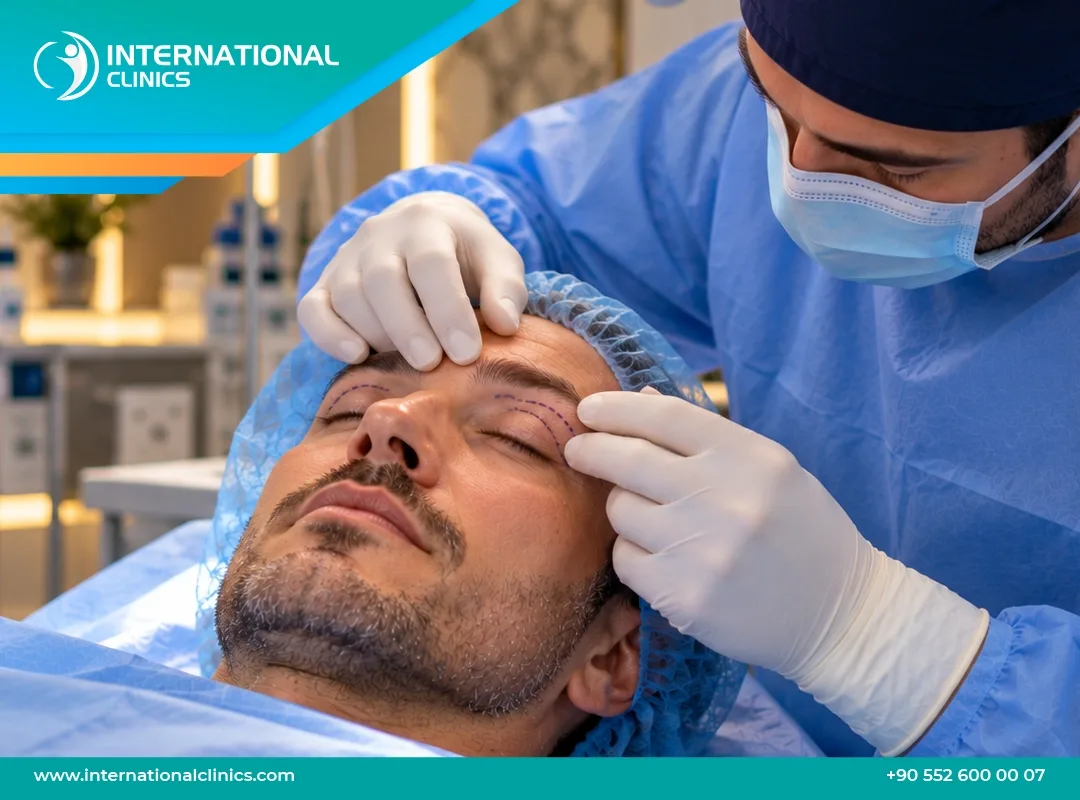
Surgical Mapping: The incision lines are drawn along the natural upper eyelid crease.
Administering Anesthesia: Local anaesthetic (lidocaine with epinephrine) is injected under the eyelid skin (Source: AAO).
Creating Incisions: Upper-lid cuts are made in the natural crease and are hidden when the eyes are open (Source: Cleveland Clinic).
Tissue Removal: Excess skin is removed and, if needed, some of the fat.
Muscle Tightening: Rather than tightening eye muscles, the surgeon takes care not to remove too much fat, because excessive fat removal can leave a hollow look (Source: AAO).
Wound Closure: Non-absorbable stitches are removed 7 to 14 days after surgery (Source: AAO).
Medical Observation: Ointment and cold compresses may be applied, and most people go home the same day (Source: NHS).
This structured approach shows what the Upper Eyelid Surgery Cost in Turkey pays for.
The surgeon also reviews your medicines and supplements, because aspirin, anti-inflammatory painkillers, blood thinners, fish oil, vitamin E and ginkgo raise the risk of bleeding; stopping smoking and reducing alcohol before surgery is also advised (Source: AAO).
Comparing the Upper Eyelid Surgery Cost in Turkey Globally
Upper eyelid surgery in Turkey usually costs less than in the UK or the US, where the published average does not even include anaesthesia or the operating room. The table only lists figures with a source: the International Clinics price, the NHS range for the UK and the ASPS average for the US.
Comparing the Upper Eyelid Surgery Cost in Turkey globally with these figures shows the real saving:
| Region / Country | Approximate Average Cost | What the figure includes |
| Turkey | 1,500 - 2,500 Euros | International Clinics price: consultations, medical fees, accommodation and transfers. |
| United Kingdom | 2,000 - 6,000 GBP | NHS range for eyelid surgery; consultations, further surgery and follow-up can be extra. |
| United States | 3,359 USD on average (upper eyelids only) | ASPS average surgeon fee, excluding anaesthesia, operating room and other expenses. |
In the UK, blepharoplasty may cost 2,000 to 6,000 GBP, and consultations, further surgery or follow-up care can add to this (Source: NHS).

When you compare prices, check what each figure includes. The International Clinics package puts consultations, medical fees, accommodation and transfers into one quote, while the ASPS average leaves out anaesthesia, the operating room and other related expenses; flights are not part of any package (Source: ASPS).
Pros and Cons of the Surgery
Upper blepharoplasty can make the eyes look more rested and sometimes widens the visual field, but it comes with a healing period and risks you should know. Bruising and swelling usually last 10 to 14 days, and numbness of the eyelid skin and lashes normally settles over 2 to 4 months (Source: AAO).

Evaluating the Upper Eyelid Surgery Cost in Turkey requires understanding these clinical tradeoffs:
| Advantages (Benefits) | Disadvantages (Risks) |
| Youthful Appearance: Removes the excess upper-lid skin that makes the eyes look tired. | Temporary Swelling: Bruising and swelling usually last 10 to 14 days. |
| Improved Vision: When heavy skin covers the upper or outer visual field, removing it can make driving, reading and screen work easier. | Dry Eyes: The eyes may feel dry or irritated for a few weeks; unmedicated drops or ointment help. |
| Hidden Scar: The incision follows the natural crease and is hidden when the eyes are open. | Fine Scars: The scar can feel tight for some months before it fades, and an unfavourable scar is possible. |
| Local Anaesthesia: Local anaesthesia is usually enough, and most people go home the same day. | Light Sensitivity: Sensitivity to sun or bright light while the lids heal. |
| Long-lasting Results: The removed skin does not come back, although natural ageing continues. | Anesthesia Reactions: As with any surgery, anaesthesia carries risks, and some patients need a revision. |
The risks listed by the ASPS include anaesthesia risks, bleeding from the incisions, changes in skin sensation, difficulty closing the eyes, dry eyes, infection, pain that may persist, possible revision surgery, sensitivity to sun or bright light, unfavourable scarring and temporary or permanent changes in vision, with a very rare chance of blindness (Source: ASPS).
The most serious complication is bleeding behind the eye (orbital haemorrhage), which can threaten sight and has an estimated incidence of about 1 in 20,000. Other possible problems are asymmetry, over-correction with difficulty closing the eye, too much fat removal and a drooping lid after surgery (Source: AAO).
Severe pain, increasing swelling, bleeding, discharge or any change in vision after surgery are reasons to contact the surgical team at once (Source: Cleveland Clinic).
The Post-Operative Recovery Timeline
After upper blepharoplasty, most people resume light, normal activities within 24 to 48 hours, and bruising and swelling usually settle within 10 to 14 days (Source: AAO).

The comprehensive Upper Eyelid Surgery Cost in Turkey includes guided post-operative recovery instructions:
Absolute Rest: Swelling can increase during the first 24 hours; ice, keeping your head raised and limiting activity help, and discomfort is usually controlled with paracetamol (Source: AAO).
Cold Therapy: Cold compresses and lubricating ointment help control swelling, bruising, irritation and dry eyes (Source: ASPS).
Head Elevation: Keep your head raised on pillows when resting during the first days.
Medication Adherence: Use the drops or ointment you are given, because the eyes may feel dry for a few weeks (Source: Cleveland Clinic).
Avoiding Strain: Ask your surgeon when you can return to exercise and normal activity, and avoid rubbing the incisions (Source: ASPS).
Sun Protection: Wear darkly tinted sunglasses and protect the skin from the sun until healing is complete (Source: ASPS).
Suture Removal: Non-absorbable stitches are removed 7 to 14 days after surgery, and contact lenses can usually be worn again after about a week (Source: AAO).
Final Unveiling: Most patients are presentable in public in 10 to 14 days, but full healing takes a few months (Source: ASPS).
Following these guidelines helps the Upper Eyelid Surgery Cost in Turkey turn into a smooth recovery.
Most people take about 2 weeks off work, depending on their job, and cannot drive for several days after the operation (Source: NHS).
How Long to Stay in Turkey After Upper Eyelid Surgery
Many patients plan to stay in Istanbul for about a week, so that the stitches can be checked or removed before flying. The NHS advises avoiding flying for 7 to 10 days after facial cosmetic procedures, because air travel soon after surgery raises the risk of blood clots; your surgeon confirms the date for your own case (Source: NHS).
Transformative Patient Experiences
Patient experiences help you understand the process, but they do not replace a medical assessment or predict your own result. That is why this guide shows a real patient video from International Clinics instead of anonymous quotes, and describes the two most common reasons for surgery.
Cosmetic reason: the excess upper-lid skin makes the face look tired even after a good night’s sleep. Here the goal is a more rested look without changing the shape of the eyes, and the surgeon first checks that a low brow is not the main cause (Source: ASPS).
Functional reason: the lid skin covers the upper or outer visual field and forces the forehead to lift it. In these patients, removing the skin can make driving, reading and computer work easier (Source: AAO).
VIP Guarantees and the Upper Eyelid Surgery Cost in Turkey: What the Package Includes
The International Clinics package combines the surgery and the travel logistics in one quote. No package can guarantee a cosmetic result: the ASPS states that good results are expected but there is no guarantee, and a second operation is sometimes needed (Source: ASPS).
The comprehensive Upper Eyelid Surgery Cost in Turkey features these inclusions:

Free Consultation: A remote review of your photos and history to plan treatment.
Customized Plans: The surgeon decides at the in-person consultation how much skin and fat to remove.
Airport Transfers: Private transport between the airport, the hotel and the hospital.
Luxury Accommodation: A hotel near the hospital during your recovery days.
Personal Translator: An interpreter to communicate with the medical team.
Thorough Screenings: The pre-operative tests needed before surgery.
Accredited Facilities: Surgery in an operating theatre with anaesthesia monitoring.
Ongoing Follow-up: Remote follow-up after you return home.
With these inclusions, the Upper Eyelid Surgery Cost in Turkey lets you know the total before you travel.
Before you book, ask in writing what the package includes, how many check-ups are planned and how a possible revision is handled. Check whether the clinic’s insurance would cover you, because travel insurance normally does not cover complications of surgery (Source: NHS).
Expert Tips
Good preparation and a carefully chosen surgeon are the two factors that depend most on you. These tips summarise what medical societies recommend before and after upper blepharoplasty.
Maximize the value of your Upper Eyelid Surgery Cost in Turkey by adhering to these tips:
Select Carefully: Check the surgeon’s registration and ask how many eyelid operations they have done and with what complications (Source: NHS).
Read Reviews: Other patients’ reviews can guide you, but they do not replace a medical assessment of your eyelids.
Demand Transparency: Ask for a written quote that says what is and is not included.
Plan Ahead: Allow about 2 weeks before returning to work, depending on your job (Source: NHS).
Follow Instructions: Follow your surgeon’s instructions on eye care, medicines and warning signs (Source: ASPS).
Keep Clean: When inserting and removing contact lenses, pull down the lower lid so you do not touch the upper-lid incision (Source: AAO).
Quit Smoking: Stop smoking and reduce alcohol before surgery (Source: AAO).
Stay Connected: Report severe pain or any vision problem to the medical team immediately (Source: Cleveland Clinic).
Following this advice helps your Upper Eyelid Surgery Cost in Turkey deliver a safe result.
If you are also concerned about the rest of the face, see our guide to the eyelid and brow lift surgeon in Turkey and the facelift in Turkey. Patience matters too: the scar can stay pink or tight for some months before it fades (Source: NHS).
Conclusion
The Upper Eyelid Surgery Cost in Turkey at International Clinics is 1,500 to 2,500 EUR, with consultations, medical fees, accommodation and transfers included. The operation removes excess upper-lid skin, can widen the visual field and leaves a scar hidden in the crease, with long-lasting results although ageing continues. It has real risks and about two weeks of recovery, so weigh them with a surgeon first. To have your eyelids assessed, contact the medical team at International Clinics.
Medical review and disclaimer:
This article was reviewed by a specialist physician contracted with International Clinics. It is general health information, not a substitute for medical advice, and results vary between individuals.