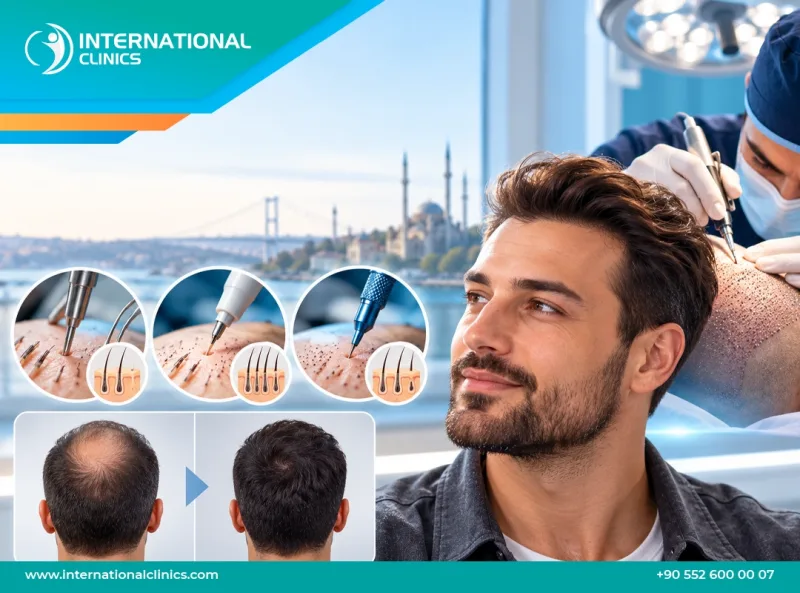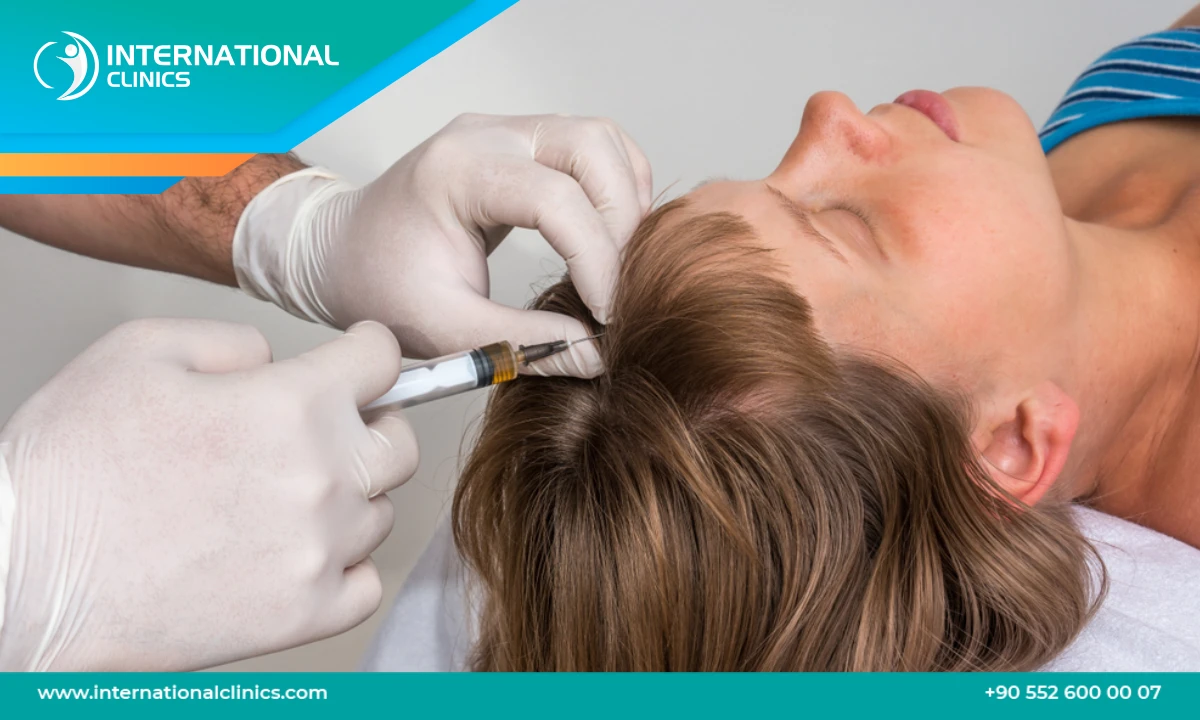
- Advantages and Benefits of Hair Transplant
- Cost of Hair Transplant in Turkey vs. Mexico: Cost Breakdown
- Turkey vs Mexico Hair Transplant Cost
- How Much Do 3,000 Hair Grafts Cost in Mexico vs. Turkey?
- 2000 grafts hair transplant cost in Turkey and other graft counts
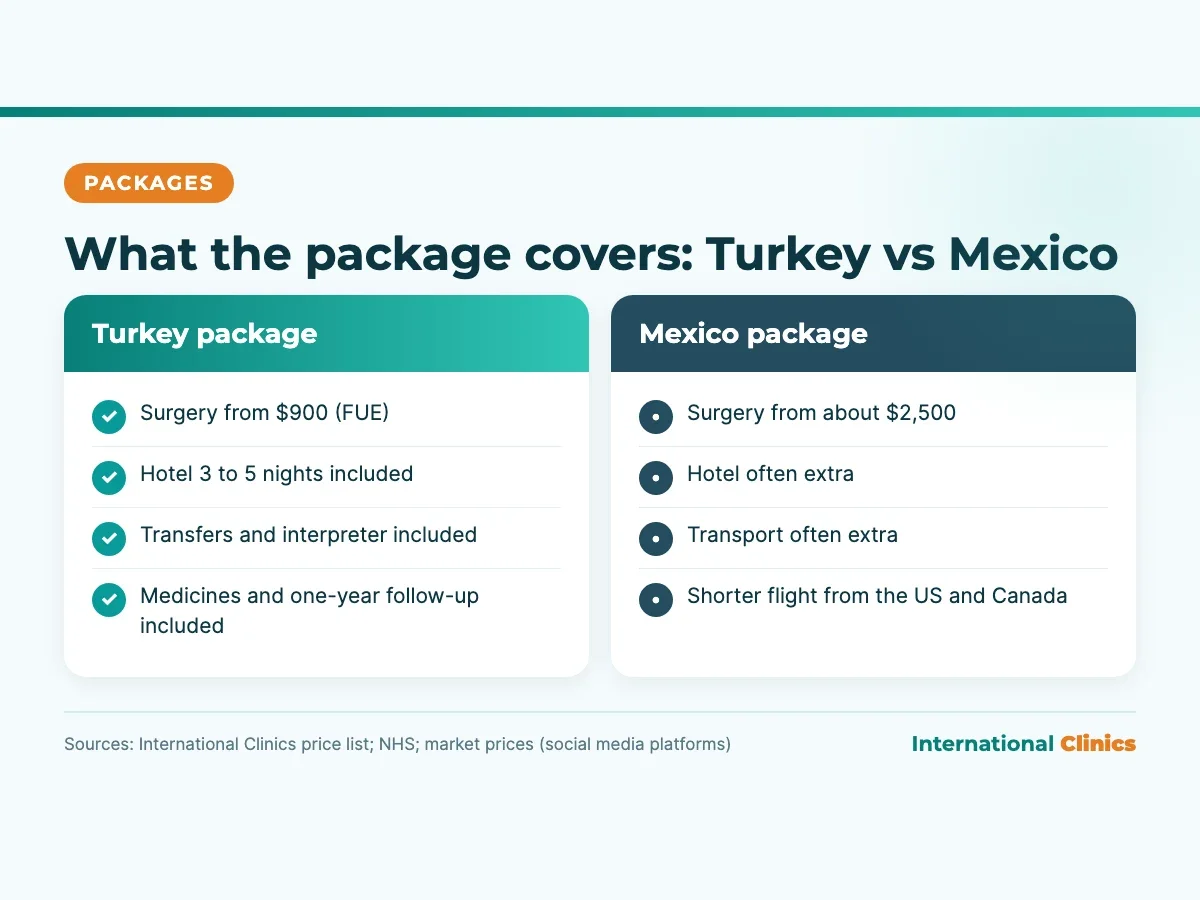
- What a Turkey Hair Transplant Package Includes
- Hair Transplant Turkey vs. Poland, Brazil and Other Countries
- Hair transplant cost: US vs Turkey
- Hair Transplant Techniques in Turkey vs. Mexico
- Quality and Reputation of Clinics in Mexico vs. Turkey
- Aftercare hair transplant Mexico vs. Turkey
- Risks of a hair transplant in Turkey or Mexico
- Success Rates and Long-Term Results: Mexico vs. Turkey
- When Will You See Hair Transplant Results?
- Medical Tourism for Hair Transplants in Turkey vs. Mexico:
- The bottom line:
Hair transplant cost in Turkey in 2026 starts from $900 (approx. £650) with FUE through the surgeons contracted by International Clinics, rising according to the case or the patient’s choices, and the package includes the hotel, transfers and follow-up; in Mexico a hair transplant starts from about $2,500 and the price rarely covers lodging or local transport (source: social media platforms). For a 2,000-graft or 3,000-graft session the Turkish package is therefore usually the lower total, while Mexico is closer for patients from the US and Canada, with shorter flights and easier follow-up visits. Both countries use FUE, FUT and DHI.
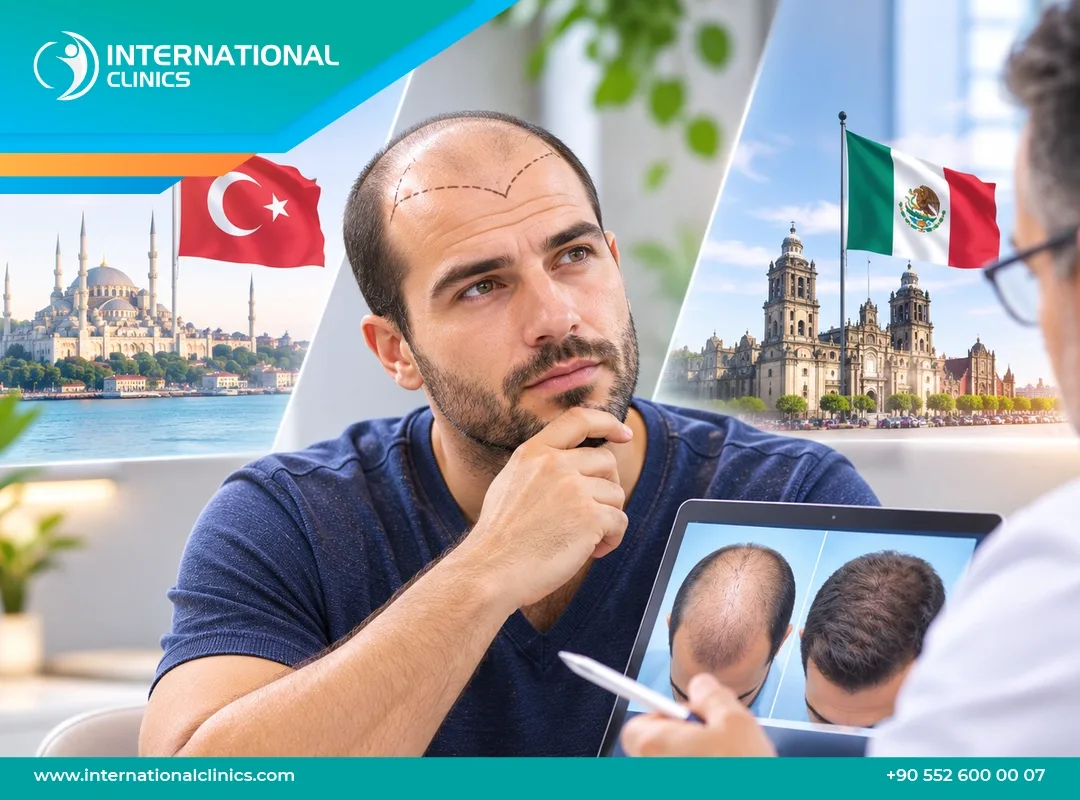
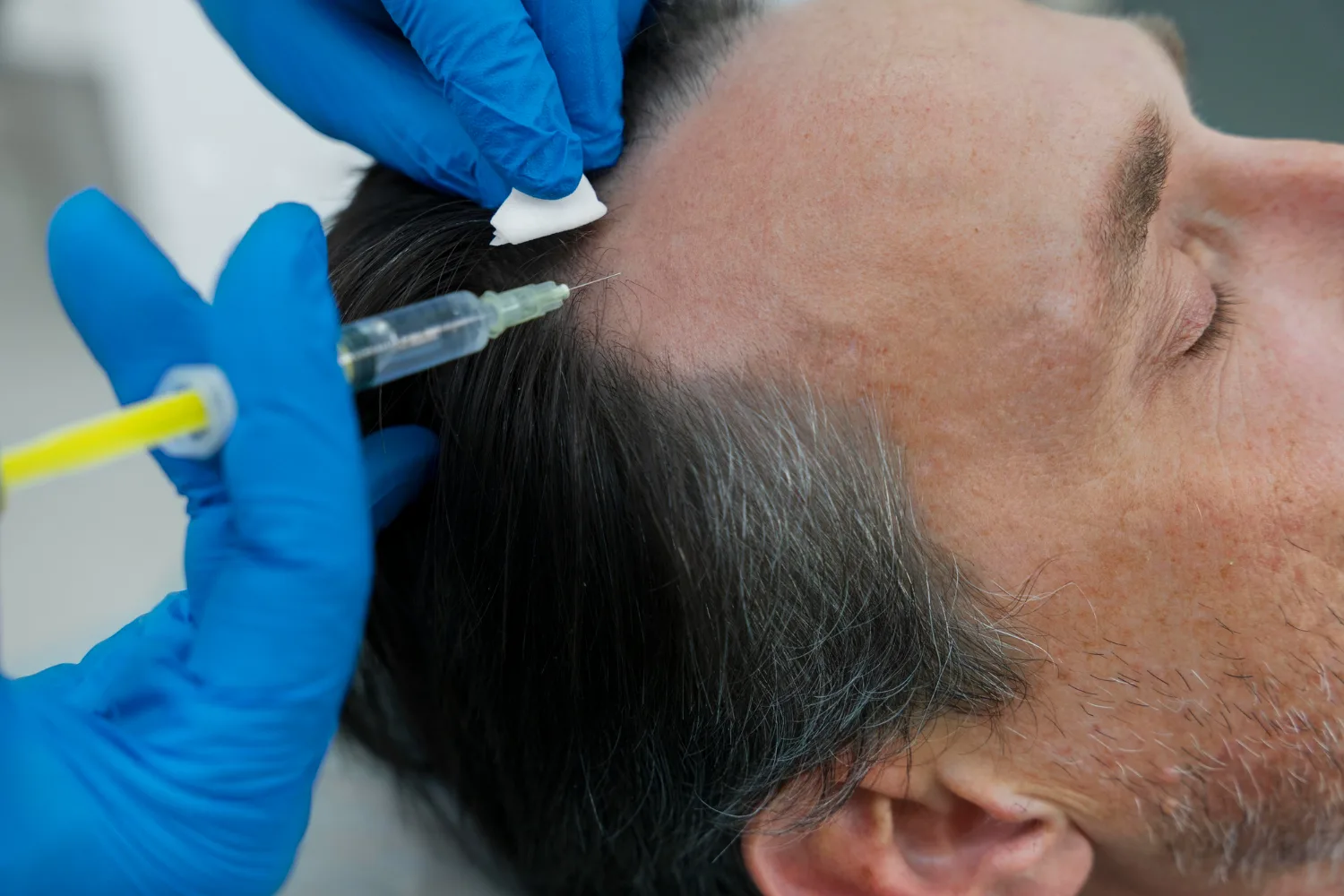
When comparing hair transplants in Turkey and Mexico, it’s essential to consider overall costs, advancements in techniques and equipment, and service quality. Turkey is one of the most popular destinations worldwide for hair transplant surgeries, thanks to its prices, its high procedure volume and its experienced teams, making it an attractive choice for many international patients. The procedure itself is the same everywhere: hair follicles are moved from an area of thick growth, usually the back and sides of the scalp, to a thinning or bald area, most often while you are awake under local anaesthetic. (Source: Cleveland Clinic)
Advantages and Benefits of Hair Transplant
A hair transplant is the only treatment that adds hair-bearing follicles to a bald area. Good candidates are in good general health, have realistic expectations and still have enough thick hair at the back and sides of the scalp to use as a donor area. (Source: Cleveland Clinic)
- Permanent Solution: follicles taken from the donor area keep their resistance to the hormone that causes male pattern baldness, so transplanted hair usually continues to grow for life.
- Natural Development: after the first months the new hair keeps thickening, and density and fullness increase until the final result is reached.
- Natural Appearance: when performed by qualified doctors, hair transplants can look natural by carefully placing hair at the right angles and densities.
- Less Maintenance: once hair grows back, patients won’t need complicated care beyond normal hair maintenance.
Hair loss can continue around the transplanted area, so a doctor may also recommend medicine to protect the hair you still have; the transplant does not stop the underlying process. (Source: American Academy of Dermatology)

Cost of Hair Transplant in Turkey vs. Mexico: Cost Breakdown
In 2026 a hair transplant in Turkey starts from $900 (approx. £650) through International Clinics, a hair transplant in Mexico starts from about $2,500, and in the United States prices start from about $10,000 (source: social media platforms). In the UK, the NHS states that a hair transplant can cost anywhere between £1,000 and £30,000. (Source: NHS)
Hair transplants can be costly, with prices typically varying based on the method, number of grafts, and clinic location. The NHS explains that the price depends on the size of the area being treated and the type of transplant, and that a large area may need more than one session. (Source: NHS)
Both Turkey and Mexico offer medical tourism packages for hair transplants, but hidden costs such as travel, accommodation, and post-operative care can significantly change the overall expense, so compare totals rather than headline prices.
Turkey vs Mexico Hair Transplant Cost
The cost of a hair transplant in Turkey with an all-inclusive package starts from $900 (approx. £650) with FUE and from $1,100 (approx. £800) with DHI, rising according to the case or the patient’s choices. Packages are priced by technique and session rather than by graft, which is why a 2,000-graft and a 3,000-graft FUE session usually fall under the same starting price. In comparison, the hair transplant cost in Mexico starts from about $2,500, and because packages rarely include lodging or local transport, hotel nights, transfers and follow-up add to the total (source: social media platforms).
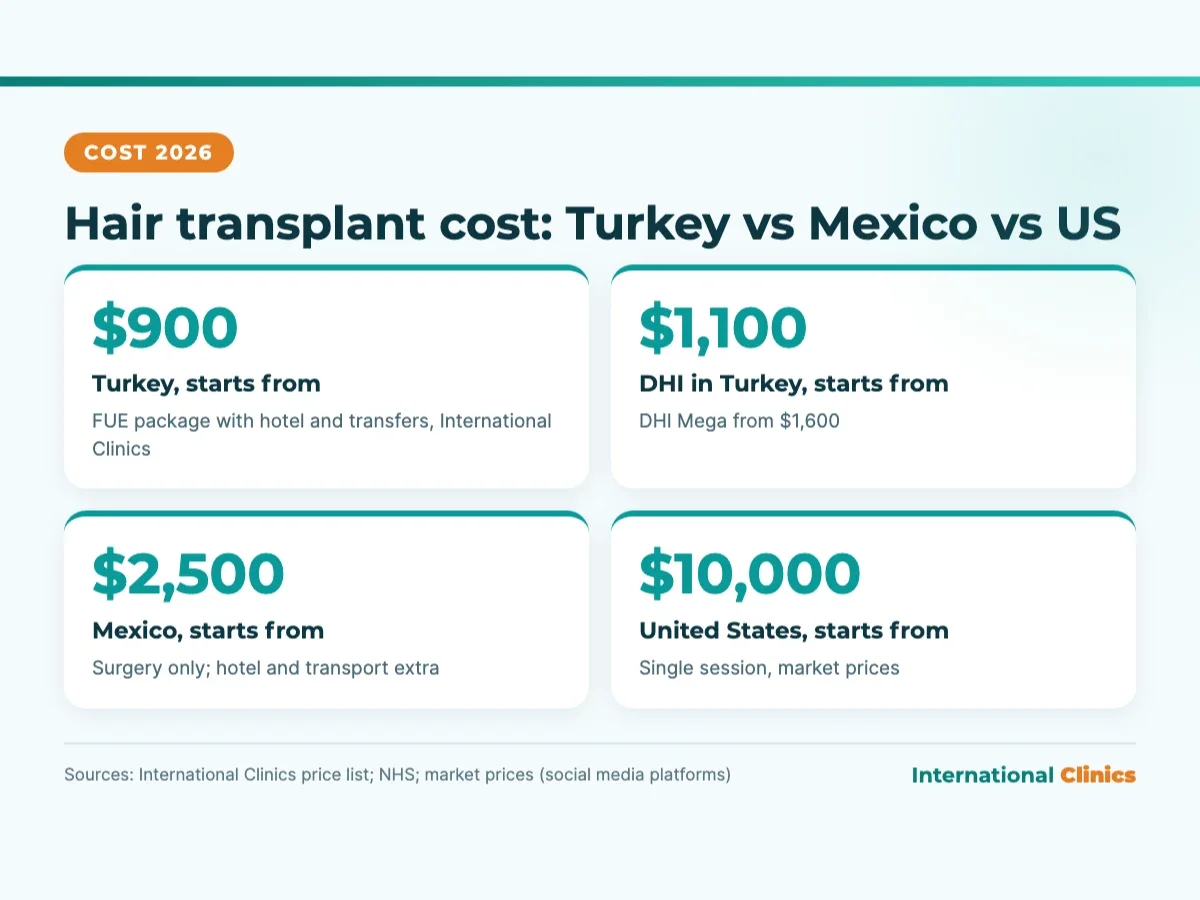
Our newest price list for Turkey breaks the starting prices down by technique and by the number of grafts each package covers:
| Technique | Approximate grafts per session | Price in Turkey through International Clinics |
|---|---|---|
| FUE (follicular unit extraction) | 3,000 to 4,500 | Starts from $900 (approx. £650) |
| Sapphire FUE | 3,500 to 5,000 | Starts from $900 (approx. £650) |
| DHI (Choi implanter pen) | 2,500 to 4,000 | Starts from $1,100 (approx. £800) |
| DHI Mega (higher density, more sessions) | Set by the density you need | Starts from $1,600 (approx. £1,200) |
| Female hair transplant | 2,000 to 3,500 | Starts from $1,000 (approx. £750) |
| Beard and moustache transplant | 1,500 to 3,000 | Starts from $800 (approx. £600) |
| Eyebrow transplant | Set by the design | Starts from $1,000 (approx. £750) |
What raises the price above the starting figure is the technique (DHI costs more than FUE), the density you want, a second session for very large areas, and optional extras such as PRP. The surgeon confirms the final quote after reviewing photographs of your donor and recipient areas.
Understanding these supplementary expenses is crucial for making an informed budgetary decision.
Here is a Comparison of Mexico’s hair transplant package and Turkey’s hair transplant comprehensive package:
| Parameter | Turkey package | Mexico package |
|---|---|---|
| Hair transplant surgery price (FUE or FUT) | Starts from $900 (approx. £650), rising according to the case or the patient’s choices | Starts from about $2,500 (approx. £1,850) (source: social media platforms) |
| Comprehensive pricing | All inclusive: surgery, hotel, transfers, medicines, follow-up | Usually the surgery only; extras billed separately |
| Travel expense | Flight from the US from about $300, plus an e-visa where required | Flight from the US from about $200; no visa for US and Canadian citizens |
| Accommodation | Hotel included in the package (3 to 5 nights) | Hotel sometimes included (2 to 3 nights) |
| Consultation before and after surgery | Included in package | Included in package |
| Transportation | Included in the package | Partly included; extra from about $50 |
| Postoperative medications | Included as prescribed by the doctor | Often extra, from about $50 |
| Additional treatment + Postoperative care | Included in package | Often extra, from about $100 |
| Follow up | Included in package, including remote follow-up for one year | Often extra, from about $50 per visit |
| Additional accommodations | Variable | From about $50 per night |
| Translation services | Included in package | Often extra, from about $30 |
This illustrates a big difference in the hair transplant cost between Turkey and Mexico when comparing the total expenses of hair transplant surgery. It is essential to understand hidden travel costs and make all budget considerations before booking. Mexican market figures in this table are typical prices advertised to patients (source: social media platforms).
How Much Do 3,000 Hair Grafts Cost in Mexico vs. Turkey?
In Turkey, 3,000 grafts fall within the FUE package that starts from $900 (approx. £650) through International Clinics, before flights. In Mexico, 3,000 grafts start from about $2,500, and clinics there more often quote per graft, so the total rises with every additional graft (source: social media platforms). Many clinics in Turkey quote a package price rather than a price per graft, so compare the total, not only the graft rate. For prices by graft count in Turkey, see hair transplant cost in Turkey.
2000 grafts hair transplant cost in Turkey and other graft counts
Searchers most often ask about 2,000 grafts, which typically restores a receding hairline or the front of the scalp. Because Turkish packages are priced by technique, the 2,000 grafts hair transplant cost in Turkey is the starting package price: from $900 (approx. £650) with FUE or from $1,100 (approx. £800) with DHI. Larger sessions of 4,000 to 6,000 grafts may need DHI Mega or two sessions, and the NHS notes that bigger areas can require more than one session. (Source: NHS)
| Graft count | Turkey through International Clinics | Mexico (market prices) | United States (market prices) |
|---|---|---|---|
| 2,000 grafts | Starts from $900 (approx. £650) (FUE package) | Starts from about $2,500 | Starts from about $10,000 |
| 3,000 grafts | Starts from $900 (approx. £650) (FUE package) | Starts from about $2,500 | Starts from about $10,000 |
| 4,000 to 4,500 grafts | Starts from $900 (approx. £650) (FUE package) | Quoted per graft, higher than for 3,000 | Quoted per graft, higher than for 3,000 |
| 6,000 grafts or more | Starts from $1,600 (approx. £1,200) (DHI Mega or two sessions) | Usually two sessions | Usually two sessions |
Mexico and United States figures are typical advertised prices (source: social media platforms). The number of grafts you can safely receive depends on your donor area, not on your budget: the surgeon counts the grafts available at the back and sides of the head before promising a density.
What a Turkey Hair Transplant Package Includes
A Turkey hair transplant package through International Clinics usually includes a free remote consultation with multilingual medical advisers, the procedure in an internationally accredited hospital contracted with Türkiye Health, hotel accommodation for three to five days, airport and hotel transfers, medicines prescribed by the doctor, an interpreter and follow-up for one year. In Mexico these items are more often charged separately. Read more about how much a hair transplant in Turkey costs and what a package should list.
Hair Transplant Turkey vs. Poland, Brazil and Other Countries
When you compare Turkey with Poland, Brazil, Taiwan or any other country, use the same checklist as for Mexico: the total package price including flights and hotel, who performs the graft extraction and implantation, how many grafts are planned, and how follow-up is handled after you go home. A lower headline price is only useful if these points are clear in writing. If you are comparing with the UK, our hair transplant in Turkey and London guide sets the NHS price range against Turkish packages.
Hair transplant cost: US vs Turkey
For American patients the comparison is usually the US, Mexico or Turkey. In the United States prices start from about $10,000 for a single session (source: social media platforms), against a Turkish package that starts from $900 (approx. £650) including the hotel. Mexico sits between the two on price but wins on distance. The NHS advises anyone travelling for cosmetic surgery to check the qualifications of the person who will operate, plan for follow-up at home and allow enough time before flying back. (Source: NHS)
Hair Transplant Techniques in Turkey vs. Mexico
Turkey and Mexico both offer FUE, FUT and DHI; newer variations such as Sapphire FUE and DHI are standard in Turkey, while FUT is still used more often in Mexico.
Both Turkey and Mexico utilize FUE, FUT, and DHI hair transplant techniques, but they differ in the equipment used and in how much experience the medical staff have with each one.
Both Turkey and Mexico utilize FUE, FUT, and DHI hair transplant techniques, but they differ in equipment, medical staff expertise, and technique implementation. For the difference between the two main methods, read FUE vs FUT.
FUE (Follicular Unit Extraction) Technique: individual follicles are removed one by one from the shaved donor area, leaving many tiny dot scars instead of one line. Turkish teams perform this technique in very high volume. FUE hair transplant cost in Turkey starts from $900 (approx. £650) for an all-inclusive package, while FUE in Mexico starts from about $2,500 before the hidden costs (source: social media platforms). Patients must carefully evaluate clinic quality and potential hidden costs, which can multiply the initial cost.
FUT (Follicular Unit Transplant) Technique in Turkey vs. Mexico: a strip of skin is removed from the back of the head and divided into grafts. FUT leaves a linear scar and is preferred when patients require a large number of grafts in one session. In Mexico, the cost and quality of FUT vary widely, making thorough research essential. (Source: Cleveland Clinic)
DHI (Direct Hair Implantation) Technique in Turkey vs. Mexico: grafts are loaded into an implanter pen and placed directly, so channel opening and implantation happen in one movement. DHI starts from $1,100 (approx. £800) in Turkey; in Mexico, availability and experience vary more between clinics.
Wherever you have surgery, transplanted hair falls out a few weeks after surgery before new growth starts, and every technique leaves some scarring in the donor area. (Source: American Academy of Dermatology)
Quality and Reputation of Clinics in Mexico vs. Turkey
Good and poor clinics exist in both countries, so the reputation of the individual clinic and surgeon matters more than the country.
Turkey has a strong international reputation for hair transplant surgery and treats a very large number of international patients every year, which gives established teams wide experience. International Clinics is the link between the patient and the surgeons and internationally accredited hospitals it has contracted in Istanbul: you receive the name and qualifications of the doctor before you book.
While Mexico has a reputation for hair transplants, service quality varies significantly. Some clinics offer advanced, high-quality procedures, while others provide considerably lower-standard care.
The American Academy of Dermatology stresses that results depend largely on the surgeon, and advises choosing someone who understands hair loss and performs transplants regularly. (Source: American Academy of Dermatology)
The NHS suggests asking about the surgeon’s qualifications, how many procedures they have done, complication rates and follow-up care. (Source: NHS)
The International Society of Hair Restoration Surgery warns that unlicensed technicians increasingly perform surgical steps of hair restoration in many countries; confirm in writing that a licensed physician designs the hairline, harvests the grafts and creates the recipient sites, whether you choose Turkey or Mexico. (Source: ISHRS)
Your Health Journey Continues with: Female hair transplant in Turkey affordable solution

Aftercare hair transplant Mexico vs. Turkey
In Turkey, aftercare such as the first hair wash, medication and check-ups is usually part of the package; in Mexico it is more often paid separately, but the shorter trip makes it easier for North American patients to return for a follow-up visit.
Post-Operative Care Services: Turkey vs. Mexico
Cost-effectiveness: Turkish packages often cover post-surgery visits, medications and the first wash. In contrast, patients in Mexico typically pay separately for postoperative services, resulting in additional expenses.
Quality of Instruction and Follow-up Care: the service quality of Mexican clinics varies significantly, while Turkish packages generally include organised aftercare. Through International Clinics, follow-up continues remotely for one year after you return home.
Recovery is similar in both countries. Most people need one to two weeks off work, should avoid touching the grafts for the first two weeks and cut down on exercise for the first month; bandages usually come off after two to five days. Plan your return flight with this in mind. (Source: NHS)
Related Health Insights: How long does a hair transplant need to heal day by day
Risks of a hair transplant in Turkey or Mexico
Side effects are the same in both countries: swelling, bleeding, infection, temporary numbness of the scalp, cysts where follicles were implanted, and transplanted hair that does not look natural. A hair transplant can also fail, and some people need a second session. (Source: NHS)
The NHS adds that travelling abroad for cosmetic surgery brings its own risks: language barriers, different standards, and flying too soon after an operation. Ask how complications are handled after you return home before you pay a deposit. (Source: NHS)
Success Rates and Long-Term Results: Mexico vs. Turkey
Success rates in Turkey and Mexico depend on the surgeon, the donor hair and how the grafts are handled, not on the country itself.
Both Mexican and Turkish hair transplant procedures can give lasting results. Turkey’s high procedure volume tends to make results more consistent between established teams, while Mexico experiences more variability.
Clinics in both countries advertise high graft survival rates, but these are clinic-reported figures rather than independent data, so ask how a clinic measures graft survival and what happens if growth is poor. Cleveland Clinic notes that most people see good regrowth, while some need a touch-up session. (Source: Cleveland Clinic)
When Will You See Hair Transplant Results?
Most people see hair transplant results six to nine months after surgery, wherever it is done. Transplanted hair falls out two to eight weeks after surgery, and some patients need 12 months to see results. (Source: American Academy of Dermatology)
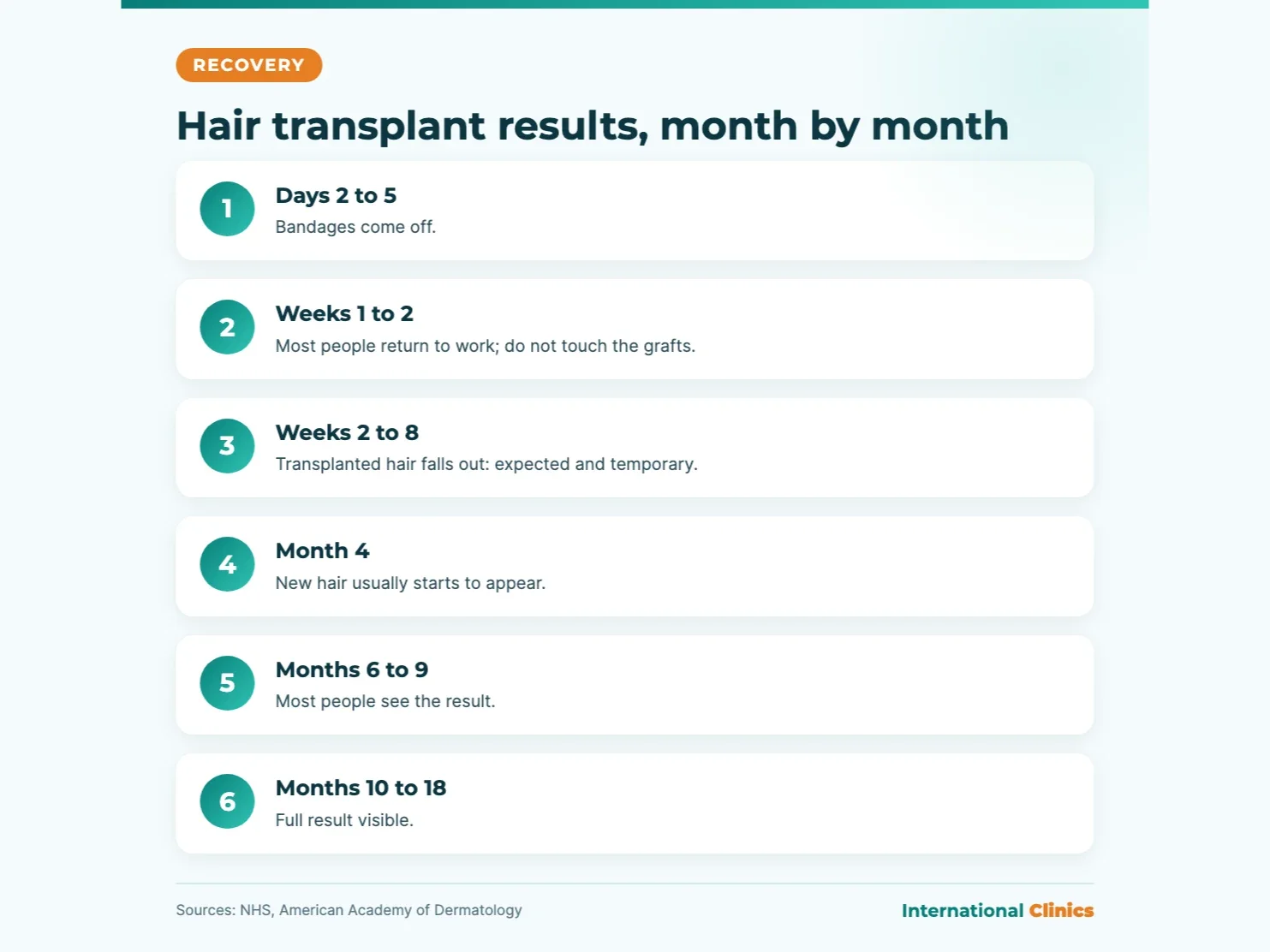
New hair usually appears around four months after surgery and the full result is seen at 10 to 18 months. (Source: NHS)
You Might Also Be Interested In: Hair transplants before and after
Medical Tourism for Hair Transplants in Turkey vs. Mexico:
Medical tourism means travelling to another country to obtain medical treatments, procedures, or services.
Turkey has become a leading medical tourism destination for hair restoration. Patients usually spend three to five days in Istanbul: arrival and consultation on day one, surgery on day two, the first wash and check on day three, then the flight home. Through International Clinics the hospitals are internationally accredited and contracted with Türkiye Health, multilingual medical advisers handle the free remote consultation, and the team stays in touch for one year. The same contracted network covers related procedures such as an eyebrow transplant in Turkey, which can be planned on the same trip.
Mexico’s main advantage is distance: border cities such as Tijuana are a short trip for patients in California, and many do not need a hotel at all. Its drawback is that prices and standards vary more between clinics, so the same checks apply. (Source: NHS)
Read also: Ultimate Guide to Hair Transplant Surgery
The bottom line:
For most patients who compare total cost, Turkey is the more favourable destination for hair transplants compared to Mexico. A Turkish package starts from $900 (approx. £650) and includes accommodation, transportation and post-operative care, while a Mexican hair transplant starts from about $2,500 for the surgery alone (source: social media platforms). Patients from the US or Canada who value a short flight and easy follow-up visits may still prefer Mexico. Hair restoration cases through International Clinics are supervised by specialists such as Gökçen Özkul. For a full guide to the procedure, see hair transplant in Turkey.
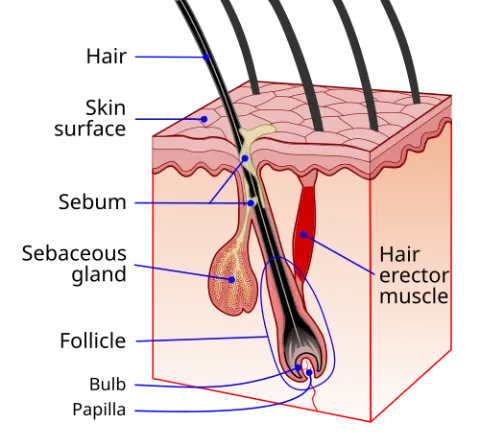
Diagram of a hair follicle: in FUE and DHI, whole follicles are taken from the donor area and implanted in the thinning area. Image: United States National Institutes of Health, public domain, via Wikimedia Commons.
Medical review and disclaimer:
This article was reviewed by a specialist physician contracted with International Clinics. It is general health information, not a substitute for medical advice, and results vary between individuals.