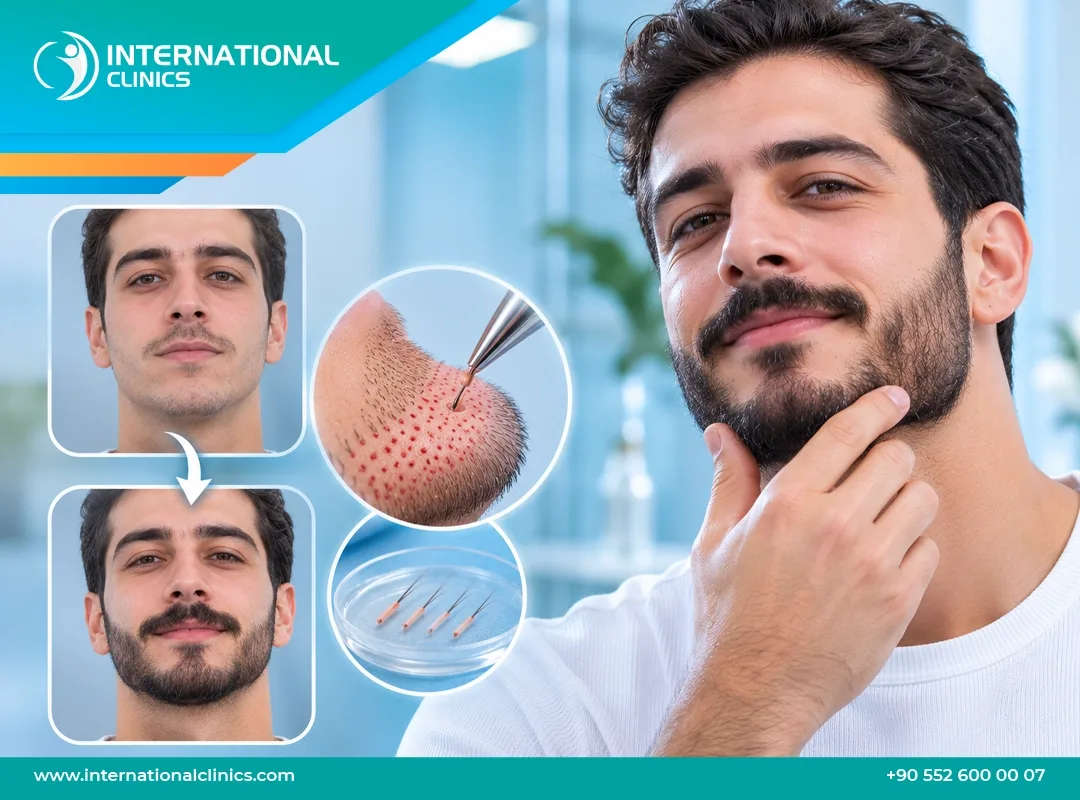
A mustache and chin hair transplant moves healthy hair follicles from the back of the scalp to the upper lip and chin, so that a natural, permanent mustache or goatee grows where hair was thin or missing. In Turkey, a mustache and chin transplant starts from $800, rising according to the case or the patients choices, because these areas need fewer grafts than a full beard but more precise placement.
This guide explains who the procedure suits, how many grafts each area needs, which techniques work best for the mustache line, how the operation and recovery go, and when the final result appears.
What Is a Mustache and Chin Hair Transplant?
A mustache and chin transplant is a form of facial hair transplant in which the surgeon takes follicular units from a dense area at the back of the head and implants them one by one into the upper lip or chin. The transplanted hair grows like normal facial hair: it can be shaved, trimmed and styled, and the result is permanent because hair from the back of the scalp resists genetic hair loss.
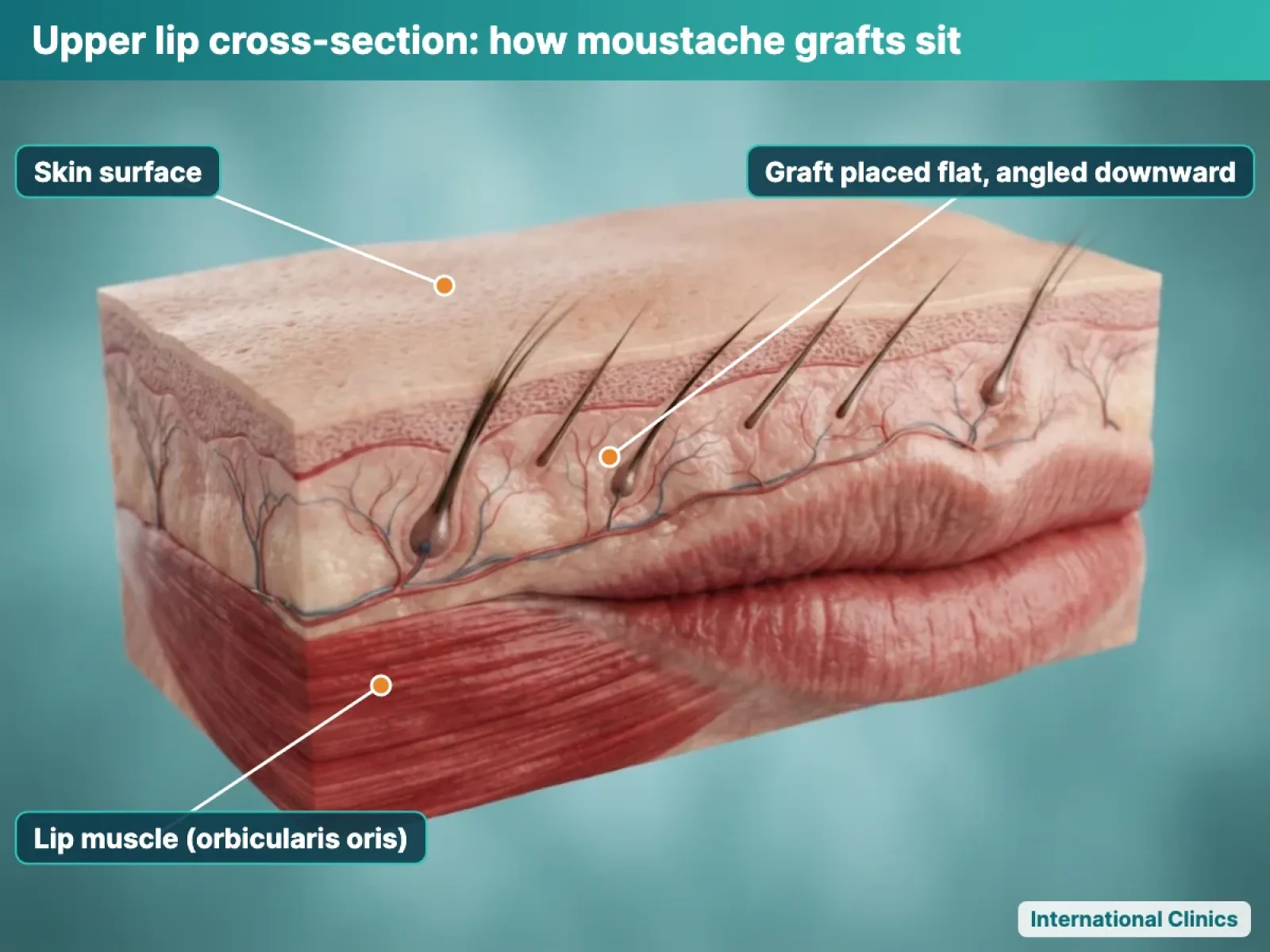
The mustache is the most demanding area of the face. Mustache hair grows downward and outward at a very flat angle to the skin, while chin hair grows mostly downward, so the surgeon uses fine single-hair grafts and a very low implantation angle to make the mustache look natural.
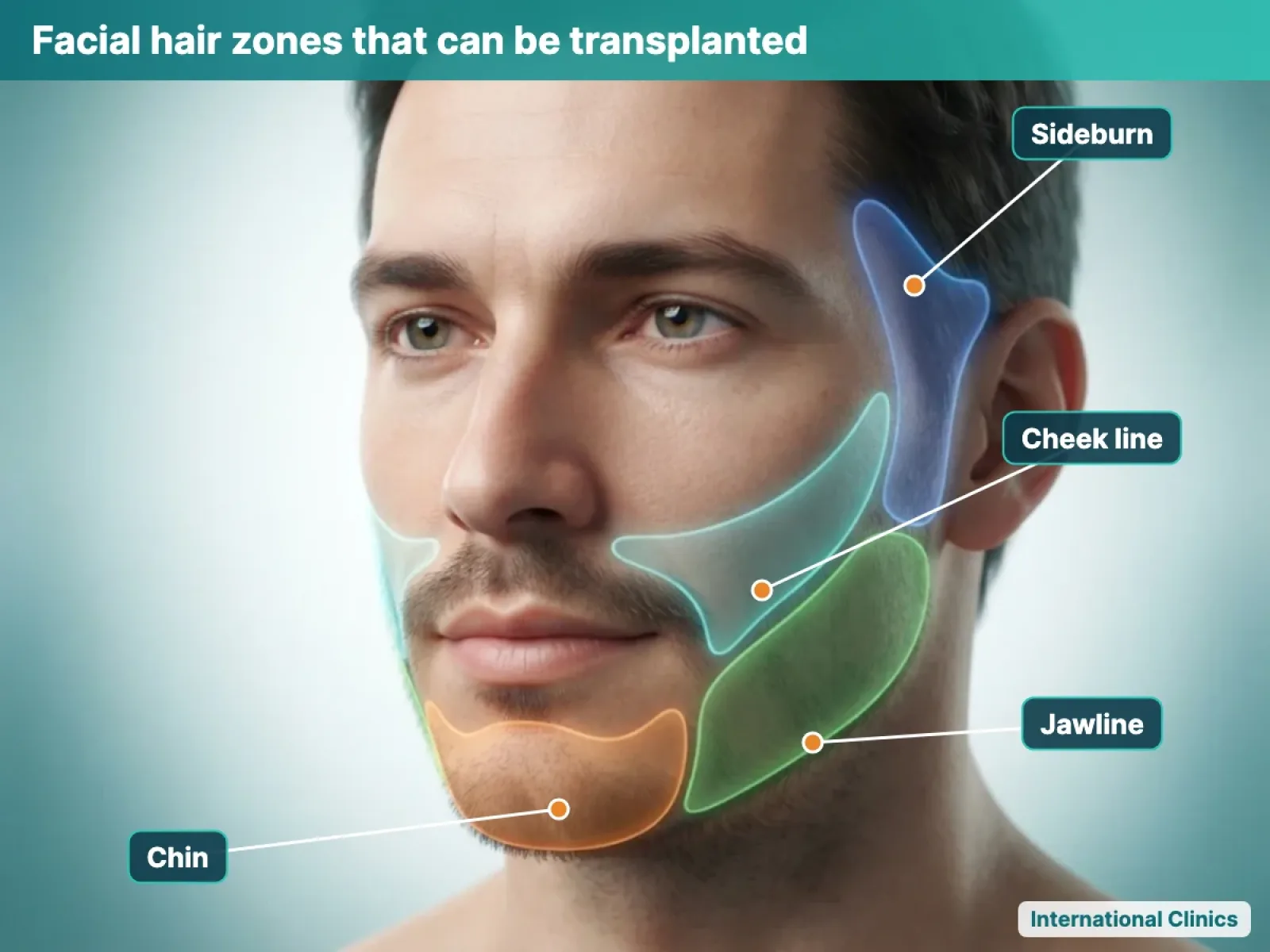
Who Is a Good Candidate?
- Men with a patchy or missing mustache or chin hair due to genetics.
- Men with scars from burns, injuries, surgery or a repaired cleft lip.
- Men with traction alopecia from pulling facial hair, or long-stable alopecia areata of the beard.
- A good donor area at the back of the head, good general health and realistic expectations, usually after the age of 20–25.
If you want a full beard including the cheeks and sideburns, read our guide to beard transplant in Turkey.
How Many Grafts Do You Need?
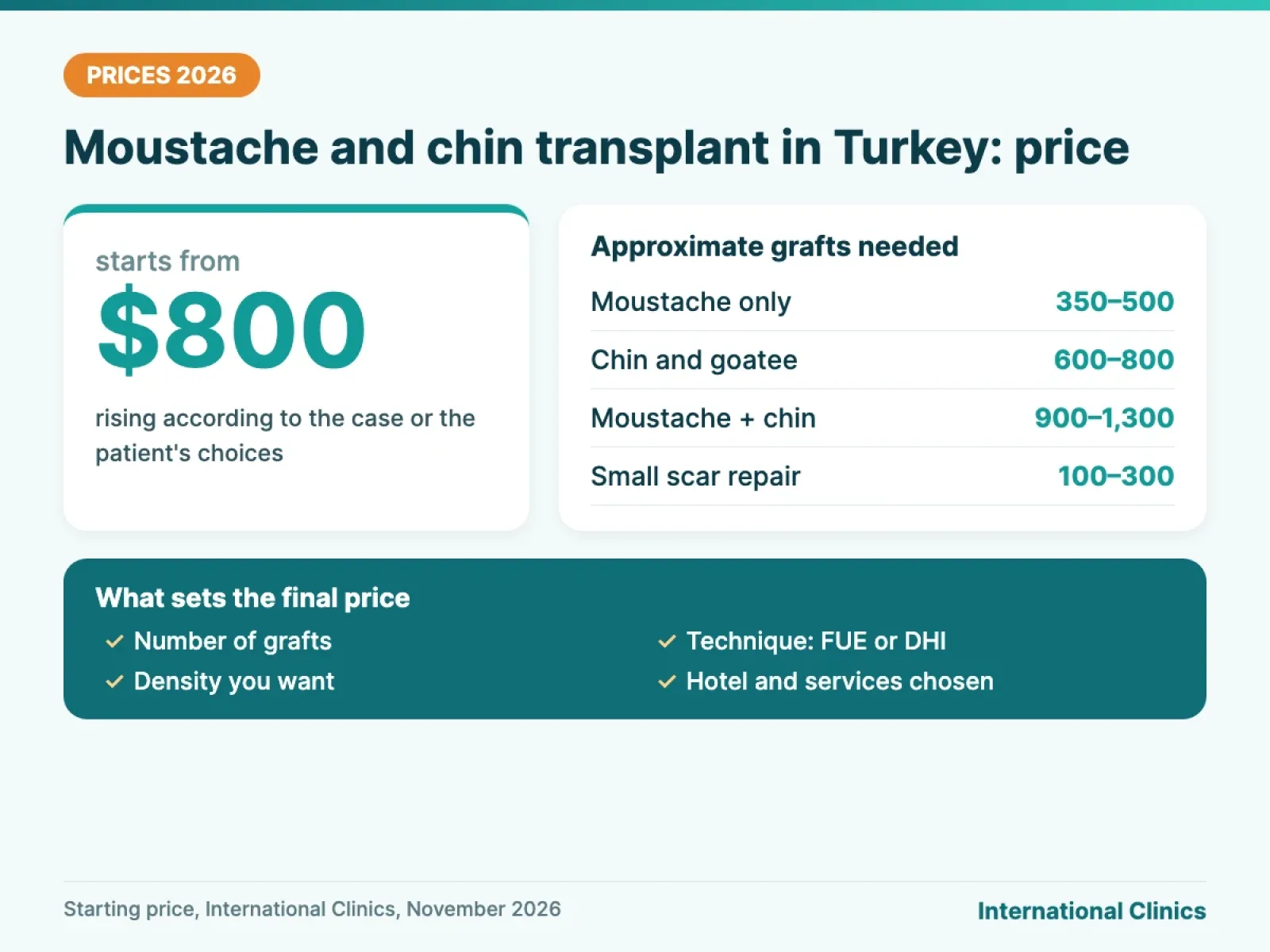
| Area | Approximate grafts |
|---|---|
| Mustache only | 350–500 |
| Chin and goatee | 600–800 |
| Mustache + chin | 900–1,300 |
| Small scar repair | 100–300 |
These figures follow the ranges the International Society of Hair Restoration Surgery gives for facial hair. The surgeon confirms the safe number after examining the donor area and the density you want.
Mustache and Chin Transplant Cost in Turkey
A mustache and chin transplant in Turkey starts from $800, rising according to the case or the patients choices. The final price depends on the number of grafts, the technique (FUE or DHI), the density you want and the hotel and services you choose. Packages usually include the operation, medicines, hotel nights, transfers and an interpreter.
Techniques Used for the Mustache and Chin
FUE
With FUE, grafts are extracted one by one from the back of the head and placed into tiny channels opened in the mustache or chin. FUE leaves only dot-like marks in the donor area and allows careful selection of single-hair grafts for the mustache edge.
DHI with a Choi Pen
With DHI, each graft is loaded into a hollow Choi implanter pen and placed directly into the skin at the chosen angle, without opening channels first. Many surgeons prefer DHI for the fine mustache line because it gives full control of the angle and direction of every hair.
How the Procedure Works
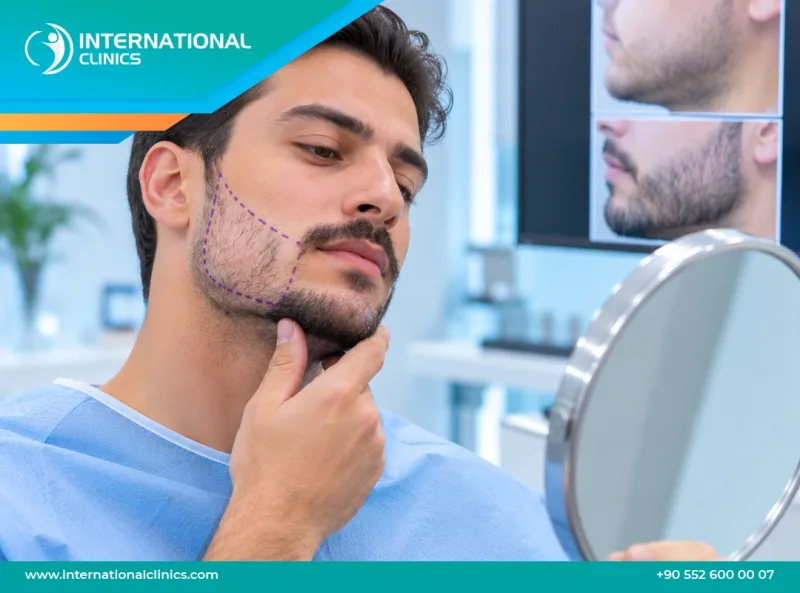
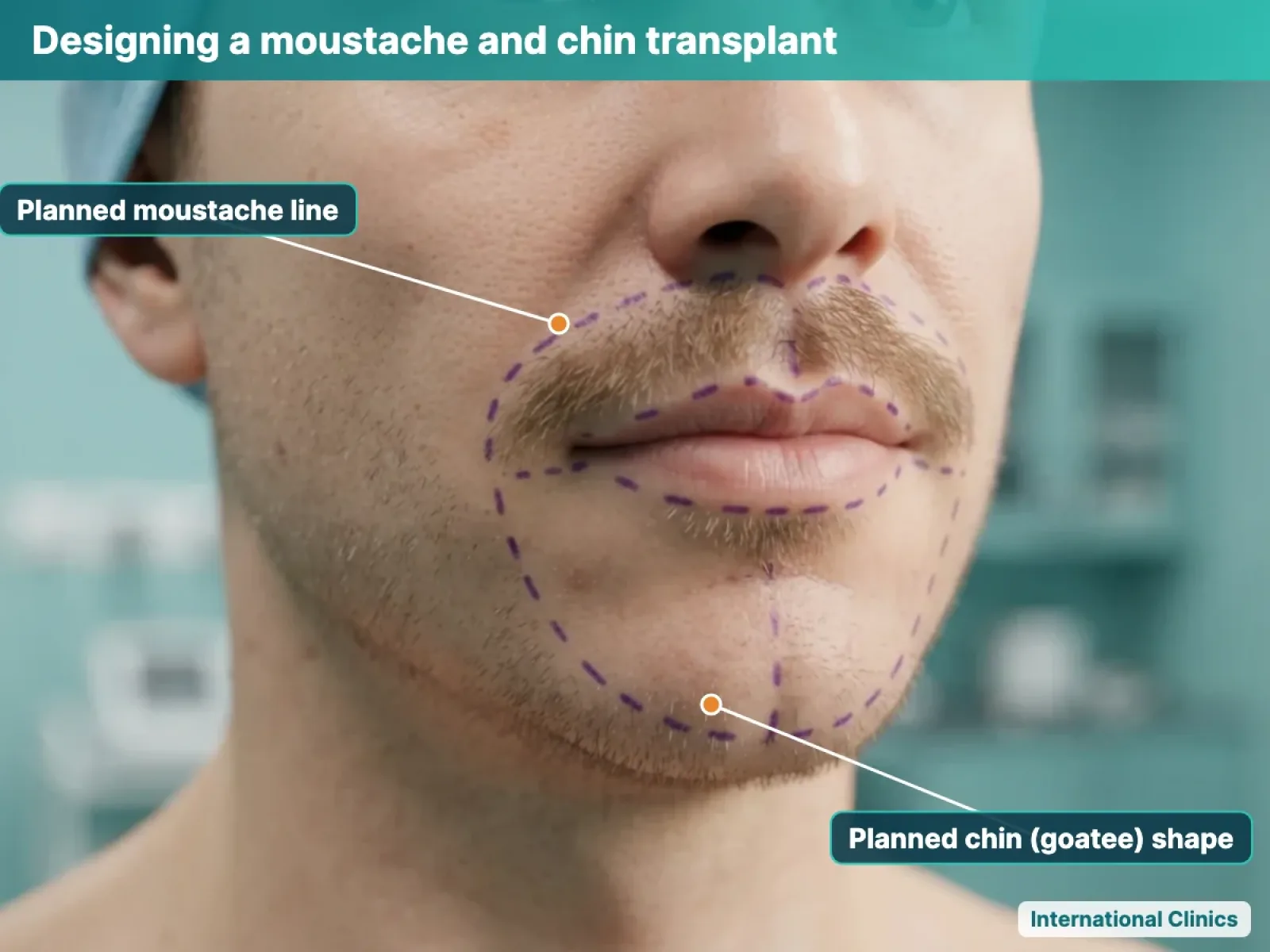
The surgeon first draws the planned mustache line and chin shape with a surgical marker and agrees on the design with you. Under local anesthesia, grafts are then harvested from the back of the head, sorted by the number of hairs and implanted evenly in the direction of natural growth, with single-hair grafts on the edges for soft, natural lines. The procedure usually takes three to five hours and you return to the hotel the same day.
Recovery and Aftercare
- Small crusts form around the grafts and fall off within 7–10 days.
- Wash the area gently as instructed and do not rub, scratch or pick the mustache or chin.
- Sleep with your head raised for the first nights and avoid direct sun, saunas and swimming for several weeks.
- Avoid smoking and alcohol for at least six weeks to support healing.
- Do not shave the mustache in the first week; trim gently with scissors afterwards.
When Will You See the Results?
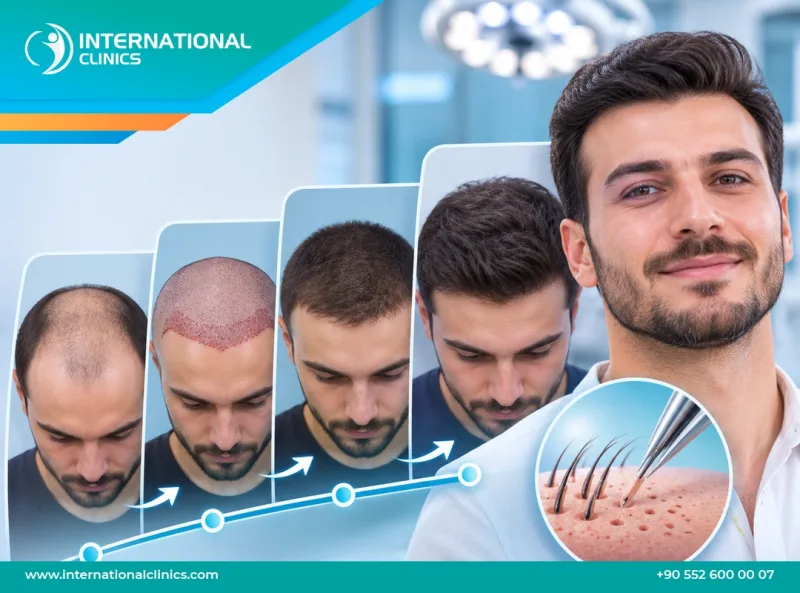
Most transplanted hairs shed in weeks 2–4, which is normal because the follicles stay in the skin. New hair starts growing at 3–4 months, the mustache and chin look close to final at 7–9 months, and full density usually takes about a year. The ISHRS notes that transplanted facial hair can be shaved and trimmed like natural facial hair.
Risks and Side Effects
Side effects are usually mild and temporary: swelling, redness, small crusts and numbness. Large FUE series report a low overall complication rate, mainly folliculitis and small scars. The NHS advises that hair transplants carry risks such as infection, bleeding, scarring and an unnatural look, so choosing a qualified surgeon in a licensed hospital matters more than the price.
Mustache and Chin Transplant with International Clinics
International Clinics is not a medical centre or a middleman; it is the link between patients and the right treatment. We connect you with experienced facial hair transplant surgeons and licensed, internationally accredited hospitals in Istanbul, with a free remote consultation, multilingual advisers and one year of follow-up after the procedure.