
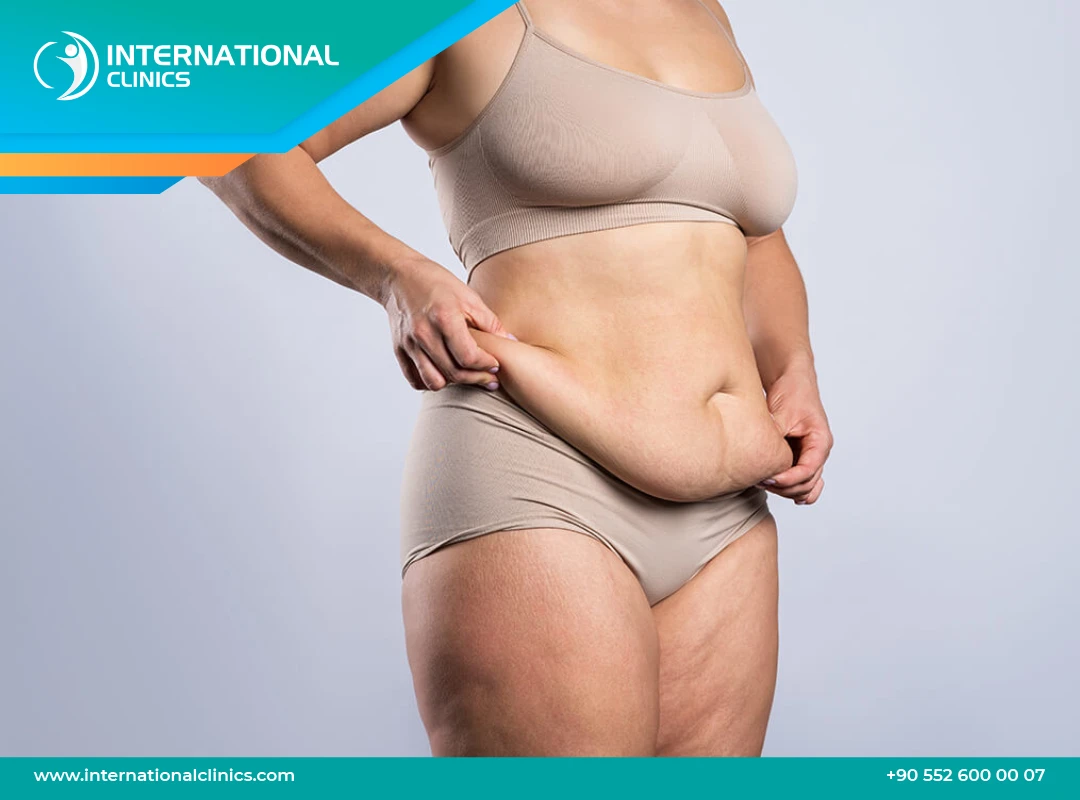
- What is loose skin, how does it develop, and why?
- Can You Tighten Loose Skin After Weight Loss?
- How to Tighten Loose Skin After Weight Loss
- Natural & Lifestyle Methods (Best for Mild Laxity)
- Non-Surgical Medical Treatments (Best for Moderate Laxity)
- Surgical Options (Best for Severe Laxity)
- How to Tighten Loose Skin Naturally?
- Can exercises effectively firm loose skin?
- How to tighten loose skin after weight loss surgically?
- What are the best surgical procedures to treat loose skin?
- Tummy tuck surgeries:
- How to tighten breast sagging effectively?
- How to get rid of saggy skin in the thighs and arms?
- How can you tighten loose skin in the face:
- Neck lift procedure to get rid of loose skin in the neck and under chin area
- How to tighten loose skin after weight loss without surgery:
- How do non surgical techniques treat saggy skin?
- Advantages vs. disadvantages of non surgical skin tightening
- Types of non-surgical skin tightening therapies:
- How long does it take for loose skin to tighten? surgical vs. non surgical methods?
- How to tighten stomach skin after weight loss
- Does smoking make sagging worse after weight loss?
- How to avoid loose skin when losing weight on GLP-1 medication
- Natural vs non-surgical vs surgical: which one matches your skin?
- How to choose the best method to treat your sagging skin?
Loose skin, commonly known as sagging, is a common concern for both men and women who experience body weight changes during their lives. Most people experience weight fluctuations and may develop loose skin in various parts of their bodies.
How can you tighten loose skin after weight loss? There are several natural, non-surgical, and surgical options to restore tighter, firmer skin in different areas of the body.
Short answer: the natural methods that actually move the needle are building muscle with resistance training 3 to 4 times a week, eating enough protein and vitamin C, staying hydrated — the NHS Eatwell Guide figure is 6 to 8 cups or glasses of fluid a day — losing weight slowly at the NHS-recommended rate of 1 to 2lbs, or 0.5 to 1kg, a week, and not smoking, because smoking breaks down the collagen and elastin your skin already has. What none of them can do is remove skin that is already hanging in folds. That needs surgery, and no cream, supplement or exercise changes it.
While surgical removal of excess skin is the most effective solution for severe sagging, especially when folds are present, many people prefer non-surgical approaches. These include therapies that stimulate collagen, such as laser and radiofrequency treatments, as well as natural methods like exercises that strengthen the muscles under the skin, giving the body a more sculpted appearance.
In this article, we will review all available methods for treating loose skin and determine the best approach for tightening each body area.

What is loose skin, how does it develop, and why?
What makes skin unique is having elastic features, that is, it can be stretched and restore its shape rapidly.
That is because of collagen and elastin, natural body proteins which are essential components of your skin and give it its elasticity and tightness properties.
Over-stretching of skin occurs when your body size enlarges more than normal, which happens when gaining overweight.
When you lose this weight, your skin cannot respond efficiently to produce the huge quantities required of these proteins.
Collagen and elastin deficiency result in loose skin.
Loose skin is a lack of the skin’s ability to retain its elasticity, so excess and overstretched skin build-up results in a sagging appearance.
Collagen deficiency also occurs due to age progression, which contributes to age-related sagging.
Can You Tighten Loose Skin After Weight Loss?
Yes, you can tighten loose skin after weight loss, although the results depend on factors such as how much weight you lost, your age, and your genetics. There are several ways to address loose skin, including natural, non-surgical, and surgical methods.
Natural methods to tighten skin combine healthy lifestyle habits, proper nutrition, and regular exercise. These approaches are most effective for mild skin sagging.
Non-surgical treatments offer a safe and effective option for moderate skin sagging, without the risks of incisions or scarring.
Surgical methods are the most effective solution for mild, moderate, and severe skin sagging. However, because they are invasive procedures, they are usually reserved for more severe cases of loose skin.
How to Tighten Loose Skin After Weight Loss
To tighten loose skin after weight loss, combine strength training to build muscle, with a nutrient-rich diet (protein, vitamins C and E, omega-3s) plus hydration, and good skincare (moisturizers, sunscreen) to support skin elasticity; for significant sagging, consider professional non-surgical treatments (ultrasound, radiofrequency) or surgical options (tummy tuck) for the most dramatic results.
The best approach to tighten loose skin depends on your age, health and degree of skin sagging. The most effective methods are:
Natural & Lifestyle Methods (Best for Mild Laxity)
These methods support the skin’s natural structure and work gradually rather than overnight. How far they get depends on how much weight was lost, your age and your genetics — which is why no honest timeline fits everyone.
- Strength Training: Lifting weights or doing bodyweight exercises such as squats, push-ups and lunges 3 to 4 times a week builds muscle that fills the space previously occupied by fat, providing internal structure that makes skin appear firmer.
- Gradual Weight Loss: Losing 1 to 2lbs, or 0.5 to 1kg, a week — the rate the NHS recommends — gives collagen and elastin time to contract naturally, whereas rapid loss (for example after bariatric surgery or while on GLP-1 medication) often outpaces that ability.
- Nutrition & Hydration: Consuming protein, vitamin C, and omega-3s supports collagen production. Proper hydration keeps skin cells plump and resilient.
- Topical Treatments: Creams with retinoids or hyaluronic acid may improve texture, but they cannot remove significant excess skin.
Non-Surgical Medical Treatments (Best for Moderate Laxity)
These professional treatments stimulate deep collagen and elastin production without surgery.
- Radiofrequency (RF): Heats deep skin layers to trigger contraction (e.g., Thermage, BodyTite).
- Ultrasound Therapy: Uses sound waves (e.g., Ultherapy, Sofwave) to target deep tissue layers for a lifting effect.
- RF Microneedling: Combines microneedles with heat to remodel skin texture and firmness (e.g., Morpheus8, VirtueRF).
Surgical Options (Best for Severe Laxity)
If you have significant “hanging” skin — skin that folds over on itself rather than simply looking soft — surgery is usually the only permanent solution.
- Tummy Tuck (Abdominoplasty): Removes excess abdominal skin and tightens underlying muscles.
- Body Lifts: Comprehensive procedures to remove skin from the lower body (buttocks, thighs, belly) or upper body (arms, breasts, back).
- Arm or Thigh Lifts: Targeted removal of skin in specific problem areas.

How to Tighten Loose Skin Naturally?
To naturally tighten loose skin, combine strength training to build muscle, a diet rich in protein, collagen-boosting foods (like bone broth, fish, fruits/veggies with Vitamin C), and omega-3s, and stay consistently hydrated.
Also, protect your skin from the sun, manage stress, get enough sleep, and consider firming creams with ingredients like retinoids to support elasticity and collagen production.
For those who prefer natural methods, here are some important tips to help keep your skin healthy, tight, and youthful:
- To tighten loose skin after weight loss, focus on a combination of nutrition, exercise, and skincare.
- Stay hydrated, as moisturised skin is more elastic than dry skin. The NHS Eatwell Guide recommends 6 to 8 cups or glasses of fluid a day.
- Follow a balanced diet rich in protein, vitamins A, C, E, and collagen-boosting foods like bone broth, citrus fruits, and berries to support skin repair and elasticity.
- Incorporate regular strength training exercises, such as squats, lunges, push-ups, and deadlifts, to build muscle that fills the space under loose skin.
- Gradual weight loss also helps the skin adapt to body changes more effectively.
- Maintain a consistent skincare routine, including massages and firming creams with retinoids, peptides, or hyaluronic acid, to improve circulation and collagen production.
- Collagen supplements or collagen-rich foods can further support skin elasticity when used alongside a healthy lifestyle.
- If you smoke, stopping is one of the highest-value changes you can make: smoking damages the collagen and elastin fibres your skin already has, which reduces its ability to bounce back.
Combining these tips will help you achieve both your ideal weight and body shape.
Can exercises effectively firm loose skin?
Exercise can help you prevent, control and get rid of mild sagging skin that sometimes occurs after weight loss. Strength training and muscle building are crucial to tightening loose skin and are far more beneficial than cardio.
However, exercise alone typically isn’t enough to fully tighten moderate and severe loose skin or get rid of excess skin, especially after significant weight loss or aging.
The main role of exercises to tighten skin is by building muscle through strength exercises that can improve body shape effectively and fill spaces formed due to fat loss. Underlying this helps unfold part of the skin and gives it a more tightened appearance. Regular exercise during the weight-loss phase itself is just as valuable, because it reduces how much loose skin forms in the first place.
How to tighten loose skin after weight loss surgically?
Surgical procedures to tighten loose skin involve making incisions to remove excess skin and underlying tissue, sometimes including muscle tightening for enhanced body contouring. These surgeries are most effective for treating loose skin after a large weight loss, where the amount of excess skin is beyond what the skin can retract on its own.
Advantages vs. disadvantages of surgical methods:
Advantages include:
- It is the best method for severe skin sagging, at any part of your body
- Provides immediate results
- Their results are more dramatic with high ability to contour your body as you like
Surgical skin tightening drawbacks include:
- Risks from surgery and general anesthesia
- Requires recovery time
- Invasive procedure with high likelihood of scarring
- Higher cost compared to non-surgical alternatives
What are the best surgical procedures to treat loose skin?
The best surgical procedure to tighten loose skin depends on the site of sagging.
Tummy tuck surgeries:
Tummy tucks are the most effective method for tightening loose abdominal skin, which commonly occurs due to weight loss, aging, and pregnancy. Different types of tummy tuck procedures target specific areas of the abdomen.
The traditional tummy tuck addresses both upper and lower abdomen. For more comprehensive results, a 360-degree tummy tuck can contour the abdomen, waist, and back simultaneously.
For sagging confined to the lower abdomen, a mini tummy tuck offers targeted correction with minimal scarring, avoiding the larger incision of a full procedure.
How to tighten breast sagging effectively?
Many women experience breast sagging after breastfeeding due to hormonal changes and aging. Breast lift surgery can restore a youthful appearance.
Discuss surgical vs. non-surgical options with your plastic surgeon to determine the most effective, safe, and affordable approach. Surgical lifts remove excess skin and reshape breast tissue for sculpted results, while non-surgical methods focus on improving skin elasticity naturally.
Some procedures combine breast lifts with tummy tucks, common in "mommy makeover" surgeries addressing post-pregnancy changes. Costs vary by procedure type and treatment areas, with results varying accordingly.
How to get rid of saggy skin in the thighs and arms?
Thigh lift surgery is an effective way to enhance the appearance of the legs, while tightening sagging skin in the arms helps achieve a firmer and more toned look.
Loose skin in the thighs and arms occurs when the fat tissue under the skin is lost and the skin loses its elasticity, which can result from aging or significant weight loss.
During the procedure, excess skin is removed, and remaining skin is tightened. These surgeries are particularly beneficial for individuals seeking to improve the contour of their thighs and arms and eliminate discomfort or chafing caused by excess skin.
How can you tighten loose skin in the face:
Facial sagging is one of the most common issues that affect overall appearance, making a person look older than they really are. It is a source of concern for many women who strive to maintain a youthful and attractive look.
Facial lift is a surgical procedure that removes excess skin and tissues and tightens facial muscle and makes your face appear more attractive and youthful.
Other nonsurgical methods are common to rejuvenate and tighten stretched facial skin. These include laser facial lift, microneedling with PRP, and thread lift.
However, these methods are only effective for mild to moderate sagging and to remove fine lines.
Neck lift procedure to get rid of loose skin in the neck and under chin area
A neck lift is a surgical procedure aimed at reducing loose skin under the chin and along the neck, commonly addressing concerns like a "turkey neck" or sagging skin caused by aging or significant weight loss.
The procedure often involves removing excess skin, tightening the underlying neck muscles, and sometimes incorporating liposuction to remove excess fat for a more defined and youthful appearance.
A defined facial appearance is a desired aesthetic feature, making removal of excess under-chin skin (sometimes with liposuction) increasingly popular.
Non-surgical methods like laser therapy and radiofrequency treatments can effectively treat mild to moderate sagging.

How to tighten loose skin after weight loss without surgery:
Non-surgical approaches for tightening loose skin after weight loss are very popular ways to achieve a more tightened and youthful smooth skin appearance.
These methods are effective to treat mild to moderate skin sagging in various parts of your body, including face and neck areas, abdomen and chest also can be used to tighten loose skin in the arms and thighs.
How do non surgical techniques treat saggy skin?
Actually these techniques do not remove excess skin, they only provide smooth and tightened appearance by enhancing collagen and elastin production and activation of skin healing processes that produce natural substances which are able to rejuvenate skin and repair damaged tissues to give rise to a more toned and youthful appearance.
Discover more about:
Breast Lift Cost: Find the Most Affordable Option for You
Breast Lift Scars: What to Expect and How to Care for Them
Skin Removal Surgery Cost: what the procedure is quoted at in 2026
Advantages vs. disadvantages of non surgical skin tightening
Advantages include:
- Non surgical methods are less invasive
- Less expensive
- No down time requirement or recovery period,
- They avoid surgical scarring and the complications that come with anaesthesia — though they have their own recognised side effects, including burns, blistering, temporary swelling and changes in skin pigmentation.
- The results observed after such techniques are more natural
Disadvantages include:
- These procedures are not effective for severe loose skin,
- They require several sessions and prolonged periods of treatment to show results.
- They produce only subtle results.
Types of non-surgical skin tightening therapies:
Laser therapy for skin: laser energy is used to tighten specific areas of your body. This process stimulates collagen production, which can result in mild to moderate lifting effects.
Care Continues Here: What Is a Laser Facelift? Cost, Advantages and Disadvantages
Ultrasound techniques like Ultherapy: Ultrasound waves activate skin cells to produce large quantities of collagen to gradually return the skin elasticity and tightening properties.
Radiofrequency wave techniques: This technique depends on heat generation to enhance deep production of collagen and elastin and improve the healing process. It is more effective than laser therapy for moderate skin sagging, but it is not appropriate for severe sagging.

How long does it take for loose skin to tighten? surgical vs. non surgical methods?
Surgical methods typically provide immediate results. Once you’ve passed the recovery period, you will notice an immediate improvement, with no need for more than one surgery!
Non-surgical skin tightening methods provide slower and more subtle results that require several sessions spread over weeks to months before the change becomes noticeable. However, their results are perfect for maintenance.
Empower Your Health Knowledge:
How to Avoid Loose Skin After Weight Loss: Best solutions for Tight Skin

How to tighten stomach skin after weight loss
The stomach is the hardest area to firm naturally, because it is usually where the most skin was stretched and where fat sat deepest. Build the abdominal and gluteal muscles underneath first — squats, deadlifts, planks and hip bridges do more for the look of the midsection than crunches alone — and give the skin time by losing the remaining weight slowly.
If the skin is soft and crepey but does not fold, radiofrequency, ultrasound or RF microneedling can tighten it over several sessions. If it folds over the waistband, sits in an apron, or causes rashes and chafing underneath, no non-surgical device will remove it — a tummy tuck or a panniculectomy is the only thing that does. Being told otherwise is the single most common piece of misinformation in this area.
Does smoking make sagging worse after weight loss?
Yes. Smoking damages the collagen and elastin fibres already in your skin, which directly reduces its ability to retract after weight loss. It also narrows small blood vessels, so the skin receives less oxygen and repairs itself more slowly.
The same mechanism matters twice over if you are considering surgery: reduced blood supply raises the risk of delayed wound healing and skin-edge breakdown along long incisions, which is why most surgeons ask patients to stop well before a body-contouring operation. If you are going to change one habit on this page, this is the one with the largest effect in both directions.
How to avoid loose skin when losing weight on GLP-1 medication
GLP-1 medication tends to produce fast weight loss, and speed is exactly what the skin struggles with — collagen and elastin retract at their own pace regardless of how quickly the fat underneath disappears. Rapid loss also costs lean muscle, which is the tissue that fills the space the fat leaves behind, so the loose look is often as much about lost muscle as about the skin itself.
Three things help, and all of them are easier started early than fixed afterwards: keep protein intake high enough to protect muscle, resistance-train throughout rather than after, and aim for the steady 1 to 2lbs, or 0.5 to 1kg, a week the NHS recommends rather than the fastest possible drop. Discuss the pace with the clinician who prescribed the medication — it is a conversation about dose and timeline, not something to manage alone.
Natural vs non-surgical vs surgical: which one matches your skin?
| Approach | Works best for | How long before you see it | Removes excess skin? |
|---|---|---|---|
| Natural & lifestyle Strength training, protein, hydration, no smoking | Mild laxity; skin that looks soft but does not fold | Gradual — it tracks your training and weight, not a fixed calendar | No — it fills the space underneath |
| Non-surgical devices Radiofrequency, ultrasound, RF microneedling, laser | Moderate laxity; crepey texture without folds | Several sessions, then weeks to months | No — it stimulates collagen only |
| Surgery Tummy tuck, body lift, arm or thigh lift, neck lift | Severe laxity; hanging folds, rashes or chafing | Immediate, once recovery is complete | Yes — it is the only option that does |
Every option on this page carries a trade-off. Devices need repeat sessions and produce subtle results; surgery produces the biggest change but involves anaesthesia, scarring and recovery, and it carries real risk. No method here works for everyone, and any clinic promising a guaranteed result should be treated with caution.
How to choose the best method to treat your sagging skin?
To choose the best way to tighten loose skin, first evaluate the degree of sagging. For mild sagging, combine lifestyle changes—such as strength training, a nutrient-rich diet (protein and vitamin C), and proper hydration—with supportive measures like firming creams, regular massage, and sun protection.
For moderate to severe loose or excess skin after significant weight loss, consider professional non-surgical treatments like ultrasound or radiofrequency, or surgical options. Gradual weight loss and building muscle remain key to supporting skin elasticity.
The decision-making process depends on various factors:
The degree of skin sagging is the key factor that your doctor may base their primary decision on. However, other factors include your age, skin type, the desired goals, which part of your body is to be lifted, the need for rapid results and finally the cost of the procedure.
If you are looking for immediate and impactful results, surgery may be the best option. However, if you prefer less invasive solutions, non-surgical treatments like lasers may be the most suitable choice for you.
Ask your surgeon now and make an informed decision. Feel free to contact us at International Clinics. Our surgeon will guide you to the option that fits your body and your budget.
Butt Fillers: Types, Costs, and Effectiveness