- Dental Clinic Turkey: How to Choose the Right Clinic
- Best Dental Clinics for Foreigners in Turkey: What Makes a Clinic Reliable
- What Is the Best Dental Clinic in Turkey?
- Top 5 dental clinic in Turkey lists: how to judge them
- Your First Consultation: What a Good Dental Clinic Asks
- Questions to Ask a Dental Clinic in Turkey Before You Book
- How Much Would It Cost to Get Teeth Done in Turkey?
- Red Flags When Comparing Dental Clinics in Turkey
- Where in Turkey Is Best for Teeth?
- Is Turkey a Good Place for Dental Work?
- How to Read Dental Clinic Reviews
- Planning Your Dental Trip: How Many Visits and Days?
- Aftercare and Repairs After You Fly Home
- Common Treatments at a Dental Clinic in Turkey
The best dental clinics in Turkey for foreigners are the ones that can prove who will treat you, examine you before agreeing a plan, put every tooth, material and price in writing and explain aftercare after you fly home. Choosing the right, safe and reliable dental clinic in Turkey, whether for veneers, crowns or teeth implants, means checking the dentists name and registration, asking whether the clinic holds the Ministry of Healths international health tourism authorization, and comparing written treatment plans rather than rankings.
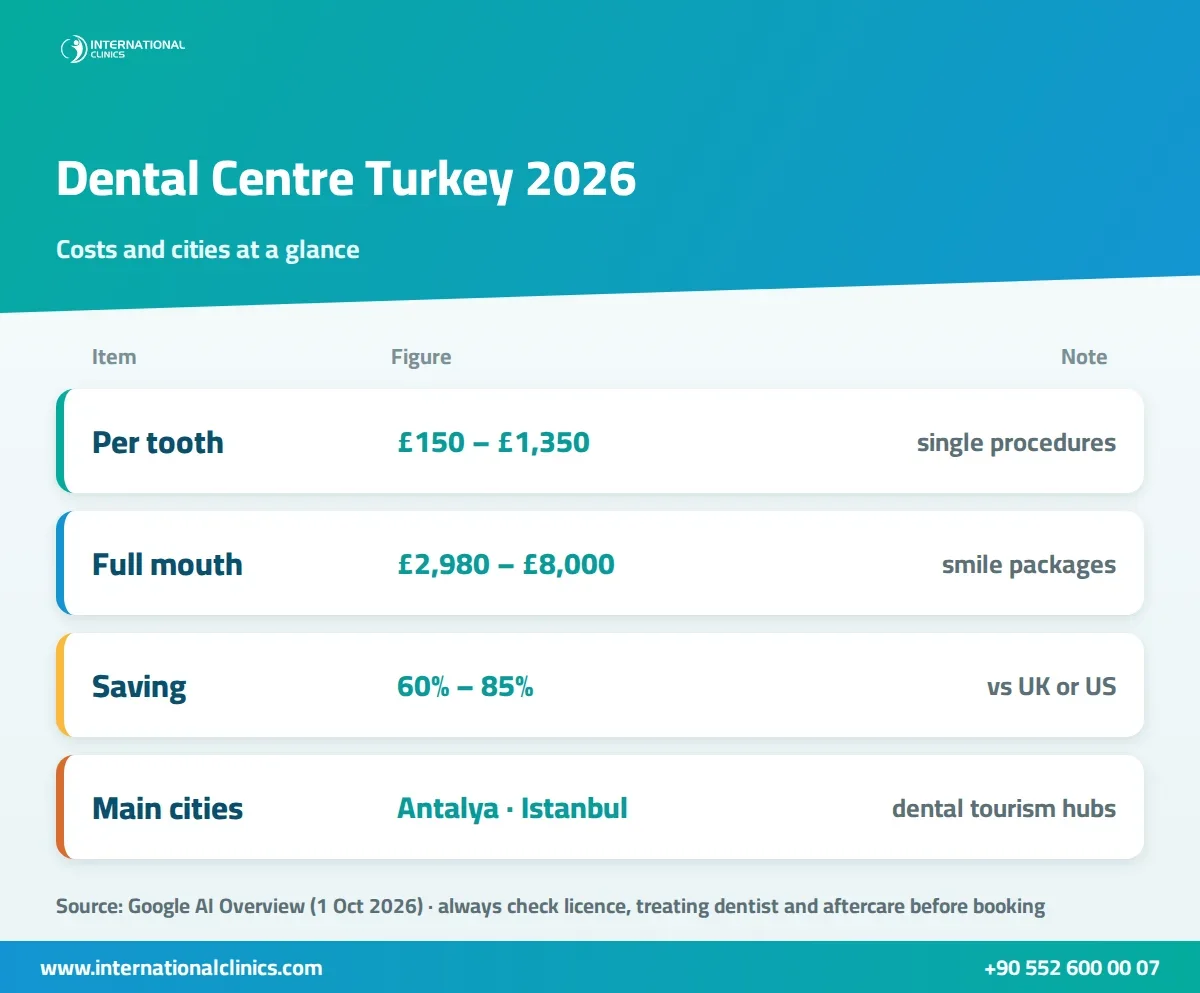
Choosing a dental clinic in Turkey comes down to accreditation, the dentists credentials, a written treatment plan and a clear aftercare arrangement. Getting teeth done in Turkey generally costs £150 to £1,350 per tooth for single procedures and £2,980 to £8,000 for full-mouth smile packages, 60% to 85% less than in the UK or US on the treatment price itself, before flights and hotel.
Dental Clinic Turkey: How to Choose the Right Clinic
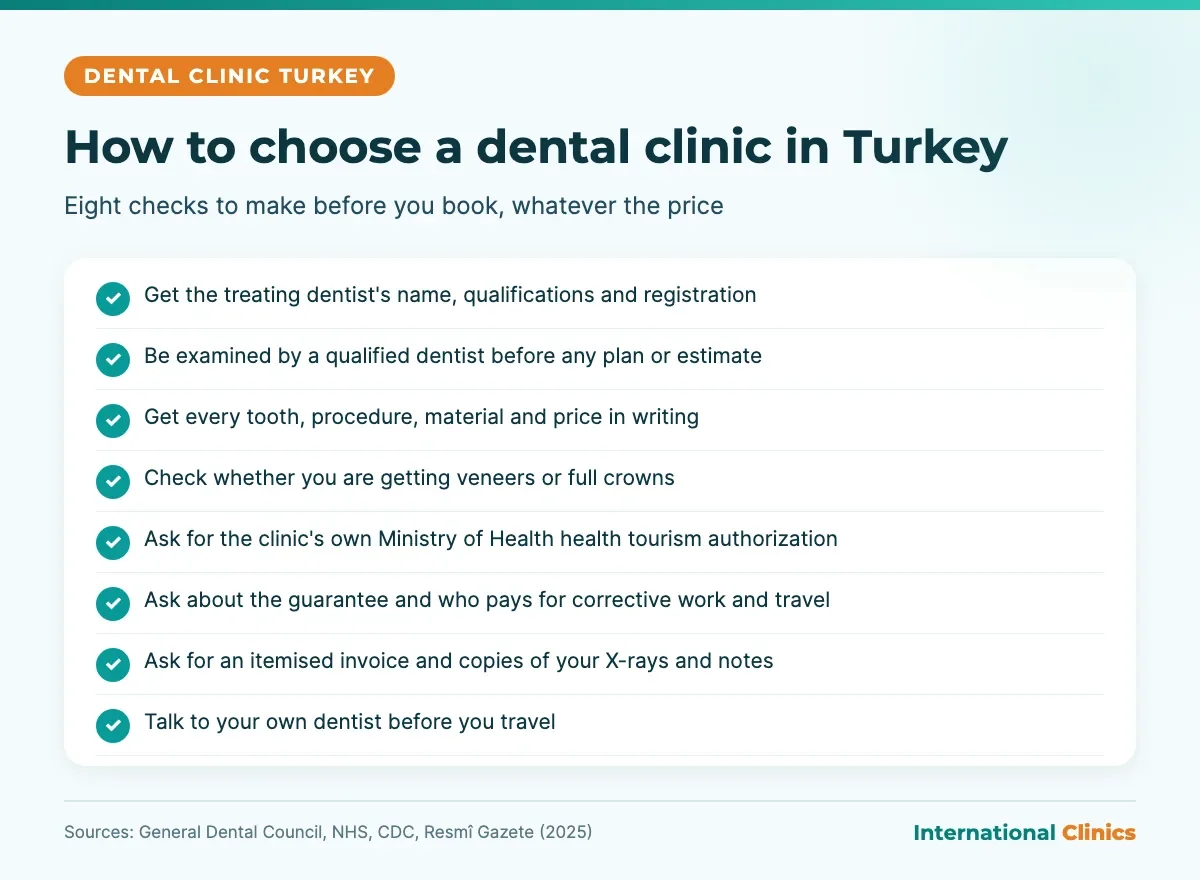
There is no single "best" dental clinic in Turkey for everyone, including for foreigners. The right one is the clinic that can show its credentials, explain exactly which treatment you are getting and tell you how problems will be handled after you fly home. Use this checklist before booking:
- Accreditation and licensing: ask for the clinics licence and any accreditation, and the name and registration of the dentist who will treat you. In Turkey, a health facility that treats international patients must hold an International Health Tourism Authorization Certificate from the Ministry of Health, and the certificate cannot be transferred to another facility, so ask for the clinics own (Source: Resmî Gazete, 26 April 2025).
- Who does the work: confirm the dentist, not an assistant, performs the key steps.
- A written treatment plan: the number of teeth, the exact procedure (veneer, crown or implant), materials and the total price in writing.
- Veneers vs crowns: make sure veneers really are veneers; some low-cost providers shave healthy teeth down for full crowns, which is irreversible.
- Aftercare: how follow-up, adjustments and repairs will be handled once you are home.
- A guarantee in writing: whether the work is guaranteed, for how long, and whether treatment of complications is included in the original price (Source: General Dental Council).
Best Dental Clinics for Foreigners in Turkey: What Makes a Clinic Reliable
For a foreign patient, a reliable dental clinic in Turkey is one that can communicate clearly with you and still be reachable after you go home. The Oral Health Foundation notes that problems and complaints often arise from communication issues, so make sure the dentist, not only a coordinator, can explain the treatment to you in a language you understand (Source: Oral Health Foundation).
- Language: the HealthTürkiye platform lists the languages offered by each hospital and says the hospital will help you find a translator if you ask for one (Source: HealthTürkiye).
- Records: ask for copies of your X-rays, scans and treatment notes in English, so a dentist at home can continue your care; the CDC advises medical travellers to request their records and share them with later caregivers (Source: CDC).
- Accreditation is a filter, not a guarantee: the CDC recommends internationally accredited facilities but adds that accreditation does not guarantee a good outcome (Source: CDC).
- Insurance: check with your own insurer before planning treatment; travel insurance normally does not cover complications of a planned procedure (Source: NHS).
What Is the Best Dental Clinic in Turkey?
The best dental clinic in Turkey is the one that suits your treatment and can prove its standards, not the one at the top of a ranking. Judge each clinic on the same points:
| What to check | Why it matters | How to verify |
|---|---|---|
| The treating dentist | Results depend on who does the work | Ask for the dentists name, qualifications and registration with a professional regulator |
| The examination | A plan made without an examination may be wrong for your teeth | Confirm a qualified dentist will examine you before treatment is agreed |
| The written plan | Prevents surprises such as crowns instead of veneers | Ask for each tooth, procedure, material and the full cost in writing |
| Aftercare | Problems can appear after you fly home | Ask what is included and who pays for corrective work and travel |
| Complaints and insurance | Shows how problems are handled | Ask whether the clinic has insurance and a clear complaints process |
These checks follow UK guidance on going abroad for dental treatment: the General Dental Council says you should always be assessed by a qualified dentist before you are given a treatment plan and cost estimate (Source: General Dental Council).
Top 5 dental clinic in Turkey lists: how to judge them
Treat "top 5" and "best clinic" lists as a starting point, never as proof of quality. Some are written by clinics, agencies or affiliate sites that may earn money from referrals, and few explain how they ranked anyone. Check who published the list, whether the criteria are stated, and then verify each clinic yourself using the checks above. This guide deliberately does not rank or name individual clinics, including in any "top 10 dental clinics in Turkey in 2026" style list.
Your First Consultation: What a Good Dental Clinic Asks
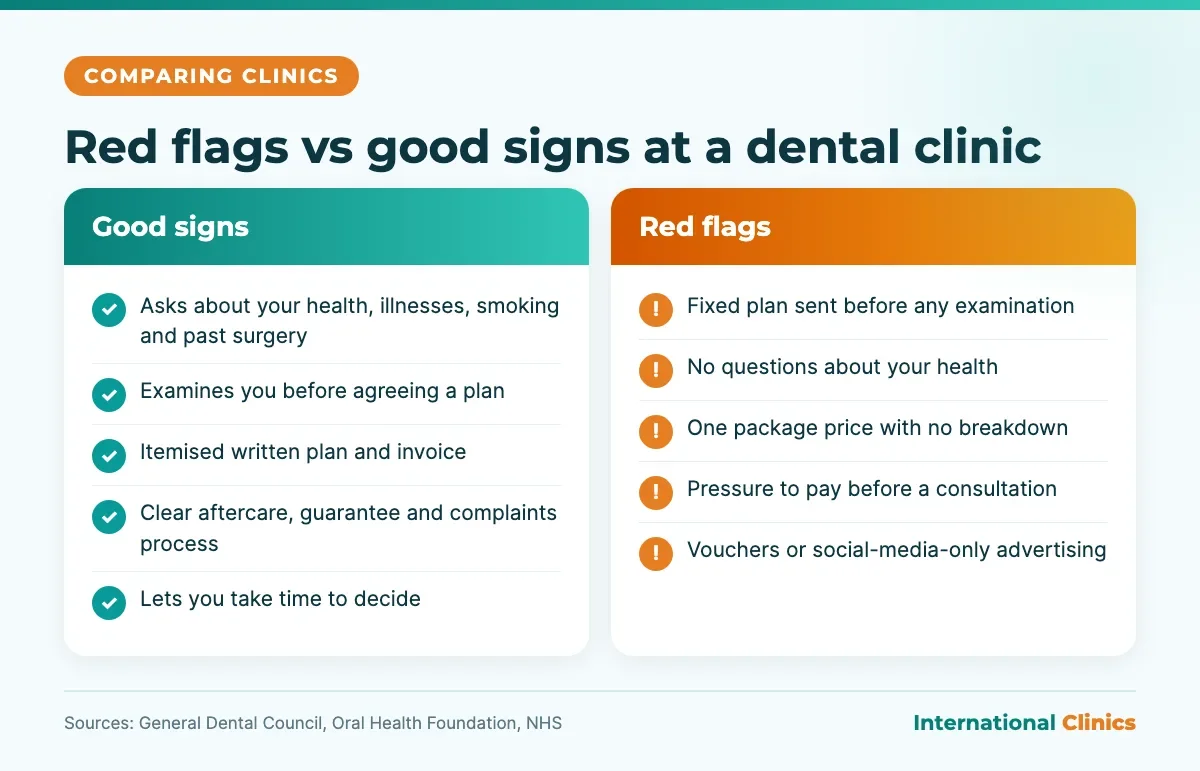
A good dental clinic asks about your health before it proposes treatment. Many overseas clinics offer a first consultation online or in your home country. The General Dental Council says the dentist who assesses you should ask for your full medical history, including:
- Your medical history and any long-term health conditions.
- Any serious illnesses you have had in the past.
- Whether you smoke.
- Previous surgery or a general anaesthetic (Source: General Dental Council).
If this information is not discussed, treat it as a warning sign. The Oral Health Foundation and the General Dental Council both recommend speaking to your own dentist first: they know your dental history, and they need to know your plans in case complications appear later. If you do not have a regular dentist, a one-off independent opinion from a local dentist before you travel serves the same purpose (Source: General Dental Council).
Questions to Ask a Dental Clinic in Turkey Before You Book
- Who will carry out my treatment, and what are their qualifications?
- Are they registered with a professional regulator?
- Will the dental team speak my language, or is a translator provided?
- How often do they carry out this procedure?
- What aftercare is included, and is follow-up care included in the price?
- What happens if I am unhappy with the result?
- Who pays for extra travel, accommodation or corrective work if something goes wrong?
- Do they have insurance and a clear complaints process?
- Who do I contact for advice after treatment?
- Is the work guaranteed, and for how long?
- If I need further treatment because of complications, is it included in the original cost?
- Does the clinic hold its own Ministry of Health international health tourism authorization, and will I get an itemised invoice?
This list is adapted from the General Dental Councils questions for patients going abroad, which also says you do not have to commit to anything on the day if the answers do not satisfy you (Source: General Dental Council).
For the last question, Turkeys 2025 health tourism regulation requires authorized facilities to issue an invoice that shows unit prices, and makes the facility responsible for the services it provides, including complications (Source: Resmî Gazete, 26 April 2025).
How Much Would It Cost to Get Teeth Done in Turkey?
Getting your teeth done in Turkey generally costs between £150 and £1,350 per tooth for single procedures, while full-mouth smile packages typically range from £2,980 to £8,000. These are typical published prices in Turkey in 2026; on the treatment price alone, dental treatment in Turkey is usually 60% to 85% cheaper than private treatment in the UK or US, and the total depends on the procedure, the materials and whether you buy an all-inclusive package. Flights, hotel nights and any return trip reduce the real saving, so compare the full written quote.
| Item | Price in Turkey |
|---|---|
| Single procedures (per tooth) | £150 – £1,350 |
| Full-mouth smile packages | £2,980 – £8,000 |
| Saving vs UK or US | 60% – 85% |
Treatment-specific prices: veneers in Turkey, dental implants in Turkey and how much are Turkey teeth. For full-arch work, see All-on-4 implants cost.
Red Flags When Comparing Dental Clinics in Turkey
- A plan without an examination: a fixed treatment plan sent before any dentist has assessed your teeth.
- No questions about your health: no discussion of medical history, medicines or past treatment.
- More treatment than expected: the Oral Health Foundation notes that standards vary between countries, including how much natural tooth is removed and the willingness to extract teeth rather than save them (Source: Oral Health Foundation).
- No written breakdown: a single package figure without a list of procedures, materials and inclusions.
- Pressure to pay: the NHS advises not paying for a cosmetic procedure until you have had a consultation, and taking time to decide (Source: NHS).
- Vouchers and social media only: the NHS advises avoiding treatment vouchers sold on discount sites and practitioners who only advertise on social media (Source: NHS).
Where in Turkey Is Best for Teeth?
Antalya and Istanbul are the main locations for dental treatment in Turkey. Antalya is a well-known dental tourism destination where clinics often bundle airport transfers, nearby hotel stays and multilingual coordination into the package. Istanbul offers larger multi-specialty centres and suits patients who want to combine treatment with a city trip.
Is Turkey a Good Place for Dental Work?
Turkey can be a good place for dental work if you choose an accredited clinic and understand the treatment. The main advantages are price and all-inclusive packages; the main drawback is aftercare, because repairs or complications after you return home can be hard to arrange locally. Much dental work is permanent, so decide carefully. Veneers cover only the front surface of a tooth, while crowns cover the whole tooth and are mainly used to restore badly damaged teeth; see veneers vs crowns (Source: Cleveland Clinic).
"Most types of dental veneers are permanent, meaning they arent reversible."
— Cleveland Clinic, Dental Veneers (Source: Cleveland Clinic).
How to Read Dental Clinic Reviews
Reviews are useful when they describe a specific treatment and what happened afterwards, and less useful when they only praise the hotel or the price. The General Dental Council suggests asking the clinic for references or testimonials from previous patients and, where possible, talking to other people who have travelled for treatment, for example in online forums (Source: General Dental Council). When you read reviews:
- Look for the treatment named (veneers, crowns or implants), the number of teeth and how the result looked months later, not just on the last day.
- Give weight to reviews that mention follow-up, adjustments or how a problem was handled.
- Read the negative reviews and the clinics replies, and check whether complaints repeat the same issue.
- Check that before-and-after photos show the clinics own patients and similar treatment to yours.
- Be cautious with influencer content: the NHS notes social media influencers are usually paid to advertise a service (Source: NHS).
Planning Your Dental Trip: How Many Visits and Days?
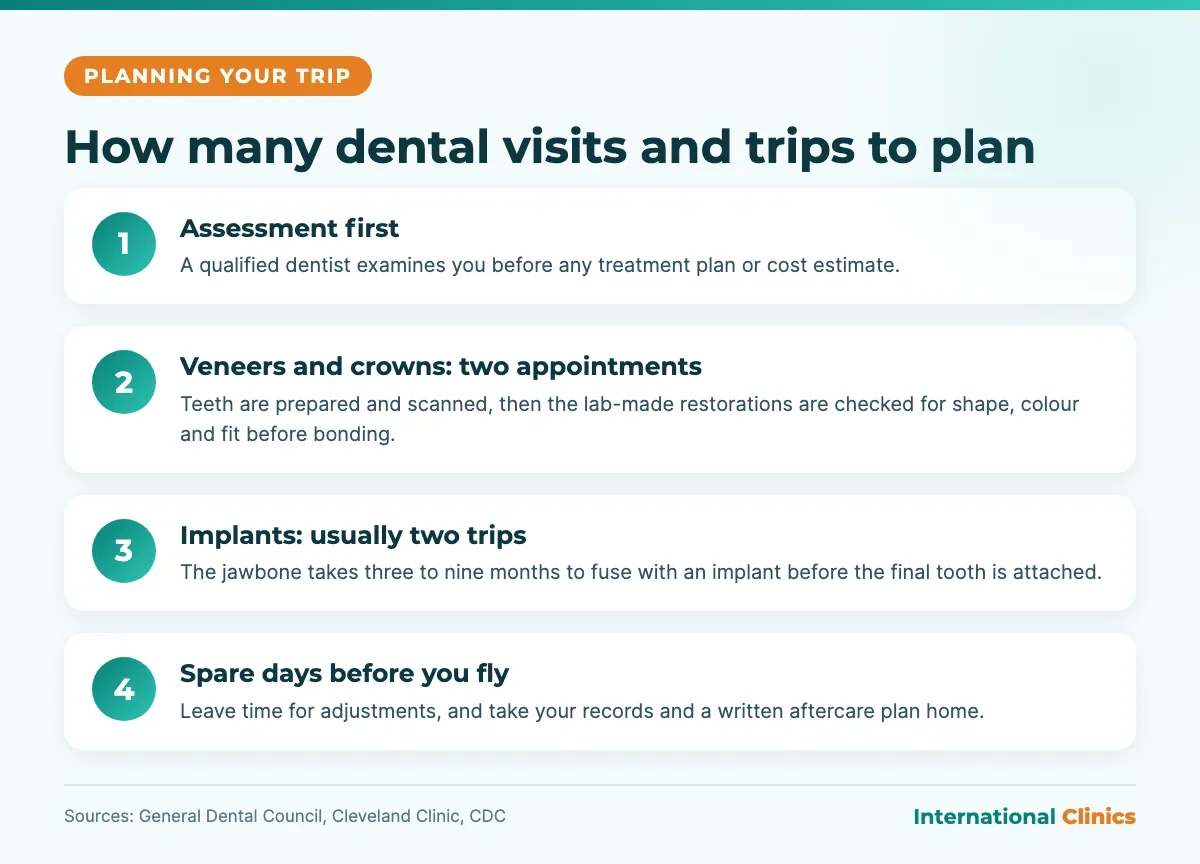
The number of trips depends on the treatment. Veneers and crowns are made in a dental laboratory after your teeth are prepared and scanned, so they need a second appointment once the laboratory has made them; Cleveland Clinic describes this visit as the point where the dentist checks the shape, colour and fit before bonding the veneers. Implants usually need two trips, because Cleveland Clinic says the jawbone takes three to nine months to fuse with an implant before the final tooth is attached. Ask the clinic for a day-by-day schedule in writing, and leave spare days in case adjustments are needed before you fly. For the implant timeline, see dental implant healing stages (Sources: Cleveland Clinic and Cleveland Clinic).
Aftercare and Repairs After You Fly Home
Agree the aftercare plan before you travel, because fixing problems later can cost more than the original treatment. The Oral Health Foundation warns that there is always a risk of treatment failure, that crowns, bridges, veneers and implants may need repeat visits and adjustments, and that returning to the clinic can be hard if an infection develops, while insurance may not cover the travel. Before booking, confirm who you contact with a problem, whether the clinic covers corrective work and travel, and how long restorations are expected to last (Source: Oral Health Foundation).
Infection is the most common complication reported in medical tourism, and the CDC notes that dentists abroad might not be subject to the same licensing oversight as at home, which is why the checks above matter more than the price (Source: CDC).
Turkeys official health tourism platform, HealthTürkiye, states that the countrys patients rights regulation applies to all public and private healthcare institutions and gives patients the right to complain if treatment goes wrong. It also advises checking with your own insurer whether treatment in Türkiye is covered (Source: HealthTürkiye).
Common Treatments at a Dental Clinic in Turkey
- Veneers: thin coverings bonded to the front of the teeth; see veneers Turkey.
- Crowns: caps that cover the whole tooth; see types of dental crowns.
- Implants: posts placed in the jawbone to replace missing teeth; see dental implants Turkey.
- Clear aligners: removable trays that straighten teeth over months, so most of the treatment happens at home; see Invisalign in Turkey.
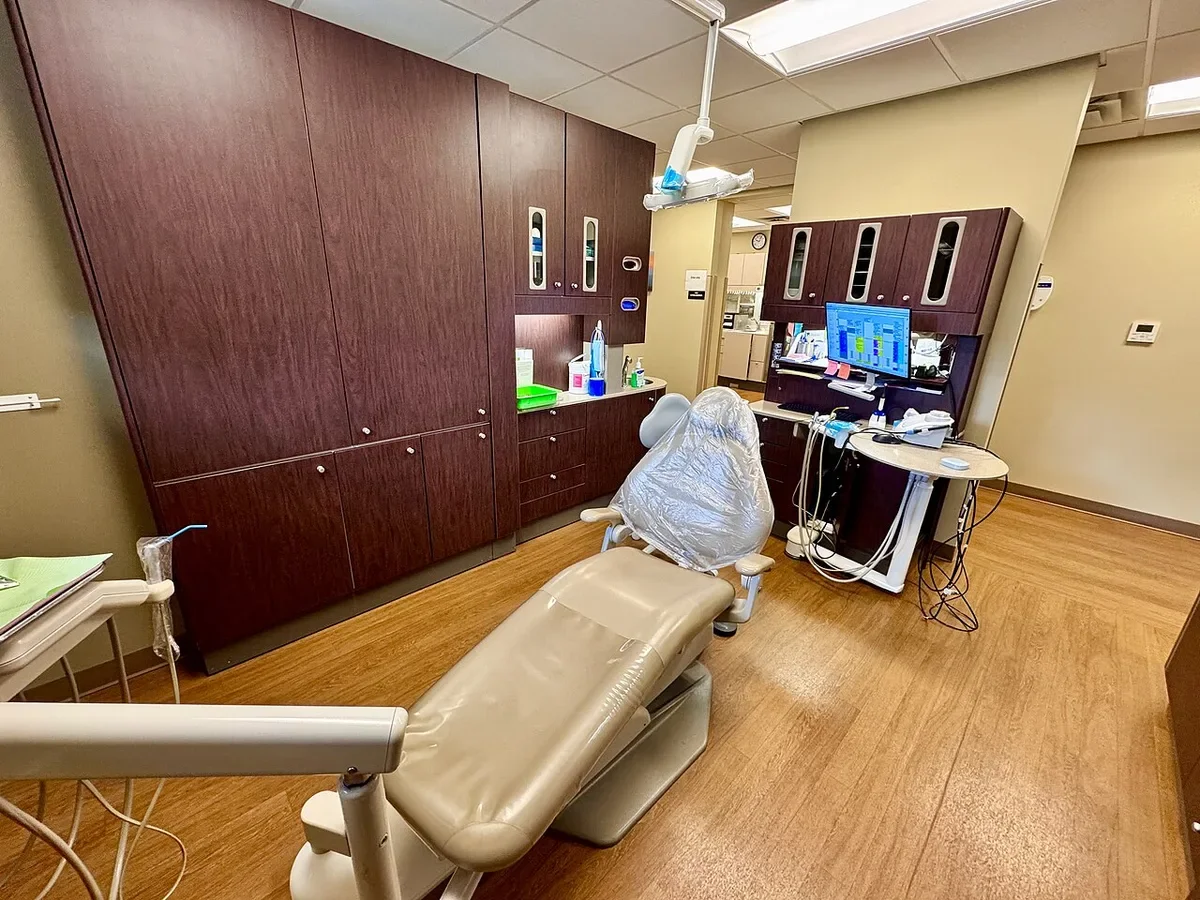
A treatment room in a modern dental centre with a dental chair, instrument unit and digital display. Photo: Harrison Keely, CC BY 4.0, via Wikimedia Commons.
Medical review and disclaimer:
This article was reviewed by Dr. Burhan Mollamusa, after its translation into the appropriate language. It is general information and does not replace an in-person examination by a dentist; treatment plans and results vary from patient to patient depending on the condition of the mouth and teeth.