- What Are the Primary Causes of Rhinoplasty Failure?
- Why Choose International Clinics for Revision Surgery?
- Technical and Anatomical Causes of Rhinoplasty Failure
- Surgical Steps to Correct Rhinoplasty Complications
- Normal Recovery Signs vs. Surgical Failure
- Pros and Cons of Revision Rhinoplasty
- Revision Rhinoplasty Recovery Timeline
- Real Patient Stories: Rebuilding Confidence
- Guarantees and Booking Consultations
- Pro-Tips to Prevent Future Complications
- Conclusion
Causes of Rhinoplasty Failure
Many patients search for the exact Causes of Rhinoplasty Failure (Rhinoplasty Failure) to understand how to correct unsatisfactory results. Consequently, International Clinics provides world-class revision surgeries addressing the Causes of Rhinoplasty Failure.
What Are the Primary Causes of Rhinoplasty Failure?
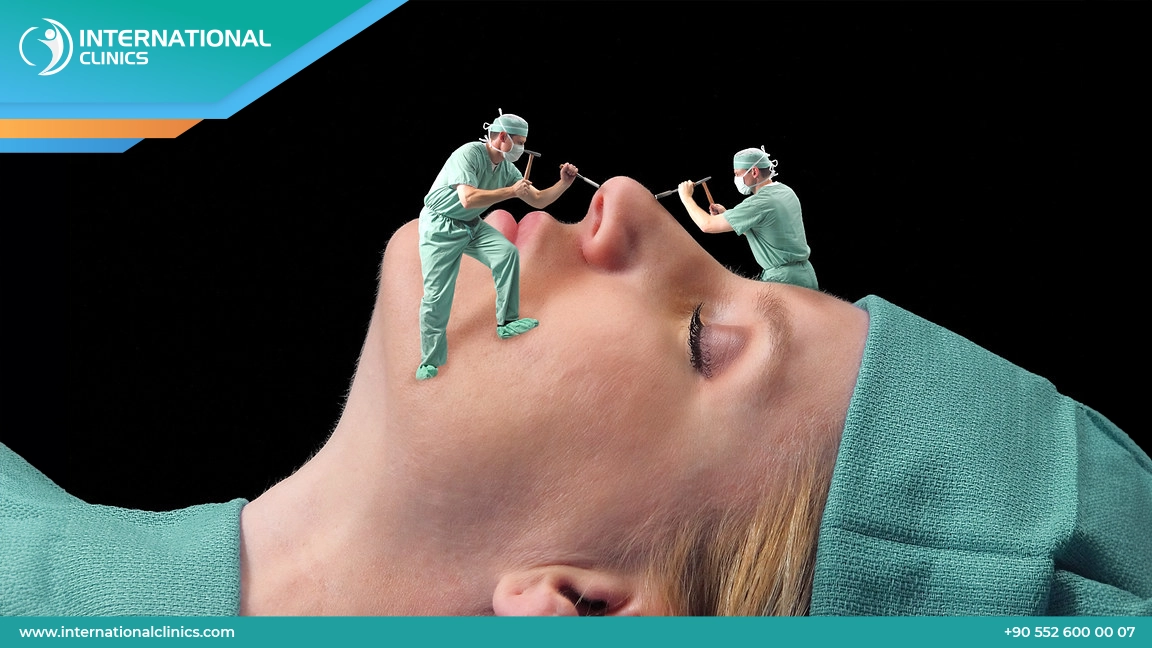
The most common Causes of Rhinoplasty Failure include excessive cartilage removal, improper tissue healing, and a lack of adherence to strict recovery protocols. Furthermore, inexperienced surgical techniques often lead to compromised structures, requiring advanced revision procedures to restore optimal functionality. (According to the WHO, strict surgical safety protocols significantly reduce post-operative complication rates).
Why Choose International Clinics for Revision Surgery?
Finding a highly skilled surgical team is essential when addressing the complex Causes of Rhinoplasty Failure safely. Therefore, our premier medical facility offers advanced reconstructive solutions tailored to prevent previous mistakes, ensuring long-lasting and natural-looking outcomes. Moreover, we prioritize patient safety by maintaining a sterile, technologically advanced surgical environment.
Here is why patients trust us to correct the Causes of Rhinoplasty Failure effectively:
Advanced Diagnostics: Utilizing 3D imaging to analyze internal structural damage.
Expert Surgeons: Specialized board-certified team handling complex revision surgical cases.
Modern Technology: Employing piezoelectric tools to minimize collateral tissue trauma.
Comprehensive Care: Providing continuous medical follow-ups for a safe recovery.
Natural Outcomes: Prioritizing aesthetic symmetry while rebuilding respiratory airway passages.
Total Transparency: Setting realistic expectations during the initial clinical consultation.
Global Standards: Strictly adhering to international medical safety protocols globally.
Luxury Experience: Offering comprehensive packages for a stress-free medical journey.
Ultimately, these premium standards guarantee an effective resolution for the Causes of Rhinoplasty Failure.
"Understanding the root Causes of Rhinoplasty Failure is the most critical step before attempting any corrective procedure. At International Clinics, our primary objective is to rebuild the compromised nasal framework meticulously, utilizing advanced grafting techniques that ensure structural integrity and restore the patient’s self-esteem permanently." — Senior Surgeon at International Clinics.
Technical and Anatomical Causes of Rhinoplasty Failure
The precise Causes of Rhinoplasty Failure are frequently linked to intricate surgical miscalculations during the primary operation. Moreover, extreme resection of the nasal dorsum or inadequate support of the nasal tip can drastically impair both the external appearance and the internal airflow dynamics. (According to the ASPS, revision rates for cosmetic nasal surgeries can reach 15%).
Identifying these technical Causes of Rhinoplasty Failure determines the correct reconstructive path moving forward.
Over-Resection: Removing excessive cartilage leading to a collapsed nasal bridge.
Internal Scarring: Developing thick scar tissue that blocks nasal airways.
Asymmetry: Failing to balance the left and right nasal proportions.
Valve Collapse: Weakening the internal nasal valves causing severe breathing difficulty.
Severe Infection: Experiencing postoperative infections that destroy healing cartilage grafts.
Septal Deviation: Leaving the underlying deviated septum uncorrected during surgery.
Skin Contracture: Shrinking of the nasal skin abnormally over the bone.
Graft Displacement: Shifting of implanted cartilage from its intended structural position.
Therefore, evaluating these Causes of Rhinoplasty Failure thoroughly prevents recurring surgical complications from happening.
Surgical Steps to Correct Rhinoplasty Complications
A highly customized surgical approach is mandatory to resolve the underlying Causes of Rhinoplasty Failure efficiently. Subsequently, the surgeon must focus on rebuilding the skeletal framework, often harvesting rib cartilage to provide adequate support, which significantly improves the breathing pathway and re-establishes facial harmony for the patient.
The corrective procedure directly addresses the identified Causes of Rhinoplasty Failure systematically and safely.
Initial Consultation: Examining the exact anatomical defects and reviewing medical history.
CT Scanning: Performing radiological imaging to map internal structural damages.
Surgical Planning: Designing a bespoke strategy to rebuild the collapsed areas.
General Anesthesia: Administering safe sedatives to ensure complete patient comfort.
Precision Incisions: Making delicate cuts to access the compromised nasal framework.
Cartilage Grafting: Harvesting robust cartilage from the ribs or ears.
Framework Reconstruction: Sculpting and securing the grafts to restore functional support.
Wound Closure: Suturing the surgical incisions meticulously to minimize visible scarring.
Consequently, following these rigorous steps actively reverses the Causes of Rhinoplasty Failure permanently today.
Normal Recovery Signs vs. Surgical Failure
Patients often confuse the standard postoperative healing symptoms with the definitive Causes of Rhinoplasty Failure. However, it is crucial to distinguish between temporary swelling that gradually subsides and permanent structural deformities or chronic breathing restrictions that demand immediate medical evaluation. (According to Cleveland Clinic, full nasal healing may take up to a year).
This table contrasts normal recovery symptoms against the definitive Causes of Rhinoplasty Failure clearly.
| Normal Recovery Symptoms | Indicators of Surgical Failure |
| Symmetrical Swelling: Mild puffiness around the nose and eyes. | Chronic Asymmetry: Persistent uneven swelling lasting for several months. |
| Temporary Congestion: Brief difficulty breathing due to internal splints. | Severe Obstruction: Permanent inability to breathe through the nasal passages. |
| Mild Numbness: Slight loss of sensation at the nasal tip. | Intense Pain: Unrelenting discomfort unresponsive to prescribed pain medications. |
| Fading Scars: Tiny incisions that lighten naturally over time. | Hypertrophic Scarring: Thick, raised, and highly visible external scar tissue. |
| Slight Tip Drop: A minor natural settling of the nasal tip. | Total Collapse: Visible caving of the nasal bridge or tip structure. |
Carefully monitoring these signs helps identify the Causes of Rhinoplasty Failure early for treatment.
Pros and Cons of Revision Rhinoplasty
Deciding to undergo a secondary surgery to fix the Causes of Rhinoplasty Failure requires a careful evaluation of the benefits and potential risks. Moreover, open communication with an expert specialist guarantees that the patient understands the complexity of the procedure and holds realistic expectations regarding the final functional outcome.
This evaluation balances the outcomes of treating the Causes of Rhinoplasty Failure surgically.
| Pros (Advantages) | Cons (Risks and Drawbacks) |
| Restored Breathing: Reopening obstructed airways for healthy, functional respiration. | Surgical Complexity: The procedure is highly intricate due to dense scar tissue. |
| Enhanced Aesthetics: Rebuilding symmetry to match the patients natural facial proportions. | Longer Recovery: Tissues require an extended healing timeframe compared to primary surgeries. |
| Structural Support: Using strong grafts to prevent future nasal framework collapse. | Additional Cost: Revision surgeries are generally more expensive due to surgical difficulty. |
| Psychological Relief: Eliminating the emotional distress caused by primary surgical errors. | Grafting Need: Often necessitates an extra incision to harvest rib cartilage. |
| Permanent Correction: Addressing the root functional issues for long-term respiratory health. | Scarring Risk: A slightly higher chance of developing unpredictable internal scar tissue. |
Understanding these variables ensures an informed approach to resolving the Causes of Rhinoplasty Failure.
Revision Rhinoplasty Recovery Timeline
Healing from a revision procedure to correct the Causes of Rhinoplasty Failure is typically a slower process than the initial surgery. Furthermore, tissues that have been previously operated on require delicate care, making strict adherence to postoperative medical instructions absolutely vital to ensure the stability of the newly implanted cartilage grafts.
Here is the standard healing timeline after treating the Causes of Rhinoplasty Failure completely.
First Week: Removing the protective splints while managing visible facial swelling.
Second Week: Returning to light desk work as external bruising fades.
First Month: Experiencing significant improvements in the internal respiratory airway passages.
Third Month: Noticing the refined nasal contours as deep tissue swelling resolves.
Sixth Month: Feeling the cartilage grafts integrate firmly with the surrounding tissues.
First Year: Reaching the final, stable aesthetic result with complete structural healing.
Routine Checkups: Attending scheduled clinical visits to monitor the graft stability.
Sun Protection: Avoiding direct ultraviolet exposure to prevent hyperpigmentation of the scars.
Sticking to this timeline prevents any recurrence of the Causes of Rhinoplasty Failure forever.
Real Patient Stories: Rebuilding Confidence
Authentic patient testimonials provide profound insight into how expert surgical intervention can resolve the complex Causes of Rhinoplasty Failure. Consequently, these narratives highlight the transformative journey of individuals who suffered from severe functional and aesthetic deformities, only to reclaim their confidence and quality of life through advanced reconstructive techniques at our specialized medical center.
"Following my initial surgery elsewhere, I developed a severely collapsed nasal bridge and struggled to breathe, which perfectly mirrored the worst Causes of Rhinoplasty Failure. Fortunately, the brilliant medical team at International Clinics meticulously reconstructed my nose using rib cartilage. Consequently, this complex revision completely restored my airflow, eliminating the persistent congestion, and gave me a beautifully natural profile that aligns perfectly with my facial proportions."
"The psychological toll of a botched nose job was overwhelming until I sought a professional consultation to deeply understand my specific Causes of Rhinoplasty Failure. However, the dedicated surgeons at International Clinics created a custom revision plan for me. Ultimately, the meticulous surgery repaired the severe septal deviation and collapsed valves. Today, my nose looks absolutely flawless, functions perfectly, and I have fully regained my lost self-esteem."
Guarantees and Booking Consultations
Selecting a trusted medical institution is paramount when seeking to rectify the multifaceted Causes of Rhinoplasty Failure. Therefore, our clinics provide an elite environment focused on patient safety, offering transparent treatment plans and unmatched clinical support to ensure your revision journey is completely secure, highly successful, and exceptionally comfortable. (Based on guidelines by ISAPS, board-certified facilities drastically improve revision outcomes).
We provide the following assurances to successfully overcome the Causes of Rhinoplasty Failure safely:
Free Consultation: Offering comprehensive initial evaluations with specialized revision surgeons online.
Transparent Pricing: Detailing all surgical costs upfront without any hidden medical fees.
Advanced Simulation: Utilizing digital tools to predict the anticipated aesthetic results accurately.
VIP Accommodation: Arranging luxury hotel stays to ensure maximum postoperative relaxation.
Hospital Accreditation: Performing all procedures exclusively in globally certified medical facilities.
Dedicated Translators: Providing multilingual support staff to facilitate clear medical communication.
Extended Aftercare: Delivering prolonged medical monitoring to track your ongoing recovery.
Proven Success: Showcasing a vast portfolio of successful revision surgical transformations.
These guarantees deliver absolute peace of mind while addressing the Causes of Rhinoplasty Failure.
Pro-Tips to Prevent Future Complications
To achieve a flawless outcome after your revision surgery, you need to be fully committed to your doctors instructions. Therefore, we have compiled a set of essential guidelines that will help you navigate your recovery period smoothly, ensuring your newly structured nose remains stable, functional, and completely free from any unexpected surgical setbacks.
Follow these expert recommendations to permanently prevent the Causes of Rhinoplasty Failure from recurring.
Surgeon Selection: Always choose a board-certified professional specializing exclusively in revision rhinoplasty.
Total Honesty: Disclose your complete medical history and prior surgical details upfront.
Splint Care: Keep your nasal cast completely dry and do not touch it.
Physical Rest: Avoid heavy lifting and strenuous workouts for at least two months.
Sleep Position: Elevate your head using two pillows to minimize postoperative swelling.
Quit Smoking: Stop nicotine use entirely as it severely restricts healthy tissue healing.
Nose Protection: Wear button-down shirts to prevent accidental trauma to the nose.
Patience Required: Wait a full year before judging the final shape of your nose.
Adhering strictly to these tips completely nullifies the Causes of Rhinoplasty Failure moving forward.
Conclusion
In summary, thoroughly understanding the underlying Causes of Rhinoplasty Failure (Causes of Rhinoplasty Failure) is the foundational step toward successfully correcting past surgical mistakes and restoring your natural facial harmony. Moreover, an unsatisfactory primary outcome should never permanently compromise your emotional well-being or your respiratory health. Consequently, taking decisive medical action is vital. We encourage you to contact the renowned specialists at International Clinics to schedule a comprehensive clinical consultation today. Ultimately, let our expert surgical team design a precise, customized revision plan that guarantees a safe, enduring, and beautiful result, ensuring that the Causes of Rhinoplasty Failure become a thing of the past.