Penile curvature correction (Peyronie's disease surgery) is surgery for the acquired bend caused by scar tissue (plaque) in the penile lining in Peyronie's disease, usually offered once the condition has been stable for several months. Its aim is to straighten the penis enough for comfortable intercourse while protecting erectile function.
It is performed under general or spinal anaesthesia. Depending on the degree of curvature, penile length and erection quality, the surgeon either shortens the longer side with fine sutures (plication), cuts or partially removes the plaque and covers the defect with a graft, or places a penile prosthesis when erectile dysfunction is significant.
The operation usually takes one to two hours, and most men go home the same day or after one night. Wound care, rest and avoiding sexual activity for several weeks follow the surgeon's instructions. The final result is usually judged once swelling settles and tissues heal over a few months.
The final cost is set after a medical consultant reviews your case and photos.
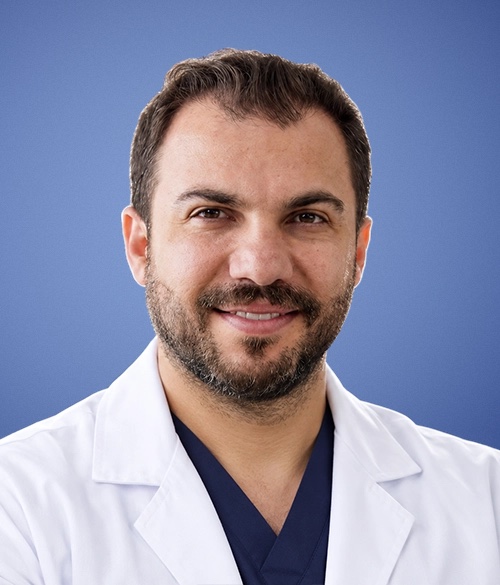

Assoc. Prof. Dr. Zülfü Sertkaya is an Istanbul urologist who focuses on andrology. He graduated from Gazi University Faculty of Medicine in 2008, completed his urology residency at Haydarpaşa Numune Training and Research Hospital in 2014, and holds the FEBU title (2017). He worked at state, university and private hospitals, including Memorial Diyarbakır and Başakşehir Çam and Sakura City Hospital. Since 2022 he has run his own clinic in Zeytinburnu, focusing on penile prosthesis, Peyronie's disease, premature ejaculation and male infertility.
Our medical consultants review all requests regularly, every three hours.
Get a free consultation and answers to all your questions by completing the form below
It can restore a straight enough shape for comfortable intercourse, ease the distress linked to the deformity and, in stable disease, gives a more predictable correction than non-surgical options.
Men whose Peyronie's disease has been stable, without pain or change in the bend, for an adequate period, and whose curvature prevents or complicates intercourse, after assessment by a urologist.
Blood tests and sometimes photos or an assessment of the erect penis are needed. Never stop any medicine on your own, such as blood thinners; your doctor decides what to pause and when. Fasting is required before anaesthesia.
Through a small incision, often around the head of the penis or at its base, an artificial erection is created to measure the bend, which is then corrected by plication, grafting or a prosthesis and checked again before closing.
There is no pain during surgery thanks to anaesthesia. Afterwards discomfort is usually mild to moderate and controlled with prescribed painkillers.
Swelling and bruising are expected and fade gradually. Most men return to desk work within days; intercourse and strenuous activity are usually avoided for several weeks, and stretching or traction may be advised.
Straightening is visible right after surgery, but the true result is assessed after healing. It remains stable for most men, although a slight recurrence of curvature can occur.
Possible issues include some loss of length, altered sensation, residual curvature, weaker erections, bleeding and infection. No result can be guaranteed; your surgeon explains your individual risk.
Plication may shorten the penis slightly, whereas grafting better preserves length but carries a higher risk of erectile weakness, so the choice is discussed with the surgeon beforehand.
A stay of about one week is usually advised so the wound can be checked before the flight home; your doctor confirms when it is safe to travel.