
- What is a Macular Hole?
- Causes and Risk Factors of Macular Hole
- Symptoms and Stages of Macular Hole
- Macular Hole Surgery Steps
- Surgical Treatment Techniques
- Pros and Cons of Macular Hole Surgery
- Macular Hole Recovery Timeline
- Real Patient Stories
- Why Choose International Clinics for Your Treatment?
- Pro-Tips
- Conclusion
Macular Hole
A Macular Hole is a serious vision-threatening condition that requires specialized care. Fortunately, International Clinics provides advanced surgical solutions to restore your central vision safely.
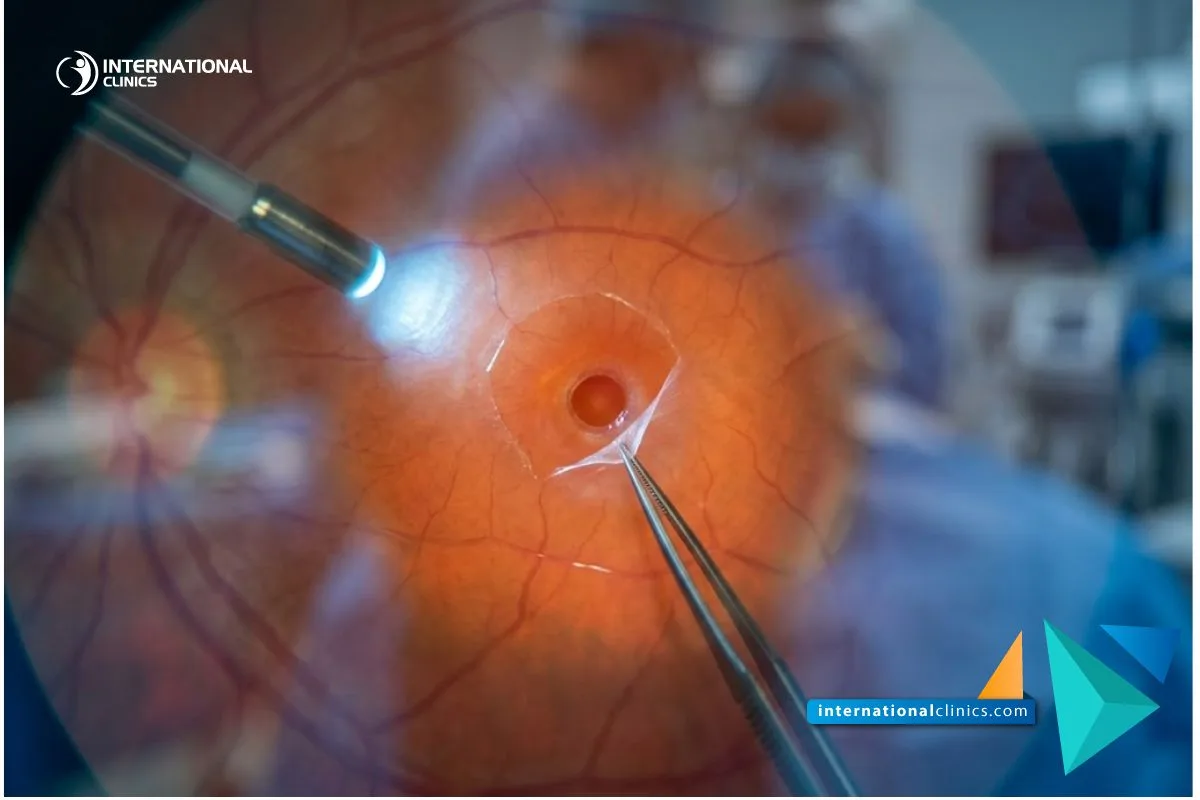
What is a Macular Hole?
A Macular Hole is a small break or tear in the macula, the central area of the retina responsible for sharp, detailed vision. Consequently, this structural defect causes blurred or distorted central eyesight, making everyday tasks like reading and driving significantly difficult without prompt medical intervention.
Causes and Risk Factors of Macular Hole
Understanding the underlying triggers of a Macular Hole is crucial for effective prevention and timely clinical intervention. Moreover, age-related changes within the eye are the primary culprits, although several other physiological and environmental factors can contribute to the deterioration of the macular tissue over time. (According to the WHO, early identification of ocular risk factors significantly reduces the incidence of severe visual impairment).
Identifying the exact causes of a Macular Hole helps determine appropriate treatment strategies:
Aging Process: Natural shrinking of vitreous gel pulls the fragile retina.
Eye Trauma: Direct blunt physical injury increases the risk of tearing.
Retinal Detachment: Previous history of retinal issues elevates your overall vulnerability.
Severe Myopia: Extreme nearsightedness structurally weakens the central macular retinal region.
Macular Pucker: Scar tissue formation creates abnormal tension on retinal layers.
Intraocular Inflammation: Chronic internal eye swelling degrades the macular cellular integrity.
Previous Surgeries: Certain complex ocular procedures leave rare but impactful complications.
Medical History: Having a defect in one eye increases bilateral risks.
Therefore, recognizing these risk factors empowers patients to seek immediate professional evaluation.
"Early diagnosis of a Macular Hole combined with precise microsurgical intervention makes a profound difference in restoring a patient's central vision. Here at International Clinics, we utilize state-of-the-art Optical Coherence Tomography (OCT) to map out the most effective and personalized surgical blueprint."
— Senior Surgeon at International Clinics.
Symptoms and Stages of Macular Hole
The progression of a Macular Hole is typically gradual, beginning with mild central blurriness before escalating into severe visual distortion. On the other hand, recognizing these symptoms during the early stages can save patients from permanent vision loss and drastic reductions in their overall quality of life.
Monitoring the evolving symptoms of a Macular Hole ensures timely medical consultation:
Blurred Vision: Noticeable difficulty focusing on fine details and reading text.
Distorted Lines: Seeing straight lines as wavy, bent, or irregular shapes.
Blind Spot: Sudden appearance of an empty patch in central vision.

Reading Difficulty: Struggling to decipher words or distinguish facial features clearly.
Stage One: Partial detachment of vitreous gel without full hole formation.
Stage Two: Small defect develops alongside a noticeable decline in sight.
Stage Three: Defect widens significantly causing substantial central visual field loss.
Stage Four: Complete vitreous detachment severely compromises the visual acuity entirely.
Consequently, ignoring these warning signs will inevitably lead to irreversible retinal damage.
Macular Hole Surgery Steps
Vitrectomy is globally recognized as the gold standard procedure for repairing a Macular Hole safely. Furthermore, this intricate microsurgical operation involves removing the vitreous gel to relieve traction on the retina, followed by the insertion of a specialized gas bubble to facilitate the natural healing of the macula.
The surgical repair of a Macular Hole involves highly precise steps:
Local Anesthesia: The eye is numbed to guarantee absolute patient comfort.
Micro-Incisions: Creating three microscopic scleral ports to access inner cavities.
Vitreous Removal: Extracting jelly-like substance to completely eliminate retinal surface traction.
Membrane Peeling: Removing the internal limiting membrane to stimulate cellular repair.
Gas Injection: Introducing customized medical gas bubbles into the cleared chamber.
Hole Closure: The bubble gently presses macular edges to seal defects.
Instrument Removal: Safely withdrawing surgical tools allowing tiny incisions to self-seal.
Eye Bandaging: Applying sterile protective shields to prevent postoperative bacterial infections.
Ultimately, this methodical approach maximizes the chances of successful anatomical closure.
Surgical Treatment Techniques
Various advanced clinical techniques are employed to treat a Macular Hole based on the specific anatomical stage of the defect. However, the primary goal across all methods is to relieve retinal tension, promote natural tissue regeneration, and restore visual clarity while minimizing potential surgical risks.
Selecting the right technique for Macular Hole repair is vital for success:
| Surgical Technique | Medical Procedure Details | Expected Success Rate |
| Standard Vitrectomy | Complete removal of vitreous fluid and targeted gas injection | Exceeds 90% for early-stage cases |
| Internal Membrane Peeling | Micro-surgical removal of the retina's delicate inner layer | Extremely high and highly sustainable |
| Pharmacologic Injection | Using specialized drugs to dissolve vitreoretinal structural bonds | Moderate (strictly for early stages) |
| Silicone Oil Tamponade | Utilizing medical oil instead of gas for specific patients | Good, but requires secondary removal |
| Laser Photocoagulation | Adjuvant therapy to secure and seal peripheral retinal tears | Excellent for supportive structural reinforcement |
Thus, consulting an expert ensures you receive the most appropriate therapy.
Pros and Cons of Macular Hole Surgery
Undergoing surgery for a Macular Hole offers tremendous benefits, primarily the restoration of central vision, but it also carries inherent medical risks. Therefore, weighing these advantages against the potential drawbacks with your surgeon is essential for making an informed and confident healthcare decision. (According to the Cleveland Clinic, vitrectomy for macular holes boasts a success rate of over 90% when performed promptly).

Evaluating the pros and cons of Macular Hole surgery ensures realistic expectations:
| Pros (Advantages) | Cons (Risks and Drawbacks) |
| Restored Vision: Significant improvement in central visual acuity and clarity for fine details. | Cataract Formation: High probability of developing a cataract within months after the procedure. |
| Hole Closure: Complete anatomical healing of the macular defect in the vast majority of cases. | Retinal Detachment: A rare but serious complication requiring immediate secondary surgical intervention. |
| Prevented Blindness: Halts the progressive deterioration of sight, saving your central visual field. | Elevated Pressure: Temporary spikes in intraocular pressure necessitating specific medicated eye drops. |
| Permanent Results: Long-lasting structural stability without the need for repetitive future ocular surgeries. | Posture Requirements: Strict adherence to a face-down positioning protocol for several days post-surgery. |
| High Safety Profile: Advanced microsurgical instruments significantly reduce the likelihood of severe operative complications. | Infection Risk: A very slight chance of internal eye infection (endophthalmitis) needing strong antibiotics. |
In conclusion, the transformative benefits typically far outweigh the manageable surgical risks.
Macular Hole Recovery Timeline
The postoperative recovery phase for a Macular Hole requires absolute dedication to your surgeon's specific guidelines. Moreover, achieving optimal results depends heavily on maintaining proper head positioning and strictly adhering to the prescribed medication regimen to foster a stable and infection-free healing environment.
Following a strict recovery timeline for a Macular Hole is essential for healing:
Face-Down Positioning: To ensure bubble pressure, keep your head directed downwards.
Medication Routine: To prevent inflammation, administer all prescribed steroid drops strictly.
No Flying: Because altitude expands intraocular gas, avoid air travel completely.
Total Rest: To maintain stability, refrain from lifting and strenuous physical activities.
Protective Shield: To prevent accidental trauma, wear plastic shields while sleeping.
Follow-up Visits: To monitor progress, attend all scheduled postoperative clinical appointments.
Gas Absorption: The injected bubble will naturally dissipate over several weeks.
Visual Improvement: Reaching final visual acuity takes several months of healing.
Consequently, patience and strict compliance are your best tools for recovery.
Real Patient Stories
Listening to the experiences of those who have overcome a Macular Hole provides immense comfort and clarity for prospective patients. Furthermore, these narratives highlight the life-changing impact of timely expert intervention, illustrating how advanced microsurgery can return individuals to their normal, active daily routines.
"I was terrified when I noticed a persistent gray spot blocking my central vision, making reading almost impossible. After consulting the specialists at International Clinics, they diagnosed a stage three tear and recommended immediate vitrectomy. The face-down recovery was challenging, but a few months later, the hole closed entirely, and my vision is wonderfully clear again."
"My passion for painting was halted when straight lines began looking distorted and wavy due to a progressing ocular defect. The surgical team guided me through every step with incredible compassion and precision. Today, thanks to the successful surgery, the distortion is gone, and I am back to my canvas with full confidence."
Why Choose International Clinics for Your Treatment?
Selecting the right facility for your Macular Hole surgery is the most critical step in your medical journey. Moreover, International Clinics stands out as a premier global destination, offering unparalleled surgical expertise, cutting-edge technology, and comprehensive patient care packages designed for international medical tourists.
Choosing our facility for your Macular Hole treatment guarantees a premium experience:
Elite Surgeons: Because we employ globally recognized ophthalmologists specializing in retinas.
Advanced Technology: To ensure precision, we utilize the latest 3D imaging.

All-Inclusive Packages: To eliminate stress, we provide plans covering full accommodation.
Dedicated Aftercare: To secure results, we offer meticulous continuous postoperative monitoring.
Global Standards: Because safety is paramount, we adhere to international sterilization.
Proven Success: To give peace of mind, we consistently achieve closures.
Transparent Pricing: To help you plan, we offer highly competitive structures.
Multilingual Support: To guarantee clarity, personal coordinators are available in English.
Therefore, entrusting your vision to our experts is an investment in health.
Pro-Tips
Navigating the healing process of a Macular Hole can feel overwhelming, but professional advice makes it manageable. On the other hand, adopting these practical tips will help you avoid common pitfalls, protect your vulnerable eye, and ensure that your surgical results are nothing short of excellent.
Follow these essential Pro-Tips to ensure your Macular Hole recovery is swift:
Avoid Rubbing: To protect tissues, keep hands entirely away from eyes.
Maintain Posture: To secure bubble placement, adhere to face-down resting positions.
Use Drops: To ward off infections, apply medicated drops exactly scheduled.
Skip Workouts: To prevent pressure spikes, avoid intense cardiovascular exercises entirely.
Wear Sunglasses: To reduce light sensitivity, wear UV-blocking glasses when outside.
Avoid Flights: To prevent gas expansion, do not board airplanes ever.
Keep Dry: To avoid waterborne bacteria, keep tap water away completely.
Attend Checkups: To guarantee success, never miss scheduled follow-up clinical evaluations.
Ultimately, incorporating these guidelines into your routine guarantees the safest pathway.
Conclusion
In summary, a Macular Hole is a critical ocular condition that demands swift, expert surgical intervention to prevent permanent vision loss. However, with the exceptional advancements in microsurgical techniques, restoring your central vision is highly achievable and safe. By choosing the elite professionals at International Clinics, you are ensuring world-class care, unparalleled expertise, and a smooth journey back to visual clarity. Do not let distorted vision hold you back; schedule your comprehensive consultation today to protect your eyesight and future.