
- Can You Have More Than One Corneal Transplant?
- How Many Times Can You Have a Corneal Transplant
- Reasons for Repeat Corneal Transplant Surgery
- 1. Corneal Transplant Failure
- 2. Corneal Graft Infection
- 3. Corneal Scarring
- 4. Recurrence of the Original Disease
- 5. Limited Graft Longevity
- How Long Should You Wait Before a Repeat Corneal Transplant?
- Success and Survival Rates of Repeat Corneal Transplants
- Success Rate of Corneal Transplants
- Survival Rate of Corneal Transplants
- Factors That Impact the Success of Repeat Corneal Transplants
- Challenges of Repeated Corneal Transplants
- Who Cannot Have a Repeated Corneal Transplant?
- Get Repeated Corneal Transplants at International Clinics Istanbul
A successful corneal transplant typically lasts 10 to 15 years or more. However, in some cases, this may not be the case. Patients can experience corneal graft failure or other complications that require a replacement. Additionally, the transplanted cornea may wear down over time, which is especially important for younger patients who might need multiple transplants during their lifetime.
So, how many times can a corneal transplant be repeated? Technically, there is no strict limit. A new corneal transplant can be performed as long as the patient’s eye and overall health are good, a donor cornea is available, and the procedure is financially feasible.
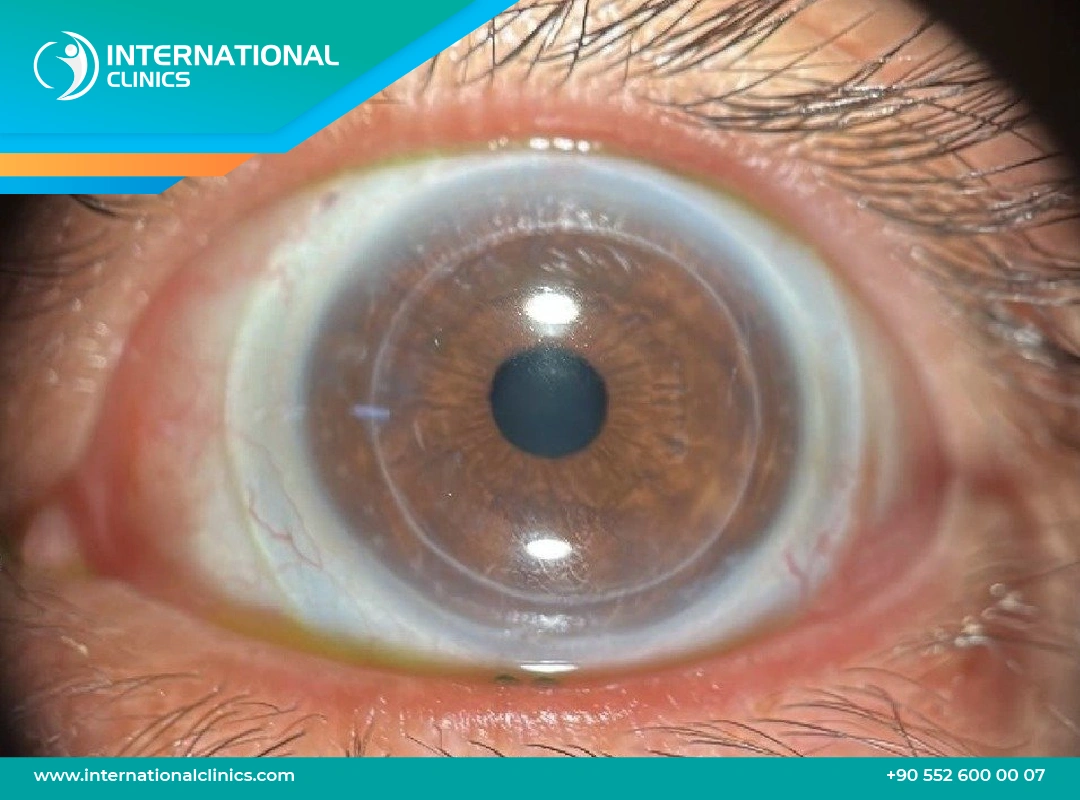
Can You Have More Than One Corneal Transplant?
Yes, a person can have more than one corneal transplant if the first one fails due to reasons such as rejection, infection, or recurrence of the original disease. Repeat transplants are possible as long as there is a reasonable chance of success and the eye can tolerate the procedure, although subsequent transplants may carry a higher risk of rejection.
When the first transplant fails or causes complications that affect vision, repeat corneal transplants (regrafts) can offer benefits such as potentially restoring vision, reducing pain, and improving the cosmetic appearance of a damaged eye.
Ophthalmologists often consider a second transplant once the eye has fully recovered from the inflammation caused by the failed graft. The decision to repeat the surgery depends on:
- Why the graft failed (rejection, infection, endothelial cell failure).
- The patient’s overall eye health.
- The potential for the eye to recover enough to support a new graft.
How Many Times Can You Have a Corneal Transplant
There is no official maximum number of corneal transplants, however most patients can undergo a corneal transplant two times, and in certain cases, a third transplant is still possible.
You should consider that with each corneal transplant repeated, the likelihood of success decreases with each additional attempt, also, the survival life of each new graft is minimized and the graft may not last as long as previous ones.
This is mainly because the eye becomes more prone to inflammation and immune rejection.
While more than three transplants have been performed in rare situations, the outcomes are generally less predictable and carry higher risks.
Reasons for Repeat Corneal Transplant Surgery
1. Corneal Transplant Failure
Graft failure is the most common reason patients need another corneal transplant. It happens when the transplanted cornea stops functioning properly and becomes cloudy again. Symptoms usually include redness, pain, increased light sensitivity, and blurred vision, and can often be reversed if treated quickly.
Reason for the corneal transplant failure include:
Immunological Rejection
Immunological rejection is the most common cause of corneal transplant failure. It occurs when the body’s immune system recognizes the donor cornea as foreign and attacks it. Early detection and treatment are crucial to prevent permanent graft damage.
- Primary Graft Failure
Primary graft failure happens immediately after surgery, when the transplanted cornea never becomes clear. This can result from inadequate function of the endothelial cells, poor tissue preservation, or surgical trauma. Unlike other causes of graft failure, primary failure occurs right after the procedure, leaving the patient with a cloudy graft that does not improve over time.
- Endothelial Decompensation
Endothelial decompensation, or exhaustion, is a type of late graft failure. Over time, the donor endothelial cells, which are essential for keeping the cornea clear, gradually die. As it deteriorates, the cornea becomes cloudy, and vision gradually declines, often necessitating a repeat transplant.
2. Corneal Graft Infection
Infections can develop in or around the graft, especially during the healing period after surgery. These infections—whether bacterial, viral, or fungal—can damage the corneal tissue and compromise the success of the transplant. If the infection leads to scarring or structural damage, the graft may lose its clarity or stability. In such cases, another transplant may be required once the infection is fully treated and the eye is ready.
3. Corneal Scarring
Corneal Scarring can occur for several reasons, including chronic inflammation, previous injuries, infections, or long-term surface problems. Even minor scars can distort the cornea’s shape and reduce vision, especially if they are located in the central visual axis. When scarring becomes dense or visually significant, replacing the graft with a new one may restore clearer vision.
4. Recurrence of the Original Disease
Some conditions that lead to a corneal transplant in the first place can reappear and damage the new graft. Conditions like Fuchs’ endothelial dystrophy, herpetic keratitis, or certain inflammatory diseases can affect the transplanted cornea the same way they affected the original one. When the underlying disease reactivates or progresses, it may cause the new cornea to fail, making repeat surgery necessary.
5. Limited Graft Longevity
Even a successful corneal transplant typically lasts 10 to 15 years, and in some cases up to 20 years. Over time, the transplanted cornea may gradually wear out or lose clarity, which can reduce vision. This is especially important for younger patients, who may need repeat transplants during their lifetime simply because the graft has reached the end of its functional lifespan.
How Long Should You Wait Before a Repeat Corneal Transplant?
You should generally wait at least 2 to 6 months before a repeat corneal transplant, the exact period varies, however It is not advisable to perform a repeat transplant immediately, as the eye needs time to recover from inflammation, infection, or other complications caused by the first graft. Attempting a new transplant too early can increase the risk of rejection or graft failure.
The exact waiting period depends on several factors, including the cause of the initial graft failure, the overall health of the eye, and the eye’s ability to support a new graft. In most cases, ophthalmologists recommend waiting several months—often between 3 and 12 months, until the eye has fully stabilized and inflammation has subsided.
Success and Survival Rates of Repeat Corneal Transplants
Repeat corneal transplants generally have lower success and survival rates compared to first-time procedures. The success rate reflects how well the transplant restores clarity and visual function, while the graft survival rate measures how long the cornea remains clear and healthy over time.
Although each subsequent transplant—especially the second and third—carries a higher risk of complications, many patients still achieve meaningful visual improvement. Studies show that second grafts can have 1-year survival rates around 91–98%, decreasing to 64–75% over 3–5 years. Overall, visual and functional success typically follows this pattern: 80–90% for the first transplant, 50–70% for the second, and 30–50% for the third, with lower and more variable results beyond that.
Success Rate of Corneal Transplants
Transplant Number | Success Rate (Visual & Functional) |
First | 80–90% |
Second | 50–70% |
Third | 30–50% |
Beyond Third | Significantly lower and unpredictable |
Survival Rate of Corneal Transplants
Transplant Number | 1-Year Survival | 3–5 Year Survival | 10–15 Year Survival |
First transplant | 91–98% | 64–75% | – |
Second transplant | 88% | 69% | 46% |
Third transplant | 65% | 49% | 33% |
Factors That Impact the Success of Repeat Corneal Transplants
The success of a repeat corneal transplant depends on several key factors. The most important is the
- The original reason the first graft failed, as the same issue can affect subsequent transplants. For example, if the failure was due to an immune reaction or graft rejection, these problems may recur, increasing the risk of failure in a second or third procedure.
- A history of glaucoma surgery, such as trabeculectomy or other pressure-lowering procedures, can also reduce graft survival, making repeat transplants more challenging and less predictable.
- Another factor is primary eye disease. The underlying eye condition that led to the initial corneal transplant can still affect the transplanted cornea. Some conditions, such as Fuchs’ dystrophy, tend to have lower survival rates when transplants are repeated, while diseases like keratoconus generally offer better long-term outcomes.
- Patient’s age: Younger patients generally heal better, while older patients may have weaker endothelial cell reserves, which affects success.
- Immune status and inflammation level: A highly reactive immune system or chronic eye surface inflammation significantly increases the chances of graft rejection with each new transplant.
- Finally, the type of transplant procedure influences success. Not all techniques perform equally; for instance, repeat DALK (Deep Anterior Lamellar Keratoplasty) has demonstrated excellent results in some studies, with success rates reaching around 93%, making it a strong option for suitable candidates.
Read more about related corneal surgeries:
Laser-Assisted Corneal Reshaping in Turkey 2025
Corneal Cross-Linking in Turkey: Affordable Prices with 90% Success Rate
Challenges of Repeated Corneal Transplants
Patients who require repeat corneal transplants face several challenges that can make each subsequent surgery more complex and less predictable. One of the main challenges is the increased risk of graft rejection, as the eye becomes more sensitive and immunologically reactive after each transplant.
Additionally, scar tissue, previous surgeries, or complications such as glaucoma can make the procedure technically more difficult and reduce the chances of success.
Another challenge is the availability of suitable donor corneas, which may delay surgery and limit options for some patients. Younger patients who may need multiple transplants over their lifetime also face the emotional and financial burden of repeated procedures. Finally, each repeat surgery may carry a slightly lower chance of long-term success, requiring careful monitoring and follow-up to ensure the best possible outcomes.
Who Cannot Have a Repeated Corneal Transplant?
Patients may not be good candidates for a repeat corneal transplant if they have:
- Severe, uncontrolled glaucoma
- History of multiple graft failures
- Certain systemic autoimmune diseases
- Poor overall eye health, where risks outweigh benefits
Get Repeated Corneal Transplants at International Clinics Istanbul
If you are considering a repeat corneal transplant, trust the experienced ophthalmologists at International Clinics Istanbul. Our specialists provide personalized treatment plans, use advanced surgical techniques, and ensure comprehensive care before and after the procedure. Whether it’s your first repeat or multiple grafts, we aim to maximize the success and visual outcomes of your surgery.
You may like:
Lens Replacement Surgery and Intraocular Lens Implantation in Turkey
Lasik Eye Surgery in Turkey- Procedure & Perfect Cost