
- What Is the Holyfix Method of Limb Lengthening Surgery?
- Ideal Candidates for Holyfix Limb Lengthening Surgery
- How Does Holyfix Limb Lengthening Surgery Work?
- Recovery Timeline After Holyfix Limb Lengthening
- Walking and weight bearing After Holyfix Surgery
- How Much Height Can You Gain With Holyfix?
- How Much Does Holyfix Limb Lengthening Cost?
- Side Effects and Complications of the Holyfix Method
- Advantages of the Holyfix Limb Lengthening
- Advantages of Holyfix Compared to Other Limb Lengthening Techniques
- Disadvantages of the Holyfix Method
- Holyfix limb lengthening Before & After Results
- Why Choose Turkey for Holyfix Limb Lengthening?
- FAQs About Holyfix Method Limb Lengthening
Holyfix method is a type of limb lengthening surgeries used for height increase by leg bone elongation, either femur, tibia or both
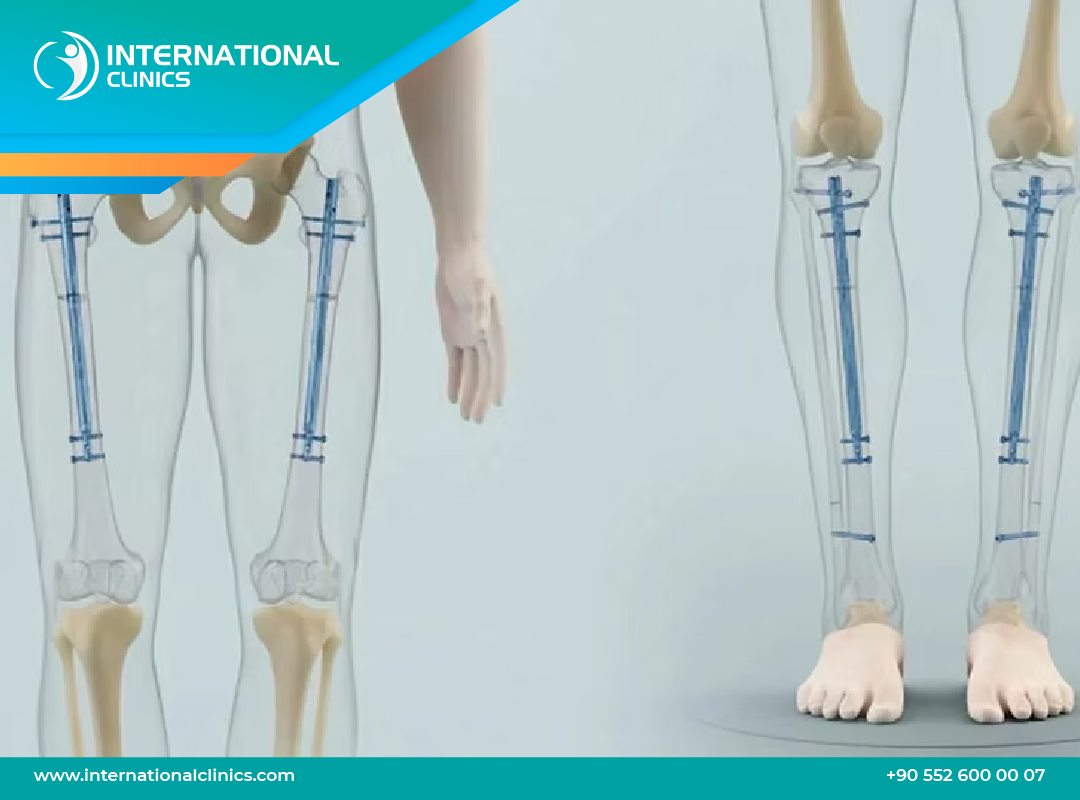
It is a modern, minimally invasive external fixation method that uses a lightweight titanium device attached to the bone for height increase or leg length correction.
It is known for lower infection risk, reduced pain, and faster recovery compared to older external methods, although the device remains in place longer than fully internal systems like Precice, as it is removed only after bone consolidation.
The method combines internal rods with an external frame, allowing gradual bone separation and new bone growth, often achieving up to 5 cm per limb, with physical therapy playing a crucial role in successful outcomes.
What Is the Holyfix Method of Limb Lengthening Surgery?
The Holyfix method is a minimally invasive limb lengthening technique that uses an external frame to gradually separate the bone while maintaining stability. It can be performed alone or in a hybrid approach combined with an internal nail for additional alignment and support.
Compared to traditional external-only frames, Holyfix offers faster recovery and less pain by reducing the risk of misalignment and allowing earlier removal of the external frame.
The Holyfix frame is a lighter, monolateral external fixator, attached on one side of the leg, designed for gradual bone lengthening, providing easier mobility and a shorter external fixation time. In contrast, Illizarovs circular bulkier full frame is more complex and fully surrounds the leg but allows highly precise correction of deformities.
Ideal Candidates for Holyfix Limb Lengthening Surgery
- Age & Health: Adults want to get taller and typically 14–60, though younger or older patients may be considered. Candidates should be in good overall health, not overweight, and free from uncontrolled chronic diseases, blood disorders, or active infections.
- Bone Health: Strong, fully developed bones with good quality for healing; no major systemic diseases (e.g., diabetes, HIV).
- Lifestyle: Non-smokers, or those who have quit for at least six months, and mentally prepared for the long rehabilitation process.
- Purpose: Suitable for addressing limb length discrepancies, short stature, or deformities for functional or cosmetic improvement.
- Commitment: Willingness to follow a strict physiotherapy and post-operative care plan.
How Does Holyfix Limb Lengthening Surgery Work?
Holyfix limb lengthening surgery involves using an external frame attached to the bone after a precise osteotomy (bone cut). The frame allows controlled, gradual separation of the bone segments, while an internal rod provides stability, promoting new bone formation in the gap. This results in gradual lengthening with less pain and faster healing than older methods. It can also be combined with internal nails for additional support.
Surgery (Osteotomy): The surgeon makes a small incision and carefully cuts the bone (femur or tibia) to preserve blood flow.
Device Placement: A Holyfix external frame is attached to the bone with pins or wires, while an internal rod may be inserted for added stability, preventing deformity.
Distraction Phase (Lengthening): After about a week of healing, the bone segments are gradually pulled apart by adjusting the external device, usually 0.5–1 mm per day, creating a controlled gap.
Bone Regeneration: The body fills the gap with new bone tissue (callus).
Consolidation Phase: Once the desired length is reached, the lengthening stops, and the new bone hardens and solidifies, often secured by screws in the internal rod.
Device Removal: After the new bone is strong enough, the external frame is removed, leaving the internal rod in place.
Recovery Timeline After Holyfix Limb Lengthening
Stage & Duration | What to Expect |
Hospital Stay (Few days) | Pain control, wound care, learning how to manage the external frame, basic physiotherapy. |
Initial Recovery (Weeks 1–4) | Daily pin-site cleaning, swelling reduction, limited weight-bearing, walking with crutches, gentle mobility exercises. |
Lengthening Phase (Months 1–3) | Gradual distraction (about 1 mm/day), regular X-rays, continued physiotherapy to prevent joint stiffness, walking with aids. |
Consolidation Phase (Months 3–6) | New bone hardens, gradually increased weight-bearing, gait improves, strength-focused physiotherapy. |
Late Recovery (Months 6–9+) | External fixator removed, possible brace, return to most daily activities, low-impact exercise allowed. |
Full Recovery (9–12+ months) | Bone fully healed, normal gait restored, return to strenuous activities and sports after medical clearance. |
Walking and weight bearing After Holyfix Surgery
After Holyfix limb lengthening, patients typically begin limited walking using aids such as crutches or a wheelchair immediately or shortly after surgery.
Walking progresses gradually, with normal walking often achieved around 4–5 months as the bone lengthens.
Full return to high-impact activities, including sports, usually take 9–12 months or more. Consistent physiotherapy and strict post-operative care are crucial for regaining strength, maintaining function, preventing infection, and ensuring proper bone healing.
How Much Height Can You Gain With Holyfix?
With the Holyfix limb lengthening method, patients typically gain 5 to 8 cm (2 to 3.1 inches) per bone. When both the femur and tibia are lengthened in separate stages, the total height increase can reach up to 13 cm (around 5–6 inches). Lengthening more than 8 cm on a single bone is usually avoided due to higher risks, since soft tissues may not adapt safely. The process works by gradually distracting the bone at about 1 mm per day, followed by a consolidation phase where the new bone hardens.
How Much Does Holyfix Limb Lengthening Cost?
The cost of Holyfix limb lengthening in Turkey typically ranges from $15,000 to $28,000 USD, depending on the clinic and procedure specifics. Prices vary significantly by country; for example, the same procedure in the United States often starts at $80,000–$100,000 USD, making Turkey a far more affordable option.
In Turkey, the price for Holyfix surgery usually includes the surgical procedure, while additional expenses may apply for rehabilitation, hospital stays, and post-operative care. In contrast, U.S. price quotes typically cover surgery fees only, making it crucial to budget for extra costs.
What’s Included in Holyfix Packages in Turkey:
- Complete surgical procedure by an experienced orthopedic surgeon
- Hospital stay and standard post-operative care
- Initial physiotherapy guidance and rehabilitation plan
- All necessary imaging and X-rays during hospitalization
- Medication and pain management during hospital stay
- Follow-up consultations for bone healing and recovery progress
Side Effects and Complications of the Holyfix Method
Side Effects, Risks, and Complications of the Holyfix Method
Common side effects during recovery from Holyfix limb lengthening include pain, stiffness, muscle weakness, and temporary posture changes. Less common but more serious side effects require careful monitoring, such as:
- Pin-site infection or deeper infections around the bone
- Nerve or blood vessel issues, including tingling, numbness, or temporary weakness
- Delayed bone healing or slow callus formation
- Fractures in the lengthened bone
More complicated risks, though rare, may include severe joint stiffness, deformities, or problems with the internal/external device, emphasizing the need for strict post-operative care and physiotherapy.
Advantages of the Holyfix Limb Lengthening
- Minimally Invasive: Uses smaller incisions than older systems like Ilizarov, reducing tissue damage and lowering the risk of scarring.
- Faster Recovery: The hybrid internal–external design generally results in less pain and quicker healing.
- Hybrid Stability: Combines an intramedullary internal nail with an external fixator for controlled, predictable bone distraction.
- Cost-Effective: Offers an advanced, reliable option at a lower price than fully internal systems such as Precice.
- High Success Rate: Considered a safe and effective technique for both cosmetic height increase and corrective deformity treatment.
- Significant Height Gain: Commonly allows up to 5 cm of lengthening per bone, and in some cases even more.
- Lower Infection Risk: The presence of an internal nail helps decrease infection risks compared to older, fully external frames.
Advantages of Holyfix Compared to Other Limb Lengthening Techniques
- Holyfix vs. Ilizarov: Holyfix is lighter, less bulky, and generally associated with a lower infection risk, while offering similar stability and wear time.
- Holyfix vs. LON (Lengthening Over Nail): Holyfix is an external-only method, whereas LON combines an internal nail with an external fixator, allowing earlier removal of the external frame. However, Holyfix avoids the added surgical complexity and higher cost of placing an internal nail.
- Holyfix vs. Precice (Internal Nail): Precice uses a fully internal, magnetically driven nail that provides maximum comfort and no external hardware. Holyfix, while less comfortable than Precice, offers strong external stability and can be more suitable for certain complex cases and budget considerations.
Disadvantages of the Holyfix Method
The Holyfix limb lengthening offers notable benefits but also comes with drawbacks. These include higher costs compared to simpler external methods, the possibility of pin-site infections if care is not meticulous, greater surgical complexity, and risks such as nerve or muscle irritation, joint stiffness, and a prolonged recovery period.
The external frame can also cause discomfort and aesthetic concerns, and the overall success of the procedure requires strong patient commitment to regular physical therapy.
Also,Holyfix limb lengthening requires extensive physical therapy and a lengthy consolidation (healing) phase, with potential for joint stiffness.
Holyfix limb lengthening Before & After Results
Holyfix limb lengthening results demonstrate noticeable height increases, typically ranging from 5 to 14 cm per limb, along with improved posture, mobility, and overall confidence. Patients often report feeling more comfortable in daily activities and social situations.
For those with leg length discrepancies, Holyfix can correct uneven limbs, leading to better balance, gait symmetry, and reduced joint strain. Visual “before and after” comparisons show not only measurable height gain but also improved leg alignment and proportionality.
Recovery and visible transformation occur gradually, with major milestones around 3, 6, and 12 months, corresponding to the distraction, consolidation, and full rehabilitation phases. Consistent physiotherapy is key to maximizing results and maintaining long-term function.
Why Choose Turkey for Holyfix Limb Lengthening?
Turkey is a popular destination for Holyfix and other limb lengthening procedures thanks to its winning combination of affordability and high-quality care. Prices are typically around 70% lower than in the US, UK, or Europe.
Cities like Istanbul are well-equipped to treat international patients, offering JCI-accredited hospitals and top-rated orthopedic surgeons. Comprehensive medical tourism packages often bundle surgical care with accommodation, transfers, and follow-up, making Turkey a cost-effective yet premium choice for limb lengthening.
You may like
Knee Surgery to Get Taller in Turkey: Safe, and Affordable Limb Lengthening