
- Composite bonding Turkey prices in 2026
- Turkey composite bonding: where the 60% to 70% saving comes from
- Who is a good candidate for dental bonding?
- What happens during a dental bonding appointment
- The five steps
- How long it takes
- How long does composite bonding last?
- Composite bonding or porcelain veneers: which suits your teeth
- Composite bonding Turkey before and after: what changes and what does not
- Risks and limits of tooth-coloured resin on front teeth
- What a Turkey bonding package includes — and what it leaves out
- Composite bonding in Antalya or Istanbul: which city should you choose?
- Composite bonding aftercare: how to make it last
- What to check before you book dental treatment in Turkey
Composite bonding in Turkey is a same-day cosmetic treatment: a dentist shapes tooth-coloured resin directly onto your front teeth to close small gaps, rebuild chipped edges and even out colour. It is the least destructive option on the cosmetic dentistry menu — no enamel is normally removed — which is exactly why it is worth understanding before you book a flight.
Composite bonding Turkey prices in 2026
Composite bonding in Turkey is quoted at roughly £70 to £150 per tooth (about $80 to $180), which is 60% to 70% below UK and US prices. Those are the figures returned by the Google AI Overview for this search on 20 September 2026.
Against that market band, here is what International Clinics publishes. The composite figure comes from our own veneers in Turkey cost breakdown; the ceramic figures are the published rates of the Istanbul dentist we work with, DMD/DDS Burhan Mollamusa.
| Treatment | Our published price (USD) | Where it is published |
|---|---|---|
| Composite resin veneer / bonding | $150 – $300 per tooth | Our veneers cost guide |
| Laminate veneer (Lense) | $360 per tooth | Published rates of our dentist |
| E-max crown | $360 per tooth | Published rates of our dentist |
| Zirconium crown | $220 per tooth | Published rates of our dentist |
| Panoramic X-ray | $60 | Published rates of our dentist |
Our published composite figure sits above the cheapest quotes in the market band, and we would rather say so than hide it: these are the rates our dentist publishes, not a headline number designed to open a conversation. The ceramic rows are not there to upsell you either — they are there so you can see what you would be paying if a clinic talked you out of resin and into crowns. Our dental veneers treatment page sets out the full cosmetic range these prices belong to.
Turkey composite bonding: where the 60% to 70% saving comes from
The saving is not a discount on the resin. It is the cost of running a dental practice: premises, staff and laboratory work are all cheaper in Istanbul than in a British high street, and Turkish clinics treat enough international patients to price a smile line as a package rather than as a series of appointments.
That arithmetic only works, though, if you are honest about the number of teeth. Someone whose smile shows eight teeth does not need twenty of them treated. The most expensive mistake in dental tourism is not the flight or the hotel — it is agreeing to treat teeth that did not need treating.
Who is a good candidate for dental bonding?
Bonding suits small problems on sound teeth: a chipped edge, a narrow gap, a tooth that sits slightly short of its neighbours, a patch of discolouration on an otherwise healthy surface. It is the right answer when the change you want is measured in millimetres.
It is the wrong answer if you want a dramatic change in shape or shade across the whole smile, if you grind your teeth heavily, or if there is untreated decay or gum disease. Those have to be dealt with first — cosmetic resin placed over an active problem hides it rather than fixing it.
What happens during a dental bonding appointment
The five steps
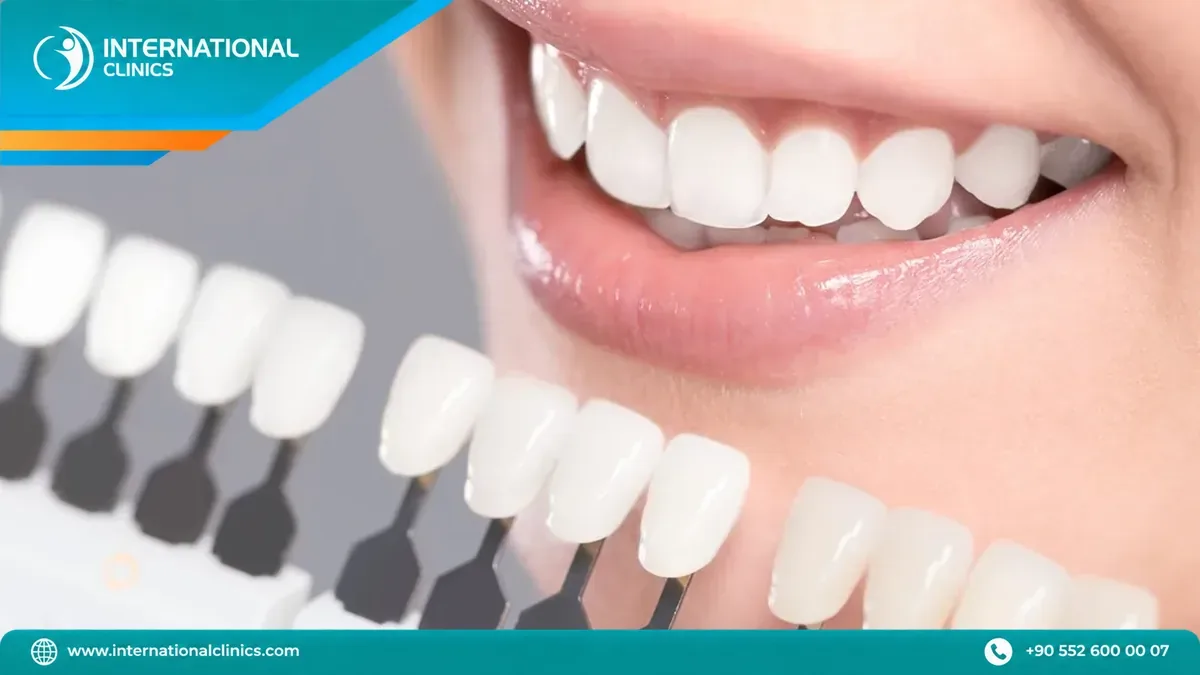
Cleveland Clinic sets out five steps: the dentist selects a shade using a shade guide, prepares the tooth surface, applies and moulds the composite resin, hardens it with a curing light, then polishes the tooth.
How long it takes
Time is the figure most clinic pages get vague about. Cleveland Clinic puts the procedure at 30 to 60 minutes per tooth, and the Google AI Overview describes bonding as a single appointment lasting one to three hours. A smile line of several teeth is therefore an appointment measured in hours, not minutes. Most cases need little or no drilling and usually no local anaesthetic.
How long does composite bonding last?
The Google AI Overview gives three to ten years, averaging five to seven. The medical authority gives the same band:
“The bonding material typically lasts between three and 10 years before it needs to be touched up or replaced.”
Those two figures agree rather than conflict: three to ten years is the full band, five to seven is where most cases land. The band is wide because the outcome depends on you — how many teeth were treated, whether you grind, and whether you bite your nails or open packaging with your teeth. A clinic that promises you a fixed number of years is guessing. Plan for touch-ups, and budget for them.
Composite bonding or porcelain veneers: which suits your teeth
These two treatments solve different problems, and the difference that matters is enamel, not price.
| Composite bonding | Porcelain veneers | |
|---|---|---|
| Enamel removal | Typically none | Significant amount removed |
| Reversible | Usually, because no enamel is removed | No |
| Appointments | Usually one | Several |
| Lifespan | 3 – 10 years (5 – 7 typical) | Longer than bonding |
| Stain resistance | Lower — stains from coffee, tea, smoking | Higher |
| Best for | Small chips, gaps, minor shape and colour changes | More dramatic changes |
Cleveland Clinic is direct about the trade-off: porcelain veneers and crowns require removing a significant amount of enamel so the materials stick, while bonding typically requires no enamel removal — and enamel does not grow back. Our veneers versus crowns comparison sets out how much natural tooth each option costs you, and our E-max veneers guide covers the material we publish at $360 per tooth.
Composite bonding Turkey before and after: what changes and what does not
Resin changes edges, gaps and shade on the teeth that are treated. It does not straighten a crooked bite, lengthen a whole arch or lift a gum line, and it cannot be whitened later — so whitening, if you want it, happens before bonding and the shade is matched to the result.
Ask any clinic for photographs of cases like yours rather than its best case, and ask how many teeth were treated in each one. A result on four teeth photographed beside a result on twenty tells you nothing about what your own smile line will look like.
Risks and limits of tooth-coloured resin on front teeth
Composite bonding is a low-risk treatment rather than a no-risk one. Cleveland Clinic states that in general dental bonding does not pose any risks to your oral health, and that it is safe if you have healthy teeth and gums — a condition, not a blanket clearance. The limits are practical rather than dangerous:
- It chips. Resin is more prone to chipping than porcelain, though it is simple to polish or touch up.
- It stains. Coffee, tea, red wine and smoking will discolour it, and unlike natural enamel it cannot be whitened afterwards.
- Short-term sensitivity is common. Tenderness or hot-and-cold sensitivity in the days afterwards usually settles; if it persists or worsens, see a dentist rather than waiting it out.
- It will not deliver a dramatic transformation. For larger changes you need a different treatment, and being told otherwise is a warning sign.
- Existing dental problems come first. Decay or gum disease must be treated before any cosmetic work goes on top.
Bonding cannot be placed on a tooth that is not sound underneath. Any clinic willing to bond over an untreated problem to keep a package on schedule is a clinic to walk away from. For removable options that touch no enamel at all, see our guide to snap-on veneers.
What a Turkey bonding package includes — and what it leaves out
Package pricing is standard across Turkish dental tourism. The packages advertised by Turkish clinics on the first page of Google today typically cover the consultation, X-rays, hotel nights, airport and clinic transfers and aftercare check-ups.
Two things are routinely outside those packages and should be confirmed in writing before you pay a deposit: flights, and the cost of any additional treatment found at the consultation. A quote built from photographs is provisional until a dentist has examined your mouth and seen your X-rays.
Composite bonding in Antalya or Istanbul: which city should you choose?
Antalya and Istanbul are the two cities where Turkish bonding packages cluster, and the honest answer is that the city matters far less than the dentist. Antalya packages are built around a resort stay and tend to bundle the hotel more heavily. Istanbul is the larger medical hub, with more flights from more UK airports and shorter transfers between the airport, the hotel and the clinic.
The dentist we work with practises in Istanbul, which is why the prices in the table above are Istanbul prices. Whichever city you pick, judge it on flight times and on the dentist who will hold the curing light — not on the hotel photographs.
Composite bonding aftercare: how to make it last
Aftercare decides whether you land at the three-year end of that band or the ten-year end. The guidance from Cleveland Clinic is to brush twice daily with a soft toothbrush and fluoride toothpaste, floss daily, use an alcohol-free mouthwash and keep regular check-ups.
Then there are the habits that break bonding specifically: biting your fingernails, chewing pens, and using your teeth to open packaging. Cutting down on dark drinks and acidic foods, and stopping smoking, is what keeps the colour match you paid for. If a bonded tooth develops a sharp edge or feels odd when you bite, get it looked at rather than waiting.
What to check before you book dental treatment in Turkey
Ask for a written treatment plan naming each tooth and each material before you pay a deposit. Ask what happens, and who pays, if something needs adjusting after you fly home. Ask to see the registration of the dentist who will treat you. And read the plan for teeth you did not ask about — a plan that has grown between the photographs and the quote is the warning sign that matters.
Our prices are published rather than quoted on request, so you can compare them before you travel. For a full smile rebuild rather than a few bonded teeth, our Hollywood Smile Turkey package page shows what a complete case involves end to end.
International Clinics is one of the medical tourism companies licensed by the Turkish Ministry of Health; our function is to connect patients with the medical institutions we partner with. The cosmetic dentistry described here is carried out in Istanbul by DMD/DDS Burhan Mollamusa at the MB Oral and Dental Health Polyclinic. Send us photographs and our dental team will review the case before you commit to anything.