
- What Is Endoscopic Sleeve Gastroplasty (ESG) and How Is It Different From Gastric Sleeve Surgery?
- How Does Endoscopic Sleeve Gastroplasty Work?
- Who Are the Best Candidates for Endoscopic Sleeve Gastroplasty?
- Endoscopic Sleeve Gastroplasty Pros and Cons
- How to Prepare Yourself for the ESG?
- What Happens During ESG Surgery? Step by Step
- After ESG Recovery and Long Term Care: Dietary Plan
- What to Expect After the Procedure? The Ultimate Results
- Endoscopic Sleeve Gastroplasty Before and After: With Photos
- Possible Side Effect after Endoscopic Sleeve Gastroplasty
- Post Endoscopic Sleeve Gastroplasty Complications
- Endoscopic Sleeve Gastroplasty Failure
- Endoscopic Sleeve Gastroplasty in Turkey: What the Package Includes
- How Much Does Endoscopic Sleeve Gastroplasty (ESG) Cost in Turkey?
- Endoscopic Sleeve Gastroplasty vs. Laparoscopic Sleeve vs. Gastric Bypass Surgery
- Why Choose International Clinics for Endoscopic Sleeve Gastroplasty in Turkey?
Medically reviewed by Assoc. Prof. Dr. Gökmen Öztürk, General & Bariatric Surgeon, International Clinics.
Endoscopic sleeve gastroplasty (ESG), sometimes called ESG stomach tightening, is a non-surgical weight-loss procedure performed entirely through the mouth. Using an endoscopic suturing device, the doctor folds and stitches the stomach into a narrow sleeve — about 30% of its original size — in 60–90 minutes, with no cuts or scars. Most patients lose 15–20% of their total body weight within 12–24 months. In Turkey, ESG costs $3,500–$6,500 at International Clinics — a fraction of US and UK prices.
ESG suits adults with a BMI of 30 or higher when diet and exercise alone have not delivered lasting results. This guide covers the procedure, recovery and results, and what endoscopic sleeve gastroplasty costs in Turkey. The final decision always belongs with your doctor — for a free consultation and answers to any questions, contact us at International Clinics.
What Is Endoscopic Sleeve Gastroplasty (ESG) and How Is It Different From Gastric Sleeve Surgery?
ESG reduces the size of your stomach so you feel full with less food and lose weight over time. Unlike laparoscopic gastric sleeve surgery (sleeve gastrectomy), nothing is cut or removed: the stomach is folded and sutured from the inside.
Because there is no surgical incision, there is no risk of a visible gastric sleeve scar, and recovery is measured in days rather than weeks — which makes ESG attractive to patients who cannot afford a long time away from work.
ESG is not designed to be a temporary fix. If ever needed, the sutures can be removed, or the procedure can be converted to another bariatric surgery.

How Does Endoscopic Sleeve Gastroplasty Work?
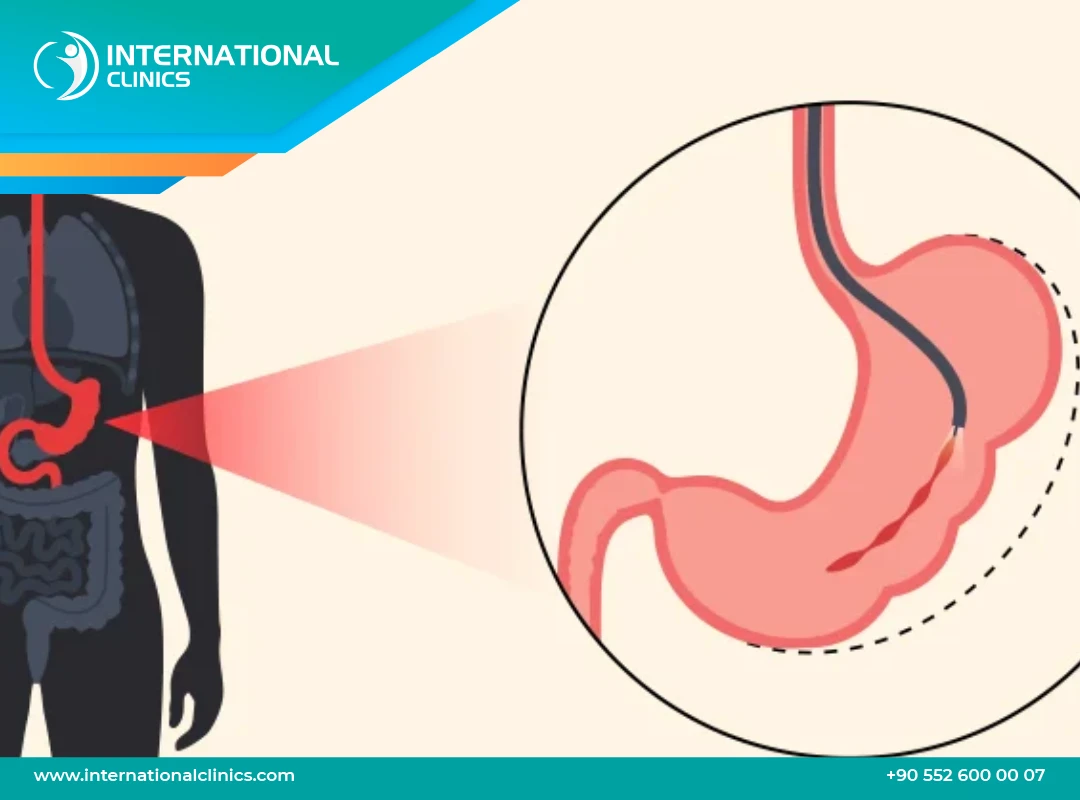
A thin suturing device connected to a camera is passed through your mouth into the stomach. The doctor places stitches that fold the stomach walls together, closing off about 70% of its volume and leaving a narrow, banana-shaped tube.
ESG also shortens and re-shapes the stomach, which slows how quickly it empties into the intestines — so you feel fuller for longer after smaller meals, without any effect on nutrient absorption.
Who Are the Best Candidates for Endoscopic Sleeve Gastroplasty?
You may qualify for ESG if you:
- Have a BMI of 30 or higher and have not been able to maintain weight loss with diet and exercise alone;
- Are at high risk for obesity-related conditions such as type 2 diabetes, high blood pressure or sleep apnea;
- Do not qualify for — or prefer to avoid — traditional bariatric surgery;
- Are committed to permanent healthy changes in diet and activity.
ESG is not suitable for people with a large hiatal hernia or a condition associated with gastrointestinal bleeding, such as gastritis or peptic ulcer disease.
Can gastric sleeve procedures be done at a lower BMI? See low BMI gastric sleeve before and after, and what applies to hypothyroidism patients.
Other bariatric options for weight loss include:
- BariClip surgery: how a surgical clip minimizes stomach size;
- Gastric balloon: its advantages and cost in Turkey.
Endoscopic Sleeve Gastroplasty Pros and Cons
| Endoscopic sleeve gastroplasty pros | Endoscopic sleeve gastroplasty cons |
|---|---|
| Minimally invasive — no external incisions or scars | Requires lifestyle changes — a strict diet is essential for success |
| Fast recovery — back to daily life within about a week | Less total weight loss than surgical options like gastric sleeve |
| Effective weight loss — 15–20% of total body weight within 12–24 months | Weight regain is possible without lasting habit changes |
| Lower risk of complications than surgical alternatives | Rare need for re-stitching if sutures loosen over time |
| Sutures can be removed, or converted to bariatric surgery, if ever necessary | A newer procedure — long-term data is still being gathered |
| Usually no overnight hospital stay | Not suitable for every patient — screening is required |
How to Prepare Yourself for the ESG?
- Medical laboratory tests to evaluate your general health and confirm the procedure is safe for you.
- Tell your doctor about every medication you take — some may need to be paused before the procedure.
- Stop eating from midday the day before, exactly as your care team instructs.
- Review all post-procedure instructions about food texture, meal frequency and the staged diet.
- Report any allergies or chronic diseases to your doctor before the procedure day.
- Report any recent health changes in the days before the procedure.

What Happens During ESG Surgery? Step by Step
- Anesthesia: you are placed under general anesthesia and sleep through the whole procedure.
- Insertion of the endoscope: a thin, flexible tube with a camera is passed through the mouth into the stomach, projecting the view onto a screen.
- Suturing the stomach: using the suturing device, the doctor places about 10 stitches between the walls of the stomach and draws them together.
This reshapes the stomach into a narrow tube: about 70% of the volume is closed off, and the remaining 30% stays functional. The procedure takes 60–90 minutes, after which you wake up in the recovery room. Most patients go home the same day; some stay one night for monitoring.
Related article: Body Sculpting in Turkey — procedures & cost.
After ESG Recovery and Long Term Care: Dietary Plan
Since ESG involves no incisions, recovery is short: side effects usually settle within the first week, and most people return to work at that point. The stage that decides your result is the diet:
- First hours: no food for a few hours after the procedure, then clear liquids only.
- Weeks 1–2: a liquid diet for at least two weeks, with protein support; avoid caffeine and alcohol.
- Weeks 3–4: soft, low-sugar, low-fat foods that mash easily with a fork.
- From about one month: gradual return to solid foods in small portions.
Following this plan strictly matters for three reasons: it prevents overloading your smaller stomach while it heals, it maximizes the weight loss the procedure was designed for, and it protects you from nutrient deficiencies during recovery.
Habits for long-term success: eat slowly and chew thoroughly, stop when you feel full, keep portions to about one cup per meal, and build meals around protein, fiber and vitamins. Staying hydrated supports the whole recovery.
For more detail, see what to eat 6 weeks after gastric sleeve, why post-op diet cheating is dangerous, and the full gastric sleeve recovery time guide.

What to Expect After the Procedure? The Ultimate Results
Patients who follow their full program typically lose 15–20% of their total body weight within 12–24 months, with the fastest loss in the first year. A lower BMI also means better control of appetite and protection against obesity-related conditions such as type 2 diabetes, high blood pressure and sleep apnea.
“When combined with lifestyle changes, endoscopic sleeve gastroplasty results in about 18% to 20% total body weight loss at 12 to 24 months.” — Mayo Clinic, 2026
Discover gastric sleeve before and after 3 months. Losing weight quickly can leave loose skin — learn how to avoid loose skin after weight loss and how a tummy tuck contours the body. Prefer non-procedural support? See the strongest weight loss prescription pills and injections for weight loss.
Endoscopic Sleeve Gastroplasty Before and After: With Photos
Before-and-after photos of endoscopic sleeve gastroplasty typically show a clear reduction in body weight over the first 6–12 months, with a slimmer, more contoured figure. Inside the body, the change is just as visible: the stomach goes from a full pouch to a narrow, sutured sleeve holding about a third of its original volume.

Possible Side Effect after Endoscopic Sleeve Gastroplasty
Nausea and vomiting: common in the first days; following the diet schedule minimizes both, and your doctor can prescribe medication if needed.
Bloating and gas: usually mild and managed with diet and simple medication.
Short-term pain or abdominal spasm lasting a few days after ESG.
Post Endoscopic Sleeve Gastroplasty Complications
ESG is generally safe — there are no incisions, which minimizes infection and clotting risks. Still, you should know the rare complications before deciding:
- Persistent nausea or vomiting beyond the first days.
- Ulceration around the sutures — rare, and may require removing the sutures.
- Stomach leakage between sutures — a serious complication requiring immediate medical intervention.
- Suture loosening over time — some patients need re-stitching to keep the result effective.
Call your doctor promptly if you develop fever, severe belly pain, repeated vomiting, blood in vomit or stool, chest pain, shortness of breath, or difficulty swallowing.
Endoscopic Sleeve Gastroplasty Failure
Failing to reach the desired result is uncommon. When it happens, it is usually due to not following the diet, or to a complication that requires removing the sutures. Weight regain over time is possible if healthy habits are not maintained — and if needed, ESG can be converted to another bariatric procedure.

Endoscopic Sleeve Gastroplasty in Turkey: What the Package Includes
Turkey has become one of the leading destinations for endoscopic sleeve gastroplasty because the same technology and the same suturing devices used in Europe and the US are available at a much lower total cost. Patients travelling for ESG surgery in Turkey usually complete the whole journey in three to four days.
Our endoscopic sleeve gastroplasty package in Turkey typically covers:
- Pre-procedure consultation, laboratory tests and anesthesia assessment;
- The ESG procedure itself under general anesthesia in an accredited hospital;
- Hospital stay and monitoring after the procedure;
- Airport transfers, accommodation and a medical interpreter;
- A structured post-procedure diet plan and follow-up with the bariatric team.
Because ESG is non-surgical gastric sleeve treatment with no incisions, recovery abroad is far simpler than after surgical bariatric procedures: most patients fly home within a few days. If you are comparing options, see how it differs from gastric sleeve surgery in Turkey.
How Much Does Endoscopic Sleeve Gastroplasty (ESG) Cost in Turkey?
If you have searched for an “endoscopic sleeve cost near me”, you will have noticed the price depends heavily on the country. Endoscopic sleeve gastroplasty in Turkey costs $3,500–$6,500 at International Clinics, against $8,000–$15,000 in the UK and $10,000–$20,000 in the US, with flexible payment plans available even when insurance does not cover the procedure. Our patients’ endoscopic sleeve gastroplasty reviews consistently report excellent results.
Average cost of ESG in Turkey vs. other countries
| Country | Average cost of ESG |
|---|---|
| How much is ESG in United States | $10,000 - $20,000 |
| How much is ESG in Mexico | $5,000 - $8,000 |
| How much is ESG in Florida | $10,000 - $18,000 |
| How much is ESG in Dubai (UAE) | $7,000 - $12,000 |
| How much is ESG in United Kingdom | $8,000 - $15,000 |
| How much is ESG in Turkey (International Clinics) | $3,500 - $6,500 |
| How much is ESG in New York City | $10,000 - $18,000 |
| How much is ESG in Miami | $10,000 - $18,000 |
For the surgical alternative, read the full breakdown of gastric sleeve cost in Turkey.
Endoscopic Sleeve Gastroplasty vs. Laparoscopic Sleeve vs. Gastric Bypass Surgery
Endoscopic Sleeve Gastroplasty (ESG): non-surgical, through the mouth, no incisions. Sutures reduce stomach volume by about 70%. Patients feel full with smaller amounts of food.
Laparoscopic Sleeve Gastrectomy (LSG): a surgical procedure that removes about 80% of the stomach through small incisions, leaving a permanent banana-shaped sleeve.
Gastric Bypass: surgery that creates a small stomach pouch and connects it directly to the small intestine, reducing stomach size and changing how food is absorbed. Permanent, and effective for obesity-related conditions such as diabetes.
| Aspect | Endoscopic Sleeve Gastroplasty (ESG) | Laparoscopic Sleeve Gastrectomy (LSG) | Gastric Bypass |
|---|---|---|---|
| Procedure | Non-surgical, through the mouth | Minimally invasive, small incisions | Surgical, with intestine rerouting |
| Duration | 60–90 minutes | 60–90 minutes | 2–3 hours |
| Recovery | Days — no incisions | 1–2 days in hospital, about a month overall | About 2 days in hospital, longer overall |
| Typical weight loss | 15–20% of total body weight (12–24 months) | About 25–30% of total body weight (1–2 years) | About 30% of baseline weight |
| Long-term nature | Convertible; sutures removable if necessary | Permanent (irreversible) | Permanent |
Why Choose International Clinics for Endoscopic Sleeve Gastroplasty in Turkey?
At International Clinics, our bariatric team performs endoscopic sleeve gastroplasty with the latest suturing technologies, in accredited facilities, at a published price of $3,500–$6,500 — a fraction of what the same procedure costs in the US or UK.
Patients from all over the world choose us for the combination of medical expertise, transparent fixed pricing with no hidden costs, and full support with translators throughout the treatment journey.
For a personalized quote and a free consultation, contact International Clinics today.