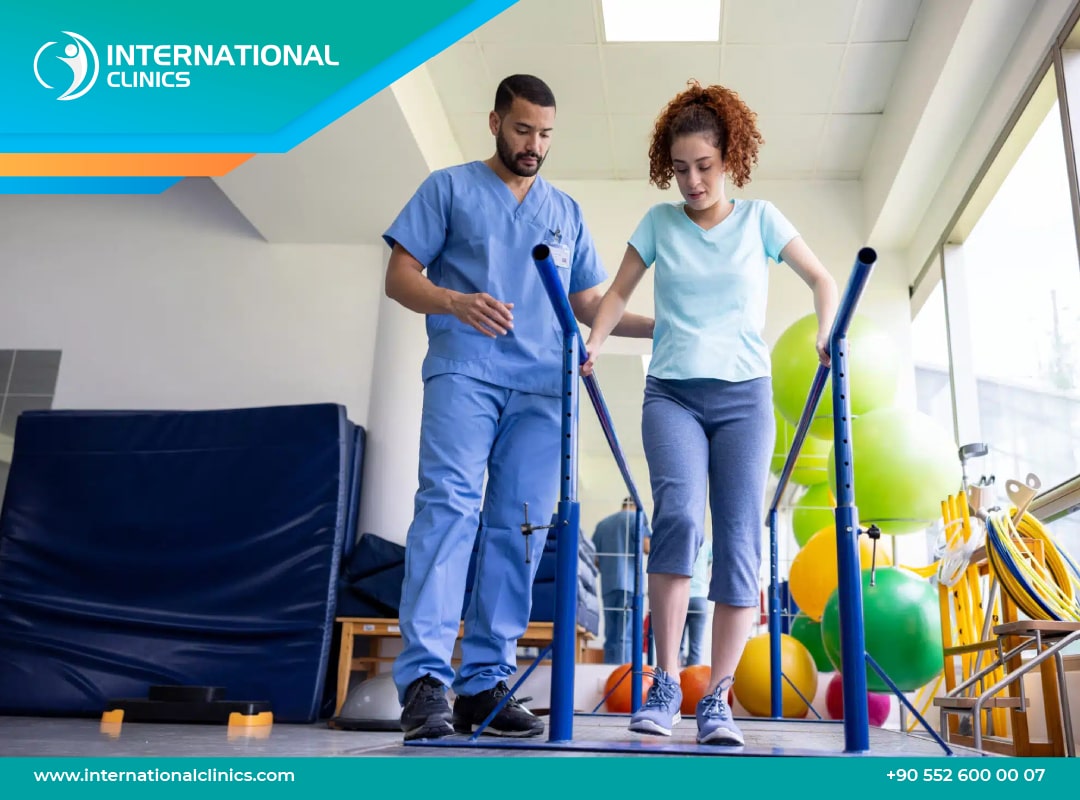
Neurological rehabilitation is a non-surgical programme that supports people after a stroke or a brain or spinal cord injury, and those living with conditions such as multiple sclerosis or Parkinson's disease. Its aim is to restore as much movement, balance, speech and independence as possible in everyday life.
After an assessment, a multidisciplinary team builds an individual plan. It may combine physiotherapy to strengthen muscles and improve walking and balance, occupational therapy to relearn daily skills, and speech and swallowing therapy, with psychological and cognitive support when needed. Assistive devices and graded exercises may be used. The programme involves no surgery and no anaesthesia.
Daily therapy usually lasts from about 45 minutes to several hours, and the programme often runs from weeks to months, either as an inpatient stay or as outpatient sessions. Improvement usually comes gradually over weeks or months, and how far it goes differs from one person to another. The treating team sets the plan and its goals.
The final cost is set after a medical consultant reviews your case and photos.
Our medical consultants review all requests regularly, every three hours.
Get a free consultation and answers to all your questions by completing the form below
It can improve movement, strength, balance, speech, swallowing and independence in daily activities, and it helps limit complications of reduced mobility. It does not promise a complete cure; the team sets realistic goals for each patient.
Usually people whose medical condition has stabilised after a stroke or a brain or spinal cord injury, or who have a chronic neurological disease, provided they can take part in exercises. The team decides after assessment.
Bring your medical report, scans and a list of your medicines, as the programme starts with an initial assessment of abilities and goals. Comfortable clothing is advisable, and it helps if a family member joins in learning the plan and the home exercises.
Sessions are divided between physiotherapy, occupational therapy, speech and swallowing therapy and cognitive support, using graded exercises and assistive devices when needed. The plan is reviewed regularly and adjusted to the progress made.
There is no recovery period in the surgical sense, although you may feel tired or have temporary muscle soreness as the effort increases. Rest time and the daily schedule are organised for you, and you then continue exercises at home once the sessions end.
Many patients notice gradual improvement over weeks or months, which may continue with regular training. Results vary with the cause, severity and duration of the condition, and they are usually kept only by continuing the exercises.
The programme is generally safe under specialist supervision, but it may bring fatigue, muscle soreness or a risk of falling during exercises, and muscle spasticity can occasionally increase. The team therefore monitors your condition and adapts the intensity.
The number depends on the condition and the goals; a patient may have several sessions a week over weeks or months. The treating team sets the duration after the first assessment and reviews it regularly.
Yes, and they are encouraged to. Training them in safe assistance, home exercises and adapting the home supports continued progress after the sessions end.
If the condition is stable, travel may be possible after the programme or the final assessment, but some cases, such as a recent stroke, need longer and special arrangements. The treating doctor confirms the appropriate date.