Laryngeal cancer surgery covers procedures that remove a malignant tumour from the larynx, including laser surgery for early, limited tumours and partial or total laryngectomy for more extensive ones. The aim is to remove the tumour while preserving breathing, swallowing and speech as far as possible, with the option chosen by the team according to tumour site and stage.
Laser surgery reaches the tumour through the mouth with an endoscope under general anaesthesia, with no external incision. Laryngectomy is done through an incision in the neck; a total laryngectomy creates a permanent breathing opening in the neck (tracheostoma), some lymph nodes may be removed, and ways of restoring speech are offered. Radiotherapy or chemotherapy may follow, depending on pathology.
Laser surgery usually takes one to two hours while laryngectomy takes several hours and a stay of days to weeks. Recovery and voice and swallowing function settle over weeks to months with regular follow-up and speech and swallowing rehabilitation, and no specific outcome can be promised.
The final cost is set after a medical consultant reviews your case and photos.
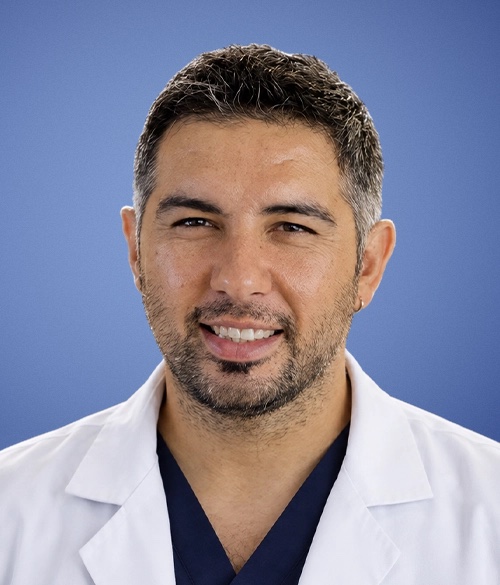

Assoc. Prof. Dr. Mustafa Çelik is an experienced ENT specialist with an academic background in ear, nose and throat diseases and head and neck surgery. Throughout his career, he has been actively involved in clinical practice, academic research, and medical education, contributing to numerous scientific studies and international medical publications.
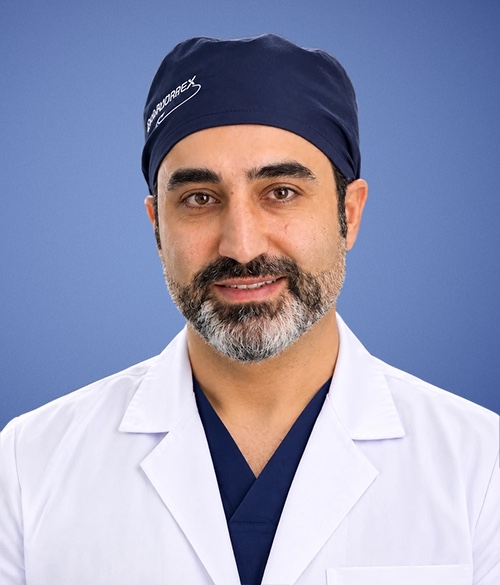
Op. Dr. Mustafa Karakaş is a highly experienced ENT specialist born in 1984, known for performing nearly 5,000 successful surgeries. After graduating from Cerrahpaşa Faculty of Medicine, he completed his specialization at Istanbul Haseki Training and Research Hospital. He is a Board-Certified surgeon who has been honored with a Certificate of Appreciation by the Istanbul Governorship for his medical services. His expertise focuses on aesthetic and functional procedures, particularly Rhinoplasty, Otoplasty, and advanced endoscopic sinus surgeries. Currently, he provides world-class care to loca...
Our medical consultants review all requests regularly, every three hours.
Get a free consultation and answers to all your questions by completing the form below
It aims to remove the tumour and control the disease, and in some cases it can preserve the voice and swallowing. The aim and outcome depend on the tumour stage and the patient's condition, and a cure cannot be promised.
Laser surgery usually suits early, limited tumours that can be reached through the mouth. Laryngectomy is considered for more extensive or recurrent tumours, or when other options are unsuitable. A multidisciplinary team decides after endoscopy, imaging and biopsy.
Preparation includes endoscopy, imaging, blood tests, and assessment of the heart, lungs and nutrition, together with stopping smoking. Tell the team about all your medicines and do not stop any prescribed drug, such as blood thinners, unless your doctor instructs you to. A session with a speech therapist before laryngectomy is advised.
Laser surgery is done through the mouth with an endoscope under general anaesthesia, without an external incision. Laryngectomy is done through a neck incision, removing part or all of the larynx, sometimes with nearby lymph nodes, and the breathing and swallowing passages are then reconstructed.
After laser surgery the stay is often short, with temporary hoarseness and voice rest. After laryngectomy the stay is longer, with tube feeding at first, care of the neck opening, and speech and swallowing rehabilitation. Recovery varies considerably between patients.
The first indication comes from examining the removed tissue, while voice and swallowing take weeks to months to settle. Long-term regular follow-up is needed because the disease can return, and no guarantee can be given.
They include bleeding, infection, difficulty swallowing, voice change or loss after total laryngectomy, leakage at the suture line, narrowing, a reduced sense of smell, and breathing problems. The team will explain the risks in relation to your case.
Laser surgery usually leaves no external scar because it is done through the mouth. Laryngectomy leaves a neck scar, and a total laryngectomy also leaves a permanent breathing opening at its lower end.
After laser surgery, roughly 5 to 10 days may be enough, while after laryngectomy several weeks are often needed, depending on recovery. Your treating doctor will confirm the right time to travel.
The natural voice does not return after a total laryngectomy, but there are ways to communicate, such as oesophageal speech, a voice prosthesis or an electronic speech aid, and a speech therapist trains the patient in them.