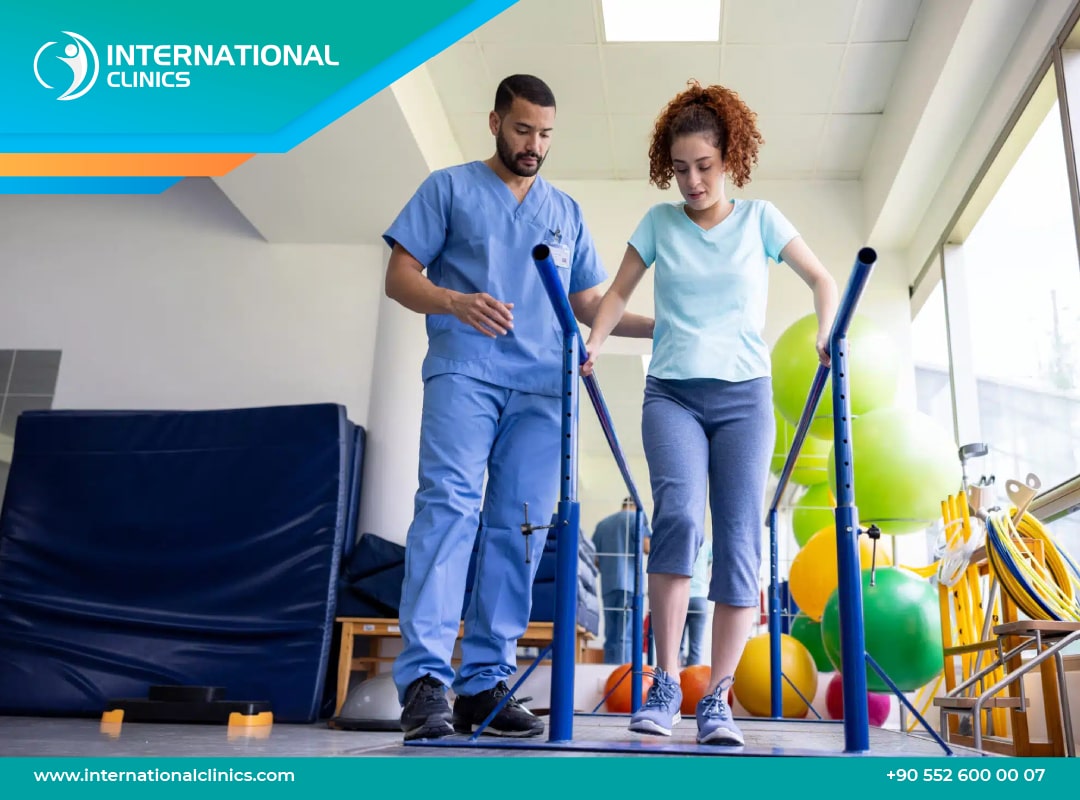
Pediatric rehabilitation is a non-surgical treatment programme for children with delayed motor development, cerebral palsy, neuromuscular disease, nerve or bone injuries, or recovery after an operation. Its aim is to improve movement, daily function and independence as far as possible, according to each child's condition.
A multidisciplinary team builds an individual plan for every child. It may include physiotherapy, occupational therapy, speech and swallowing therapy, guided exercises, assistive devices and training for the family. Sessions are adapted to the child's age and are usually play-based, with no surgery or anaesthesia.
A session typically lasts from about half an hour to an hour and may be repeated several times a week, as the team decides. Improvement tends to appear gradually over weeks and months, and the final result differs from one child to another depending on the diagnosis and on how consistently the programme is followed. Progress is reviewed regularly and the plan is adjusted when needed.
The final cost is set after a medical consultant reviews your case and photos.
Our medical consultants review all requests regularly, every three hours.
Get a free consultation and answers to all your questions by completing the form below
It can help a child improve strength, balance, movement, communication and everyday skills, and it supports participation in play, learning and family life as far as possible.
Children with developmental delay, movement or neurological disorders or injuries, and those recovering from surgery. The treating team decides whether the programme is suitable after an assessment.
Parents bring previous medical reports, test results and a list of current medicines. The child then has an initial assessment, on which the goals and the plan are based.
It consists of individual sessions that combine exercises, guided play and age-appropriate therapeutic techniques. Parents are taught exercises to continue at home.
There is no recovery period in the surgical sense. A child may feel mild tiredness or muscle soreness after sessions. The team reviews progress regularly and adjusts the plan.
Improvement usually appears gradually over weeks to months, and results vary from child to child depending on the condition. Keeping up the home exercises helps maintain what has been achieved.
The programme is generally safe. Tiredness, muscle tightness or brief discomfort may occur. The team monitors how well the child tolerates it and adjusts the intensity of the sessions accordingly.
No. It is non-surgical and involves no incisions.
The programme is based on consecutive sessions, so the length of stay mostly depends on the plan. The treating doctor confirms the appropriate duration and when it is safe to travel.
It is essential. Following the home exercises and the team's guidance and providing a supportive environment help the child's progress.