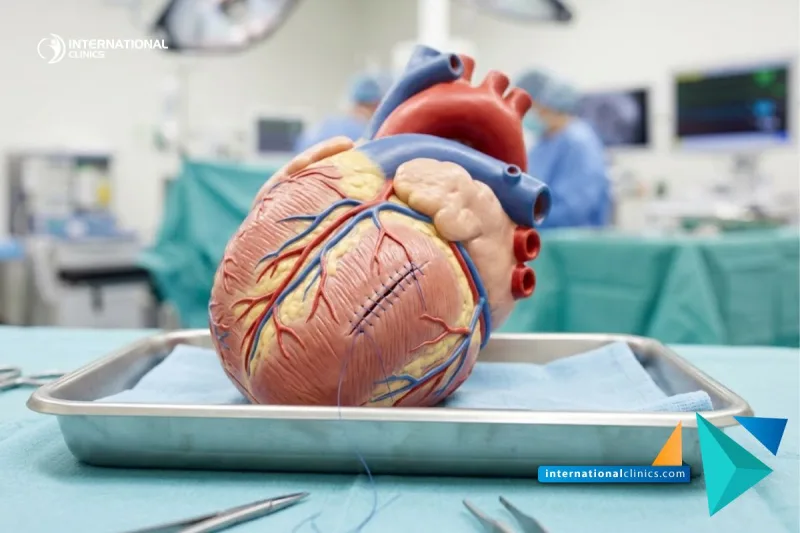
Heart valve surgery treats valves that leak or are narrowed, either by repairing the patient's own valve or by replacing it with an artificial one, including aortic valve replacement. It aims to restore normal blood flow and relieve symptoms such as breathlessness, dizziness and chest pain.
The operation is done under general anesthesia, usually through a breastbone incision and sometimes smaller ones, while a heart-lung machine does the work of the heart. In repair, the surgeon reshapes the valve tissue or fixes a supporting ring; in replacement, the damaged valve is removed and a biological valve or a long-lasting mechanical valve, which requires blood thinners, is implanted. The treating team decides the valve type and approach.
Surgery usually takes about three to five hours, followed by a day or two in intensive care and roughly five to ten days in hospital. The patient begins moving early with a cardiac rehabilitation programme, and full recovery takes about six to twelve weeks. Results vary from one patient to another.
The final cost is set after a medical consultant reviews your case and photos.
Our medical consultants review all requests regularly, every three hours.
Get a free consultation and answers to all your questions by completing the form below
It improves blood flow and relieves symptoms, and it may reduce the strain a faulty valve places on the heart muscle. The benefit varies with the affected valve, the severity of the disease and the patient's condition.
Patients with severe leakage or narrowing of a heart valve who have symptoms, or whose tests show the heart is starting to be affected. The treating team decides timing and type after an echocardiogram and other tests.
Repair preserves the patient's own valve and corrects its fault, and it often does not require long-term blood thinners. Replacement is used when damage is severe, with a mechanical valve that needs lifelong blood thinners or a biological valve that may need replacing later.
Blood tests, an echocardiogram, an ECG and a chest X-ray are done, and sometimes a diagnostic catheterization. The doctor advises on medication and fasting, and any infection, including dental infection, is treated before surgery.
After general anesthesia the surgeon reaches the heart, the patient is connected to a heart-lung machine, and the valve is repaired or replaced, including the aortic valve when needed. The chest is then closed and temporary drains are placed.
Gradual movement begins within days; lifting heavy objects and driving are not allowed for several weeks, and a cardiac rehabilitation programme may be recommended. Recovery varies from patient to patient.
A successful repair may last many years, a mechanical valve usually decades, and a biological valve for a variable time. No duration is guaranteed, so regular follow-up with echocardiography is essential.
They include bleeding, infection, heart rhythm problems, blood clots, stroke, and kidney and lung problems, and sometimes a further operation is needed. The surgeon explains these risks before the operation.
Yes, heart medications are prescribed, and a mechanical valve requires lifelong blood thinners with regular blood tests. A blood thinner may be prescribed for a limited period after repair or a biological valve, and the doctor decides this.
Usually at least two to three weeks after surgery are needed, and the treating doctor confirms the travel date after an examination and echocardiogram.