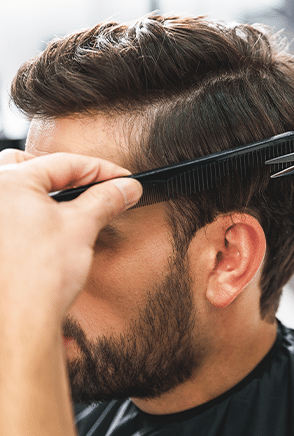
The time has come to say goodbye to baldness! Yes, a hair transplant is the ultimate solution to baldness! It’s no wonder that the number of men and women who seek hair transplants is on the rise as this method can indeed restore their natural-looking hair!
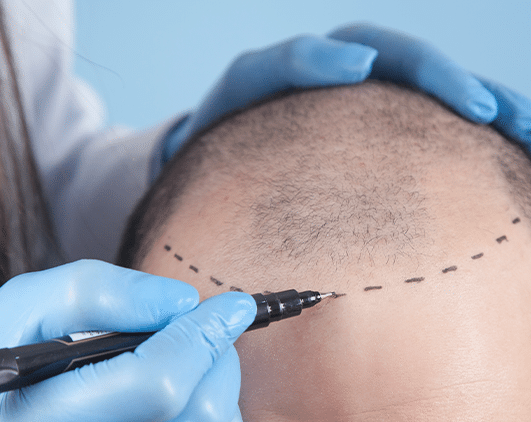
Hair transplant is a surgical procedure to treat hair loss by moving hair you already have to fill a thin or bald area in your scalp. Doctors have been practicing this kind of transplant since the 50s of the last century in the United States.
Through the last decades, however, new techniques have emerged, promising quick and satisfactory results. Currently, the main types of hair transplants are follicular unit transplantation (FUT) and follicular unit extraction (FUE). Your doctor will pick the right type for you.
Free Consultation
We provide you with free consultations by a specialized team
The demand for hair transplants is increasing remarkably, especially among men. In short, a hair transplant can provide you with multiple benefits, including:
Get thicker-looking, luscious hair with fewer bald areas on your head!
Receive a permanent hair loss solution and treat hair-related issues
Enjoy a natural-looking hairline and restore hair growth
Boost your self-esteem and stop feeling self-conscious about your look
Get new hair similar to naturally grown hair that needs no special shampoos or creams
Enjoy a cost-effective surgery that saves you a lot of cash in the long run
Be like celebrities, such as John Travolta and David Beckham, who underwent hair transplants before!
Candidates for Hair Transplant
To get natural-looking results and satisfactory outcomes, you need to select a skilled surgeon or contact a respected clinic that provides hair transplants regularly. To prepare for the surgery, they may do the following:
Give you specific instructions and guidelines on eating, drinking, and smoking.
Tell you to stop taking certain medications and supplements.
Recommend you arrange for someone to drive you home after your surgery.
Steps of Hair Transplant by Follicular Unit Extraction (FUE)
Below are the steps of hair Transplant by follicular unit extraction (FUE):
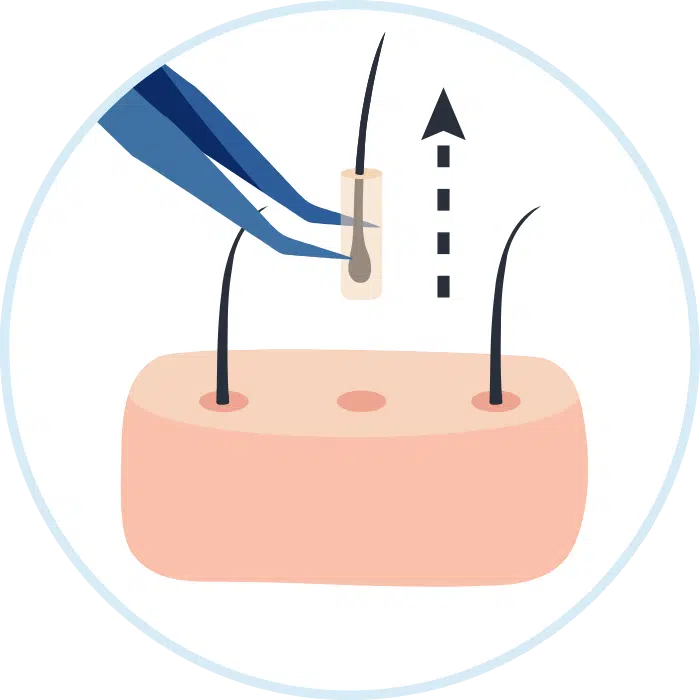
1. Taking Hair Follicles
Your surgeon makes thousands of tiny punch incisions to cut out individual hair follicles from the back of your head.
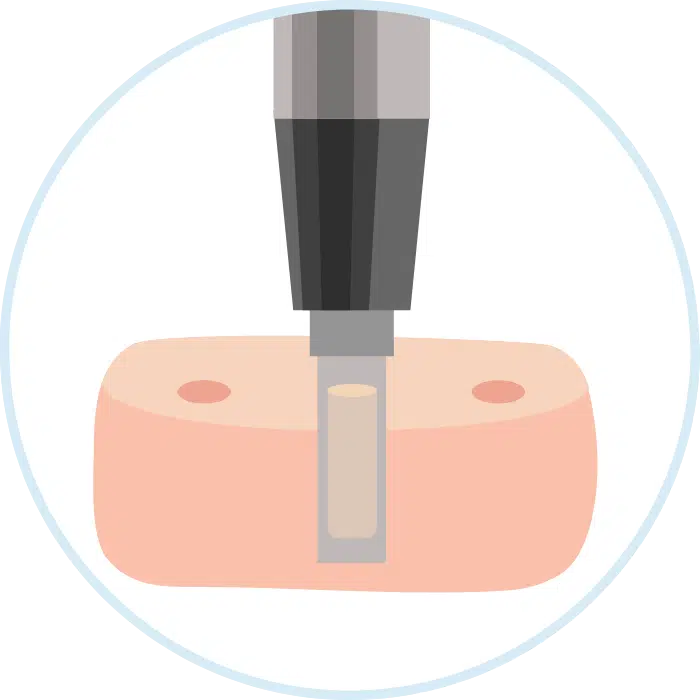
2. Making Tiny Holes
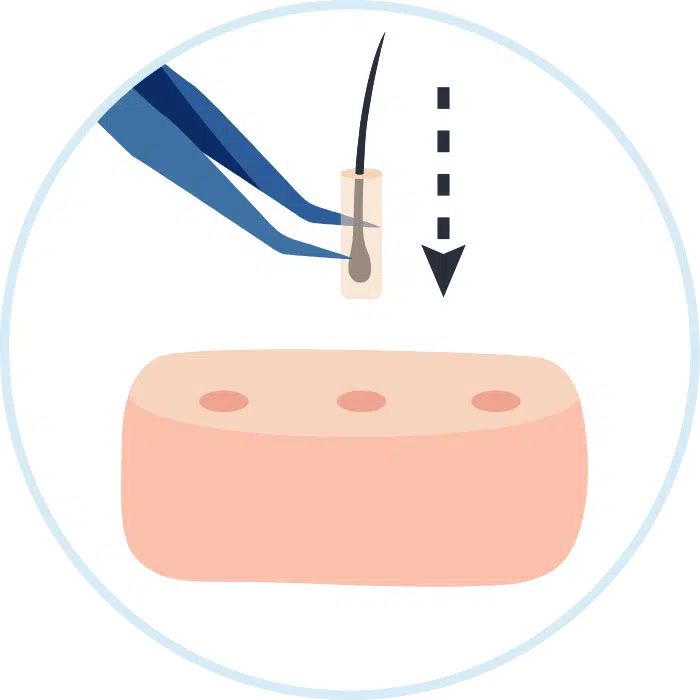
Next, they start making tiny holes with needles in the targeted areas to receive the new follicles.
3. Hair Implanting
Your surgeon implants hundreds or even thousands of hair follicles in the target area. Finally, they cover the area with bandages or gauze.
Recovery After Hair Transplant
The recovery after the surgery is usually smooth and easy, but it largely depends on the type of transplant. Often, you can go home the same day as the procedure. During the recovery phase, you may encounter the following:
Feel mild pain or tenderness in your scalp, which you can control with painkillers for several days.
Your doctor may prescribe an antibiotic or an anti-inflammatory medication to prevent infections.
Expect the transplanted hair to fall within 2-3 weeks, but that’s normal and the next hair growth will start taking off after 6-9 months.
You may be able to return to work after 3-5 days of the procedure.
Expect to wear bandages over your scalp for 1-2 days at least.
After 10 days, your healthcare provider can remove your stitches.
Risks of Hair Transplant
Luckily, a hair transplant poses a lower risk of complications, and if side effects appeared, they usually fade away within a couple of weeks. Such side effects may include:
Bleeding, infection, or itching
Swelling or numbness in the treated areas
Crusts formation on the treated areas
Bruising around the eyes
Inflammation of hair follicles (folliculitis)
Unusual tufts of hair
Contact Information
Get a free consultation and answers to all your questions by completing the form below
Let us contact you
Get a free consultation and answers to all your questions by completing the form below
✓
Success!
Your message has been sent successfully. We will contact you soon.
Thank you
The form has been sent successfully
We will contact you as soon as possible
FAQ's
Candidates for Hair Transplant
If you’re physically healthy, have realistic expectations, and still have areas of thick hair on your scalp, then you might be a good candidate for a hair transplant. Also, both men and women can undergo this surgery regardless of their race. This surgery is also appropriate for you if you:
Suffer from male pattern baldness
Lost some hair due to scalp injury or burn
Able to grow hair on the thinning area of your scalp
Can hair loss occur after a hair transplant?
Hair may fall out at first, but then the follicles begin to grow again.
Is follicular unit extraction (FUE) hair transplant painful?
The extent of the pain depends on the patient’s sensation.
The patient is given local anesthesia to numb the area and prevent pain.
How long does the hair transplant process take?
The hair transplant process takes between 2 to 8 hours, depending on the quantity of hair that will be transplanted.
Can lifestyle cause hair loss after follicular unit extraction (FUE)?
Diet choices and certain lifestyle habits- such as smoking and stressful encounters-can also cause your hair to fall out.
How much time is needed to recover from the surgery?
The time required to recover after the procedure varies from one patient to another. Some patients can recover after 15 days.
×
Get a Free Consultation
International Clinics Guarantees
Reliable medical care provided within our accredited facilities
Final fixed price with no hidden costs
Full medical support with professional interpreters
Clear treatment plans and follow-up at international standards
Personalized assistance throughout the entire treatment journey
We use our own cookies and third-party cookies so that we can display this website and better understand how you use it, with the aim of improving the services we offer. If you continue browsing, we consider that you have accepted the cookies.

 EN
EN AR
AR ES
ES FA
FA FR
FR