Millions of patients around the world have benefited from laser eye surgeries, including femtosecond-assisted LASIK or “Femo LASIK”. If you’re looking for highly advanced and safe laser surgery to solve your vision problems, then you must seriously consider this promising technology.
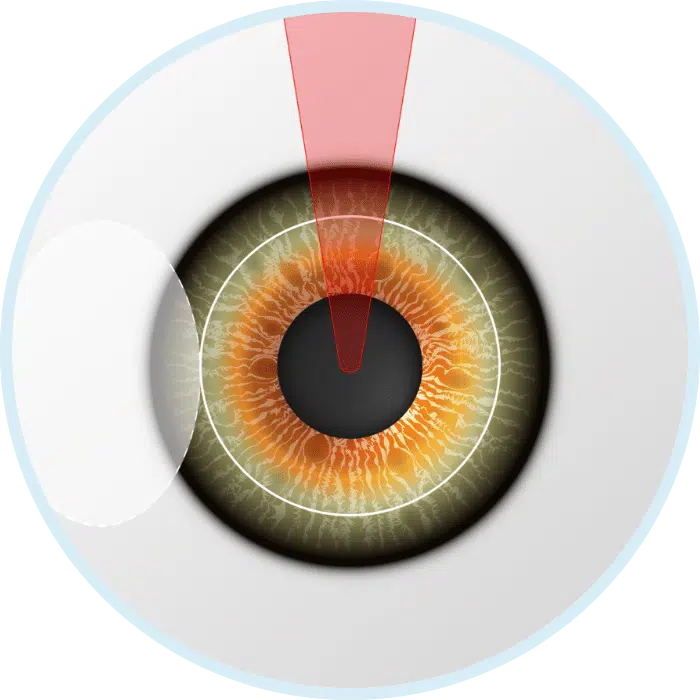
Femtosecond-assisted laser in-situ keratomileusis (Femo LASIK) allows your surgeon to reshape the cornea of your eye and resolve your vision problem by using the laser to create a corneal flap instead of other mechanical cutting tools. It depends on using Femtosecond (FS) laser, which is an infrared laser that was developed in the early 1990s.
Free Consultation
We provide you with free consultations by a specialized team
Femto LASIK is a great option to correct refractive errors, which occur when the eye faces difficulties bending or focusing light. Also, some clinics offer this technology to correct cataracts in some patients. In sum, here are the benefits and advantages of Femto LASIK:
Correct refractive errors, such as myopia, hyperopia, and astigmatism
Provide your doctor with better control over the corneal flap’s length and angle
Doesn’t require the implementation of any moving parts inside the eye
Doesn’t cause an increase in intraocular pressure or dry eyes
Provide better contrast sensitivity and great results
Candidates for Femtosecond-Assisted LASIK
You must speak with your surgeon to discuss the surgery and your expectations. They may prepare for surgery by doing the following:
Scan and examine your eye before the day of the procedure.
Ask you to remove your contact lenses 1-3 weeks before surgery (if you wear any).
Advise you to stop using lotions, creams, or makeup near the eye.
Arrange for someone to drive you home after the procedure.
Steps of Femtosecond-Assisted LASIK
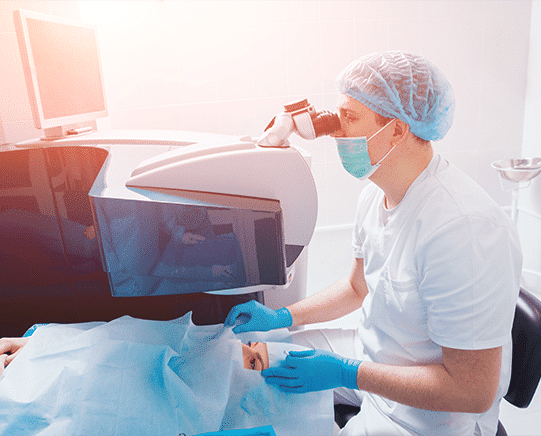
Femto LASIK is a simple procedure that only takes 30 minutes for each eye. Once you arrived at the clinic, you will be placed in a reclining chair and lie on your back under the laser machine. The steps will include:
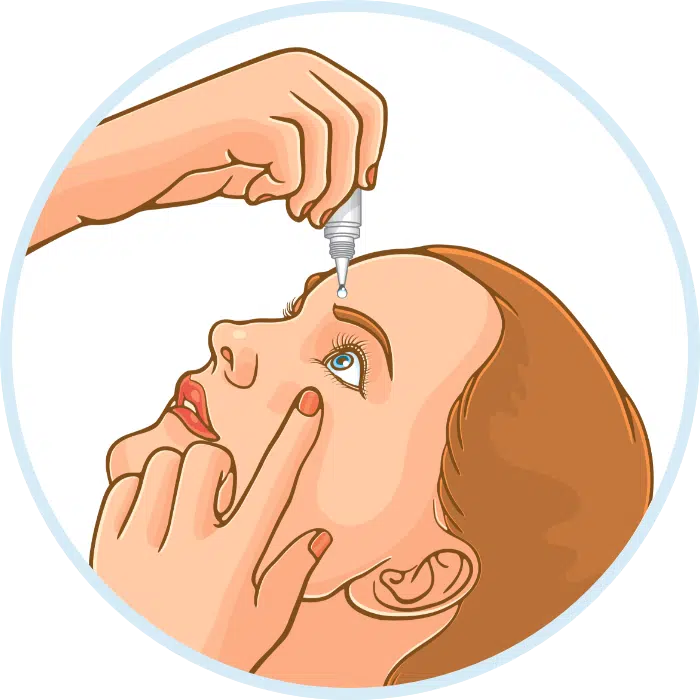
1. Anesthesia
Your doctor will use numbing eye drops to prevent discomfort or pain.
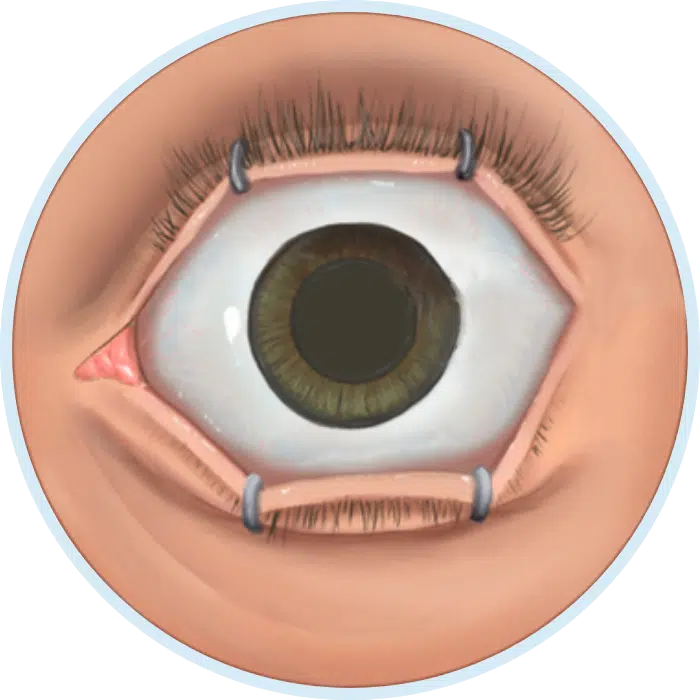
2. Eyelid Stabilization
To keep your eyelid in place, your doctor will use an eye speculum. They also will use a glass lens to hold the globe of the eye and a suction ring.
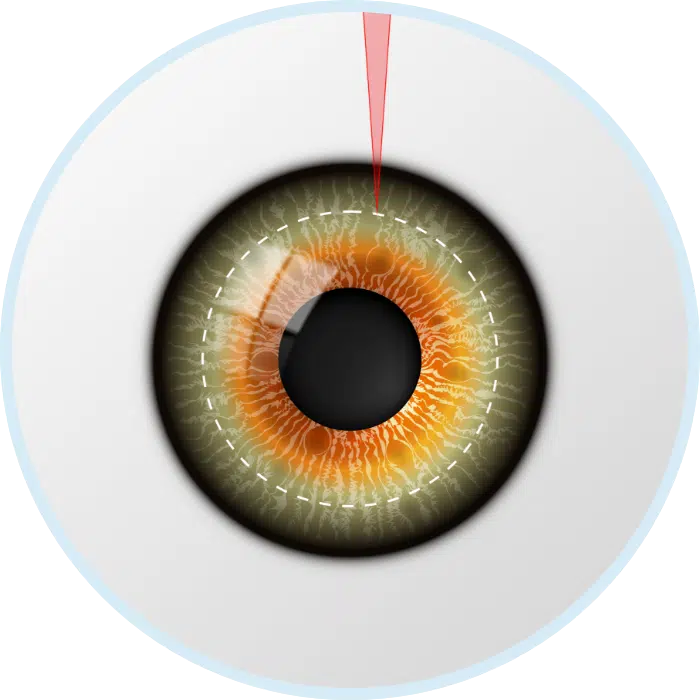
3. Laser Administration
Your doctor will start administrating the laser to create a flap on the surface of the cornea.
4. Cornea Reshaping
Once the flap is folded back, your doctor will use ultraviolet rays to reshape the cornea as required.
5. Flap Replacement
Finally, your doctor will replace the flap without using sutures.
Recovery After Femtosecond-Assisted LASIK
To get a smooth recovery, you must follow the next instructions after the procedure:
Avoid scratching or rubbing your eye and try to wear an eye shield in the first 2 days.
Visit your doctor after 2 days to remove the eye shields and check your vision.
Use the eye drops that your doctor will give you to prevent infection or inflammation.
Avoid swimming and strenuous activities in the days following the surgery.
Avoid using makeup, lotions, and creams for two weeks after surgery,
Avoid wearing contact lenses even if you complain of blurred vision.
Expect some vision fluctuations for the first months after the surgery and expect the final results to manifest after 3-6 months.
Risks of Femtosecond-Assisted LASIK
Femto LASIK is a safe procedure for the majority of patients, but it still poses some potential risks and side effects, such as:
Seeing glares and halos around lights
Extreme sensitivity to light or transient light sensitivity syndrome (TLSS)
Unsatisfactory results or reduced effectiveness over time
Permanent vision loss
Contact Information
Get a free consultation and answers to all your questions by completing the form below
Let us contact you
Get a free consultation and answers to all your questions by completing the form below
✓
Success!
Your message has been sent successfully. We will contact you soon.
Thank you
The form has been sent successfully
We will contact you as soon as possible
FAQ's
Candidates for Femtosecond-Assisted LASIK
You must be 18 or older with a stable vision to be a good candidate for Femto LASIK. Also, doctors commonly take the following things into consideration before suggesting Femto LASIK to patients:
Conditions or medications that affect recovery and healing
Previous refractory surgeries
The thickness of the cornea
What is femtosecond-assisted LASIK (Femto-LASIK)?
Femto LASIK is a procedure that aims to modify the surface of the cornea and correct vision by directing an excimer laser beam on the layers of the cornea (the transparent outer front part of the eye) to restore its natural vision abilities.
Is Femto-LASIK a safe procedure?
– The Femto-LASIK is a safe procedure and doesn’t cause complications that may affect patients, but all doctor’s instructions should be followed to guarantee that, whether before or during the recovery period.
– In addition, the patient usually does not feel pain during the procedure.
But in very few cases, the patient may feel a slight pressure on the eye for several seconds.
What is the time needed to correct vision using Femto LASIK?
The Femto-LASIK procedure takes between 10 to 15 minutes maximum.
What are the steps of the Femto-LASIK procedure?
Femto LASIK is carried out through two steps:
– The first step consists of cutting the cornea to allow the excimer laser device to penetrate the eye.
– The second step is for the surgeon to raise the corneal flap and direct an excimer laser beam on the inner corneal layers to repair vision defects.
What are the medical tips given by the doctor after the Femto-LASIK procedure?
– Don’t rub your eyes with your hands.
– Women shouldn’t use eye make-up and cosmetics.
– Don’t wear colored contact lenses.
– Avoid swimming at all costs, whether in the sea or in swimming pools.
×
Get a Free Consultation
International Clinics Guarantees
Reliable medical care provided within our accredited facilities
Final fixed price with no hidden costs
Full medical support with professional interpreters
Clear treatment plans and follow-up at international standards
Personalized assistance throughout the entire treatment journey
We use our own cookies and third-party cookies so that we can display this website and better understand how you use it, with the aim of improving the services we offer. If you continue browsing, we consider that you have accepted the cookies.

 EN
EN AR
AR ES
ES FA
FA FR
FR