The time has come to say goodbye to recurrent, annoying toothache! You can undergo endodontic treatment or a root canal to treat an infection at the center of your tooth.
People have associated root canals with pain and discomfort, but thanks to modern anesthesia techniques, root canal procedures have become virtually painless and a better option than a tooth extraction.
“Endodontics” is a dental specialty that deals with the inside of the tooth, including the root, pulp, and nerves. Each year, millions of people undergo endodontic treatment (root canal) to relieve toothache and treat oral infections. Such infections can result from deep decay or crack or chip in the tooth.
Free Consultation
We provide you with free consultations by a specialized team
People undergo endodontic treatment (root canal) because they want to save a badly infected or damaged tooth, which may result from gum disease, injury, tooth decay, or cracked fillings. Below are some of the important benefits that you can get from this procedure:
Relieve your toothache and treat your decayed or damaged tooth
Enjoy visually appealing results and boost your beautiful smile
Get an efficient and cost-effective dental treatment in the long term
Prevent tooth loss and inflammation of other adjacent teeth
Prevent jawbone degeneration and boost your oral health
Enjoy a painless dental procedure with a quick and easier recovery
Candidates for Endodontic Treatment (Root Canal)
You need to find a good dentist to secure the best results out of endodontic treatment (root canal). During your consultation, you can ask your dentist any questions you have about the procedure. The preparation may include:
Your dentist may prescribe anti-inflammatory medications or even antibiotics before the procedure.
It’s a good idea to eat a healthy meal before the procedure because your mouth will be numbed for a few hours later.
You must stop smoking for several days before the procedure to facilitate recovery.
Steps of Endodontic Treatment (Root Canal)
Your dentist needs between 1-3 sessions to complete the endodontic treatment (root canal). The goal of this treatment is to neutralize the teeth by removing all nerve tissues, so you no longer feel any pain. The 2 main steps of the procedure include:
1. Cleaning the Root Canal
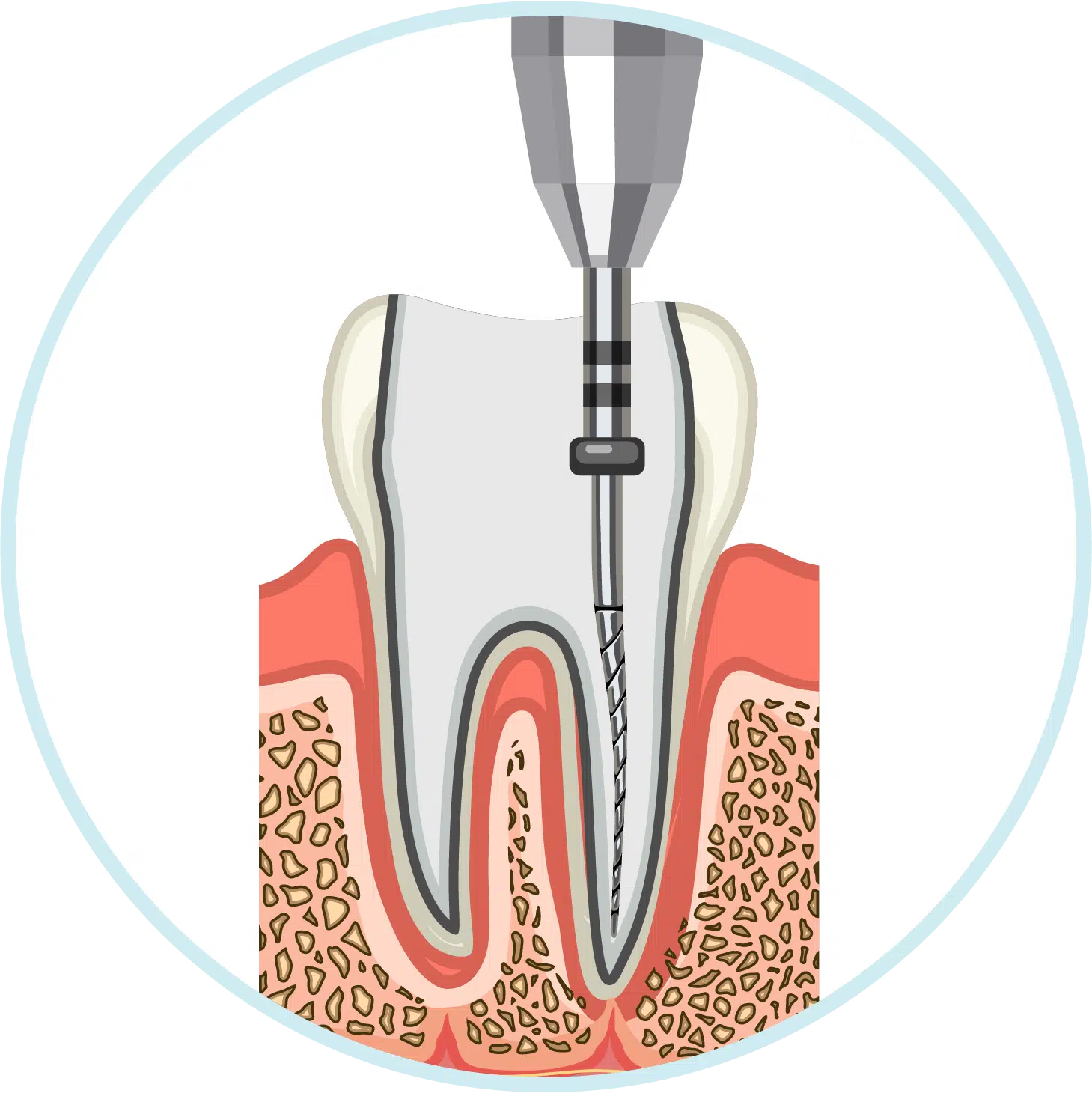
To clean and disinfect your root canal, your dentist should remove dead pulp tissue. To do this, they provide you with local anesthesia, make a small access hole on the surface of your tooth, and use irrigation solutions to decontaminate the hollow area.
2. Filling the Root Canal
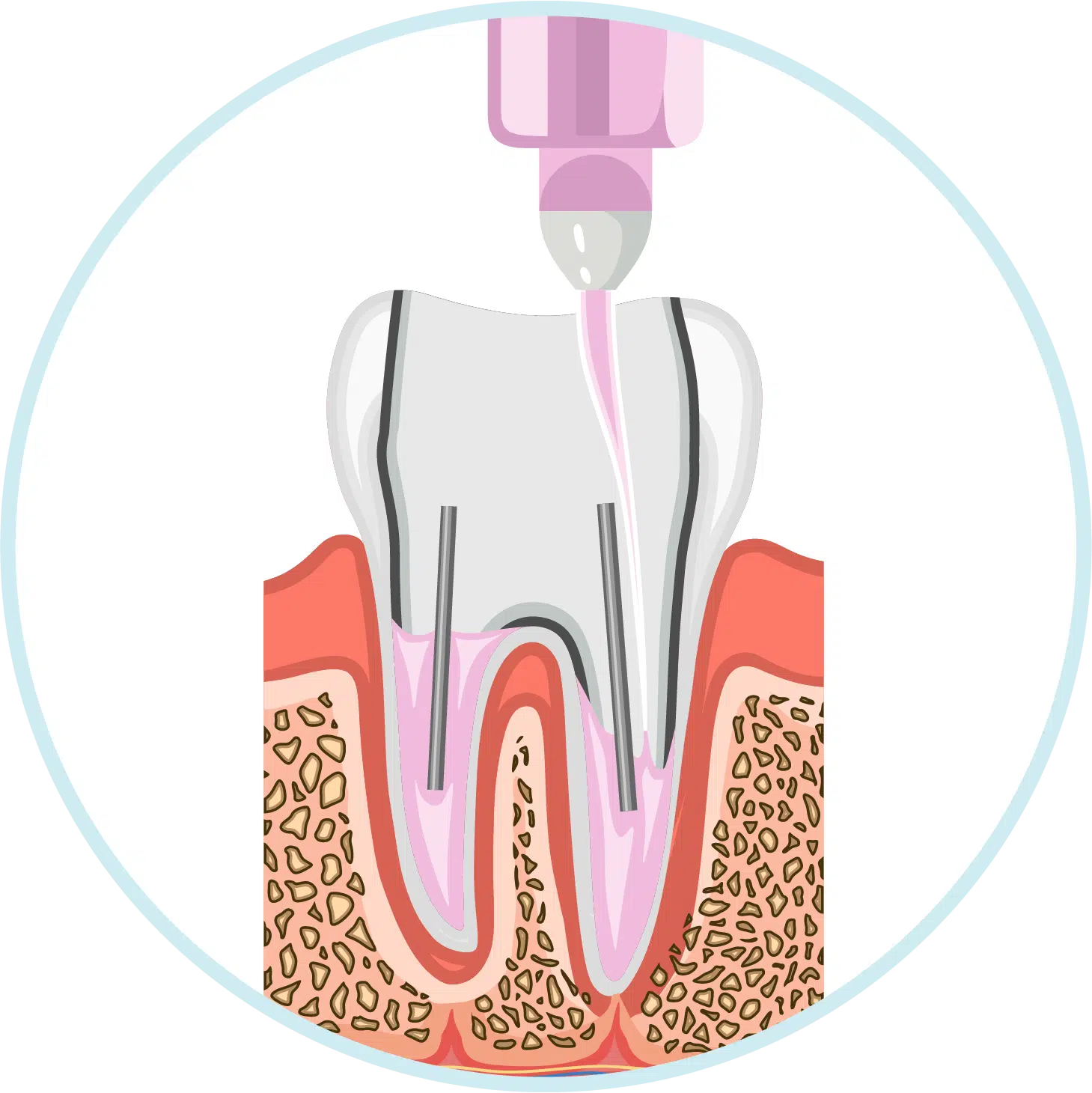
Next, your dentist starts filling your tooth with a rubber-like material and seals the canals with adhesive cement. In addition, they will add a filling or crown to protect the pulp of your tooth and keep it nourished.
Recovery After Endodontic Treatment (Root Canal)
The recovery phase after endodontic treatment (root canal) is often quick and straightforward. Remember, however, the following recommendations during this period:
Your restored tooth may feel sore for a few days, but it should no longer feel pain.
Avoid eating very solid food or biting on hard foods until your treatment is over.
Take over-the-counter painkillers if you need them, such as paracetamol. If pain persists, visit your dentist again.
Keep your teeth clean and follow oral hygiene instructions.
Prevent the need for further root canal treatment in the future by avoiding sugary foods and smoking.
Risks of Endodontic Treatment (Root Canal)
The success rate of endodontic treatment is up to 98%, so you’re likely to express satisfaction with the results. However, some cases may encounter unpleasant complications or difficulties, such as:
Failed root canal, which causes pus discharge and tooth discoloration
Spread of infection into the bone
Return of infection (if the root canal is not properly sealed)
Cracking the root of the tooth
Contact Information
Get a free consultation and answers to all your questions by completing the form below
Let us contact you
Get a free consultation and answers to all your questions by completing the form below
✓
Success!
Your message has been sent successfully. We will contact you soon.
Thank you
The form has been sent successfully
We will contact you as soon as possible
FAQ's
Candidates for Endodontic Treatment
Endodontic treatment is a very common procedure, but it is still the right solution for specific cases, not all. In any case, the procedure can be a great option for you if you complain about the following issues:
A fractured or infected tooth
Sensitivity to hot and cold
Toothache on contact or pressure
Inflammation of dental nerves
Swelling gum
Can the nerve be pulled out of the canines (front teeth)?
Anterior incisors or canines usually have one root canal, which makes it easier to pull out the nerve and shortens the recovery period.
Does the tooth fall out after pulling the nerve?
No, not necessarily. The treated teeth can last for a very long time if the treatment was successful. This is accomplished when the root canal is completely cleaned, the crown is attached, and you maintain good oral hygiene and visit the dentist regularly.
Can I undergo root canal treatment without fillings?
Treatment is not complete until a permanent filling is in place.
I had undergone root canal treatment, but tooth pain persists. What should I do?
The treatment must be completed, and if the pain persists after the end of the treatment period, the doctor should be consulted to determine the cause.
Does root canal treatment cause problems for pregnant women?
Fortunately, root canal treatment is safe for pregnant women and there are no risks.
×
Get a Free Consultation
International Clinics Guarantees
Reliable medical care provided within our accredited facilities
Final fixed price with no hidden costs
Full medical support with professional interpreters
Clear treatment plans and follow-up at international standards
Personalized assistance throughout the entire treatment journey
We use our own cookies and third-party cookies so that we can display this website and better understand how you use it, with the aim of improving the services we offer. If you continue browsing, we consider that you have accepted the cookies.

 EN
EN AR
AR ES
ES FA
FA FR
FR