
- What is Tibia Limb Lengthening Surgery?
- Indications and Uses of Tibia Limb Lengthening
- Ideal Candidates for Tibial Limb Lengthening
- Tibial Limb Lengthening Before and After Results
- How Much is the Maximum Tibial Lengthening?
- How Does Tibial Limb Lengthening Work?
- Tibial Lengthening Procedure Steps
- Types of Devices Used in Tibia Lengthening Surgery
- Recovery After Tibial Limb Lengthening
- Risks and Complication of Tibial Limb Lengthening
- Cost of Tibial Limb Lengthening
- Factors Affecting Tibial Lengthening Cost
- Cost of Tibial Limb Lengthening by Country
- Cost by Device used for Tibia lengthening
- Tibia ve. Femur Limb Lengthening
- FAQS About Tibial Limb Lengthening
Limb lengthening surgery is an orthopedic surgery performed to elongate bone, usually leg bones, to increase your limb length for medical cases like discrepancies or to get taller for cosmetic purposes.
This leg lengthening can be performed either on your tibia (shin bone) or on the femur (thigh bone)
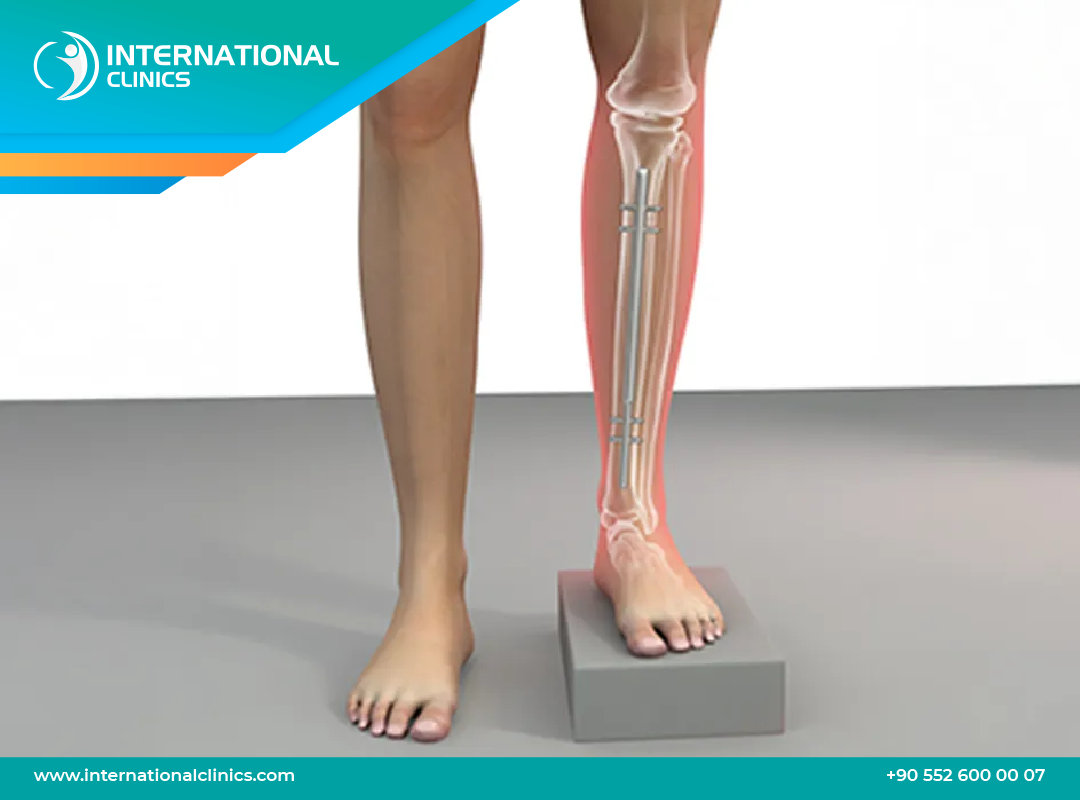
Tibia limb lengthening is a specialized orthopedic procedure designed to gradually increase the length of the shin bone. It is often preferred over femur when moderate height gain is needed, minimizing stress on major joints and reducing initial recovery challenges compared to femur lengthening.
What is Tibia Limb Lengthening Surgery?
Tibia limb lengthening is a surgical procedure to lengthen the shin bone (tibia) by cutting it, inserting a distraction device (internal nail or external frame), and slowly pulling the bone ends apart, allowing new bone, called regenerate, to form in the gap. This corrects leg length discrepancies or increases height.
Its a lengthy process spanning several months, involving controlled bone separation (distraction) at about 1 mm per day, followed by a consolidation phase during which the new bone strengthens, alongside intensive physiotherapy.
Indications and Uses of Tibia Limb Lengthening
Tibia limb lengthening is used to correct leg length discrepancies from birth defects, injury, or disease, treat dwarfism by increasing stature, fix bone deformities (such as bowing), and, in some adults, achieve a permanent cosmetic height increase. The procedure can improve walking, balance, comfort, and self-esteem.
It addresses post-traumatic shortening, congenital conditions, or post-infection growth stunting, allowing greater independence for affected individuals.
Ideal Candidates for Tibial Limb Lengthening
- Health: No systemic diseases (diabetes, rheumatoid arthritis, etc.), non-smoker for at least 6 months prior.
- Psychological: Stable mental health is crucial. Evaluation may be required to ensure patients understand the risks and are committed to the lengthy rehabilitation.
- Bone Health: Adequate bone quality and length to safely undergo tibial lengthening, ensuring proper bone formation and stability during the procedure.
- Soft Tissues: Adequate muscle, fat, and skin to allow for device placement and lengthening.
- Age: Generally 14 to 60, depending on individual health.
Tibial Limb Lengthening Before and After Results
Before and after results of tibial limb lengthening typically show significant height gain, often ranging from 2 to 5+ inches, improved limb proportion, better gait, and increased self-confidence.
Tibia lengthening for leg length discrepancies shows significant success in correcting leg length differences (LLDs), with patients gaining an average of 5–9 cm (or more) through gradual distraction, forming new bone (regenerate).
How Much is the Maximum Tibial Lengthening?
For cosmetic purposes, the maximum safe tibial lengthening is generally around 5 cm (2 inches). Exceeding this significantly increases the risk of complications.
In extreme medical cases, such as severe bone defects or major leg deformities, much greater tibial lengthening, up to 14.5 cm or more, can be achieved using advanced techniques like bone transport. These methods are complex and usually reserved for correcting serious medical issues rather than cosmetic purposes.
However, standard practice focuses on a 4–5 cm limit to avoid serious complications, including joint stiffness, nerve damage, or infection.
Tibial lengthening is often combined with femoral lengthening to safely achieve total height gains of 8–10 cm.
How Does Tibial Limb Lengthening Work?
A tibial limb lengthening procedure involves surgically cutting the tibia and using either an internal rod or an external frame to gradually separate the bone segments. Over several months, new bone forms in the gap, allowing controlled lengthening. This process requires patience and extensive physical therapy to achieve slow, steady growth—typically about 1 mm per day—for correcting leg length discrepancies or increasing height.
Tibial Lengthening Procedure Steps
Step 1: Surgery (Osteotomy)
The surgeon makes a small cut in the tibia and inserts a telescopic, motorized rod if it is an internal procedure, or attaches an external fixator if the procedure is external.
In cases of tight tendons, such as the posterior tibial tendon, the surgeon may also perform a posterior tibial lengthening. This involves splitting the tendon, releasing it from its insertion, or transferring part of it to relieve tension, allowing the tibia to lengthen safely while maintaining proper foot and ankle alignment.
Step 2: Hospital Recovery
The incision is closed, completing the first stage of surgery. Patients usually stay in the hospital for 5 to 7 days. Once they can walk with crutches or a walker, they are discharged home for the second stage: bone healing and gradual elongation.
Step 3: Lengthening and Consolidation
During the lengthening phase, a magnetic remote control gradually separates the bone ends by about 1 mm per day, stimulating new bone (callus) formation. After reaching the desired length—often 1–2 inches over approximately 3 months—the consolidation phase begins, where the new bone hardens and strengthens over several more months.
Step 4: Hardware Removal
Once the bone is fully consolidated, the external frame or internal rod is removed. For the tibia, this usually takes 12–18 months, longer than the femur.
Types of Devices Used in Tibia Lengthening Surgery
- PRECICE Internal Nail:
A motorized rod placed inside the tibia that gradually lengthens the bone from within. It reduces the need for bulky external hardware and makes recovery more comfortable. - External Frame (Ilizarov and Holyfix):
A circular or hexapod frame attached outside the leg with pins or wires. It allows precise lengthening and correction of deformities but can be large and less convenient for daily activities. - Tibial Lengthening Over an Intramedullary Nail (LON):
This hybrid method combines an internal nail with a temporary external frame. The frame guides the bone lengthening, while the internal nail stabilizes the bone. It shortens the time spent in the external frame and improves comfort, though the surgery is slightly more complex.
Recovery After Tibial Limb Lengthening
Recovery after tibial limb lengthening involves several phases: initial hospital stay for a few days, gradual lengthening at about 1 mm/day for 3–4 months, consolidation of new bone for 4–6+ months, rod removal around 12 months, and full functional recovery up to a year or more. Intensive physical therapy is essential throughout.
Phase | What to Expect |
Initial Hospital Stay | A few days post-surgery before discharge. |
Lengthening Phase (3–4 months) | Gradual distraction at ~1 mm/day; uses crutches; limited weight-bearing. |
Consolidation Phase (4–6+ months) | New bone hardens; PT reduces to 2–3 sessions/week; daily home exercises continue. |
Rod Removal (≈12 months) | Internal nail removed; short recovery period. |
Full Recovery | Up to a year or more for full functional return. |
What to Expect During Recovery
Recovery after tibial lengthening varies from patient to patient, but several common experiences can be expected:
- Pain:
Some discomfort is normal after surgery, especially in the early days. Although tibial lengthening is generally less painful than femoral lengthening, proper pain management remains essential. - Stiffness and Limited Motion:
Joint stiffness—particularly in the ankle and knee—is common. Consistent physical therapy is crucial to preserve flexibility and prevent long-term mobility issues.
3.Achilles Tendon Tightness (Ballerina Syndrome):
This is more common in tibial lengthening because the Achilles tendon becomes stretched as the tibia grows. In some cases, patients may require an additional procedure such as Achilles tendon lengthening if stretching and PT are not enough.
- Infection Risk:
For patients using an external fixator, pin-site infections can occur and require careful daily cleaning. This risk is virtually eliminated with internal nails, since no pins pass through the skin. - Bone Healing:
The tibia can take longer to consolidate compared to the femur. On average, healing may require several additional months after the distraction phase, depending on the patient’s bone quality and overall health. - Physical Therapy
Physical therapy (PT) is a vital part of tibial lengthening recovery because the muscles, joints, and tendons must adapt as the bone becomes longer. PT focuses on keeping the joints flexible, preventing stiffness, and maintaining strength through exercises such as ankle pumps, knee bends, stretching, and balance training.
Risks and Complication of Tibial Limb Lengthening
Some side effects—such as pain, discomfort, emotional stress, and mild stiffness—are common. However, rare but serious complications may require medical intervention and monitoring. These include nerve injury, severe joint contractures, delayed or failed bone healing, infection, and fractures.
- Nerve Damage: Injury to the peroneal nerve is a major concern, potentially causing numbness, tingling, or burning pain. In some cases, this can lead to permanent weakness.
- Joint Stiffness & Contractures: Muscles and joints, especially the knee and ankle, may stiffen or develop contractures (shortening) due to prolonged immobilization and bone lengthening, which can affect movement.
- Bone Healing Issues: Sometimes the new bone does not form or harden properly (nonunion or delayed consolidation), which may require slowing the distraction rate or additional intervention.
- Infections: Pin-site infections are common with external fixators, and deep bone infections can also occur.
- Fractures: The newly formed bone may fracture during or after treatment, even after the fixator or internal rod is removed
Cost of Tibial Limb Lengthening
Tibial lengthening surgery varies widely in cost, ranging from $15,000 to $35,000 in medical-tourism destinations like Turkey (often with external devices), and up to $100,000–$135,000 in the United States.
The price difference depends on the country, whether the method is internal (PRECICE) or external (LON), the surgeon’s experience, clinic reputation, and what is included in the package (physical therapy, follow-ups, accommodation, etc.).
Factors Affecting Tibial Lengthening Cost
- Lengthening Method: Fully internal systems (such as PRECICE) are significantly more expensive than LON (internal nail + external fixator) because of implant technology.
- Implant Cost: The internal PRECICE nail alone can cost tens of thousands of dollars.
- Surgeon & Hospital Fees: These vary by country, hospital quality, and surgeon reputation.
- Physical Therapy: Essential for recovery and can add several thousand dollars over the treatment period.
- Additional Procedures: Extra surgeries—such as gastrocnemius recession—can increase the total cost.
Cost of Tibial Limb Lengthening by Country
- United States: $70,000 – $150,000
- Europe: $55,000 – $80,000
- Turkey: $15,000 – $35,000 (often all-inclusive packages)
- Mexico: $15,000 – $60,000
- South Korea / Thailand / Singapore: $40,000 – $70,000
- India: $6,000 – $18,000 (mostly external methods)
Cost by Device used for Tibia lengthening
Tibial limb lengthening cost varies by device and country. Fully internal PRECICE nails are the most expensive, while external fixators are the cheapest. Costs in the U.S. range from $15,000 to $135,000 depending on the device, with Turkey offering packages from $15,000 to $50,000.
Device Method | United States (USD) | United Kingdom (USD) | Turkey (USD) |
PRECICE (Fully Internal Nail) | 70,000 – 135,000 | 60,000 – 90,000 | 30,000 – 50,000 |
LON – Lengthening Over Nail (Hybrid) | 40,000 – 70,000 | 35,000 – 60,000 | 20,000 – 40,000 |
External Fixator Only (Ilizarov/Taylor Frame) | 15,000 – 25,000 | 12,000 – 20,000 | 10,000 – 20,000 |
Tibia ve. Femur Limb Lengthening
Tibial and femoral limb lengthening differ in height gain, pain, healing speed, and recovery. Femur lengthening allows 8–10 cm gain with faster functional recovery but higher initial pain, while tibial lengthening offers up to 6 cm gain, less initial pain, slower bone healing, and intensive physical therapy for stiffness and Achilles tendon stretching.
Breakdown of major differences between tibia vs femur limb lengthening:
Factor | Femur Lengthening | Tibia Lengthening |
Height Gain | 8–10 cm | Up to 6 cm |
Pain Level | Higher | Less painful initially |
Healing Speed | Faster functional recovery | Slower bone healing |
Main Risk | Hip and knee tightness | Achilles tightness (Ballerina Syndrome) |
Recovery | Stronger muscles and quicker rehab | More stiffness need intensive PT |
Best For | Larger height increase | Small–moderate gains |