- What a Partial Shoulder Replacement ? , A Deep Dive into the Science
- Why the Shoulder Joint Fails
- Anatomy Behind
- Indications for partial shoulder replacement surgery(hemiarthroplasty)
- For insurance and administrative purposes, your procedure will be classified using specific codes:
- Cost of a Partial Shoulder Replacement in Turkey
- Cost in Turkey& Worldwide Comparison
- Medical Insurance and Financing Options
- Who Qualifies for a Partial Shoulder Replacement in Turkey: Medical Criteria
- Recovery & Aftercare for a Partial Shoulder Replacement Surgery
- partial shoulder replacement recovery timeline in Turkey
- Risks & Safety Standards for a Partial Shoulder Replacement
- Financing Options for a Partial Shoulder Replacement in Turkey
- Medical Travel Logistics for a Partial Shoulder Replacement in Turkey
- Patient Testimonials for a Partial Shoulder Replacement in Turkey
- Why a Partial Shoulder Replacement in Turkey Is Your Ideal Choice
- Your Journey to a Pain-Free Shoulder Begins Here
“Imagine struggling to lift your arm or sleep without pain…”
If you are considering a partial shoulder replacement in Turkey but feel anxious about traveling abroad for surgery, that’s completely understandable. It’s natural to worry about the safety of the procedure, the quality of care youll receive, the challenges of recovery far from home, and the overall cost.
Navigating a foreign healthcare system can feel overwhelming, leaving you unsure if it’s the right choice for restoring your shoulder’s function and easing your pain.
To understand really whats going on lets imagine your shoulder like a ball-and-cup game.
Your Shoulder Joint
“Ever wondered why your shoulder can move in so many directions?”
Your shoulder has two main parts that work together:
The Ball: The very top of your arm bone.
The Cup (or Socket): A hollow spot in your shoulder blade that the ball fits into.
They fit together perfectly, letting you swing your arm, throw a ball, wave hello, or give a big hug!
“…understanding how a partial shoulder replacement works
When the Ball Gets BumpySometimes, the ball part of your joint can get worn out or bumpy like an old toy that’s been played with a lot. When it’s no longer smooth, moving your arm can hurt or feel creaky,in another words “…causing shoulder pain that might require partial shoulder replacement.”
How Doctors Fix It

A partial shoulder replacement is like giving your shoulder a brand-new, shiny ball!,during a partial shoulder replacement in , the surgeon carefully removes the old, worn ball at the top of your arm bone and replaces it with a smooth metal ball. Your natural cup is left alone because it’s still in good shape.
“…restoring smooth motion safely and effectively.”
Now, your new ball fits perfectly into your old cup, letting your shoulder move smoothly again. You can get back to everyday activities without the ouchies!
Plan your medical travel journey, from initial consultation to postoperative recovery.
“Our international patient care team will guide you every step of the way.”
What a Partial Shoulder Replacement ? , A Deep Dive into the Science
Let’s talk about the partial shoulder replacement procedure your doctor has recommended.
“We know shoulder pain can make daily life difficult.”
We understand that the persistent pain and stiffness in your shoulder have likely made daily tasks difficult and may even be disrupting your sleep. The source of this problem is often the wearing down of the joints natural cushion.
Your shoulder is a ball-and-socket joint.
The "Ball": This is the top of your upper arm bone, called the humeral head.
The "Socket": This is a cup-shaped piece of your shoulder blade, called the glenoid.
In a healthy shoulder, both surfaces are covered with a super smooth, slippery tissue called cartilage. This allows the ball and socket to glide against each other effortlessly, giving you a huge range of motion.
Sometimes, the cartilage on the "ball" (the humeral head) gets severely damaged. This can happen for a few reasons:
Arthritis: A condition where the cartilage wears down over time, becoming rough and thin.
A Severe Fracture: The bone can break in a way that the ball part is shattered and cant be repaired.
Avascular Necrosis: A condition where the bone tissue in the humeral head dies due to a lack of blood supply.
When the cartilage is gone, the rough surface of the bone grinds against the socket, which is the direct cause of the significant pain and stiffness you are feeling.
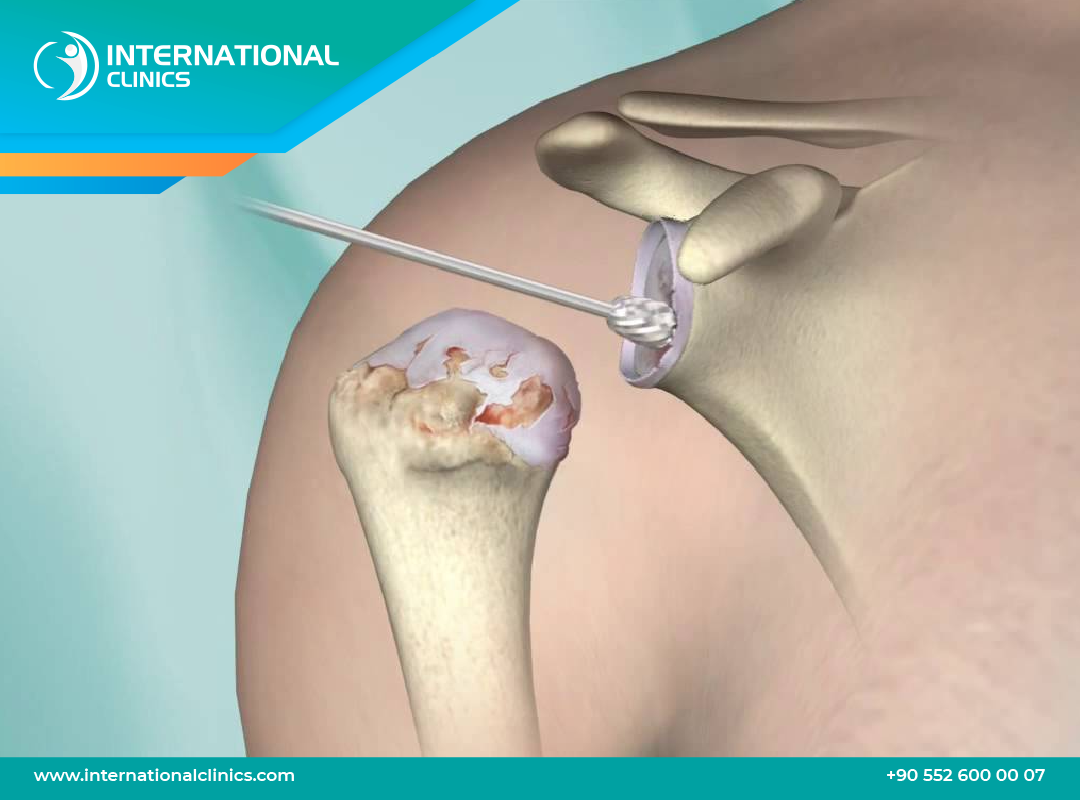
Partial shoulder replacement, also called shoulder hemiarthroplasty, is a surgical procedure during which the upper bone in the arm (humerus) is replaced with a prosthetic metal implant, whereas the other half of the shoulder joint (glenoid or socket) is left intact.
The medical name itself helps explain the surgery:
"Hemi"= half.
"Arthroplasty" = joint replacement.
So, it is a half-joint replacement. During the procedure, your surgeon will carefully remove only the damaged, worn-out "ball" at the top of your arm bone. It is then replaced with a durable, highly polished metal implant that acts as a new, perfectly smooth ball.
What is most important to know is that your natural socket is left completely untouched because it is still in good condition. We are only replacing the part of the joint that is causing the pain.
The ultimate goal of this surgery is to relieve that deep, grinding pain by eliminating the bone-on-bone contact. By giving your joint a new, smooth surface to glide on, we aim to restore your comfort, improve your ability to perform daily activities, and help you get back to a more comfortable and active life.
Why the Shoulder Joint Fails

The shoulder, or glenohumeral joint, is a remarkable ball-and-socket joint that provides the greatest range of motion of any joint in the body. According to Gray’s Anatomy, this mobility is facilitated by the humeral head (the "ball") articulating with the shallow glenoid fossa (the "socket"). However, this mobility comes at the cost of stability, making it susceptible to injury and degenerative conditions.
Simply “This procedure preserves your natural anatomy for a more natural feeling joint.”The shoulders ball-and-socket structure provides the greatest range of motion of any joint in the body. However, this remarkable mobility comes at the cost of inherent instability, making the joint highly susceptible to injury and degenerative conditions.
Anatomy Behind
A successful partial shoulder replacement in Turkey depends on preserving the delicate balance of the surrounding structures. The procedure is only performed when the rotator cuff a group of four muscles and their tendons that stabilize the joint are intact and functional. The glenoid socket must also have sufficient healthy cartilage and bone stock to support the new prosthetic ball. By replacing only the damaged humeral head, the surgeon maintains more of your natural anatomy, which can lead to a more natural feeling joint and potentially easier revision surgery in the future if needed.
Indications for partial shoulder replacement surgery(hemiarthroplasty)
The primary reasons a patient might need this surgery include:
Osteoarthritis: A degenerative "wear-and-tear" condition where the protective cartilage on the end of the humeral head erodes. This leads to bone-on-bone friction, causing severe pain, stiffness, and inflammation. When this damage is confined mainly to the humeral head, with the glenoid socket remaining relatively healthy, a partial replacement is ideal.
Avascular Necrosis (Osteonecrosis): This condition, referenced in the Merck Manual, involves the death of bone tissue due to a lack of blood supply. The humeral head is a common site for avascular necrosis, causing it to collapse and deform, leading to arthritis and intense pain.
Complex Proximal Humerus Fractures: In some severe, multi-fragmented fractures of the upper arm bone in older patients, repairing the bone is not feasible. Replacing the shattered humeral head with a prosthesis can provide a more predictable and functional outcome.
According to guidelines from the American Academy of Orthopaedic Surgeons (AAOS), you are a good candidate for this procedure if you have the conditions above and have failed to find relief with conservative treatments like physical therapy and medications.
For insurance and administrative purposes, your procedure will be classified using specific codes:
CPT (Current Procedural Terminology) Code: The primary code is 23470 (Hemiarthroplasty of the shoulder).
ICD-10 (International Classification of Diseases) Codes: These diagnose the underlying condition, such as M19.01- for Primary Osteoarthritis of the shoulder or M87.- for Osteonecrosis.
Cost of a Partial Shoulder Replacement in Turkey
The financial burden of surgery is a major source of anxiety. In many Western countries, the cost of a partial shoulder replacement can be prohibitive, even with insurance. This is where a partial shoulder replacement in Turkey offers a powerful competitive price starting from $4,000 to $8,300USD, reassuring advantage without compromising on quality.
Cost in Turkey& Worldwide Comparison
The cost savings are dramatic. This is not due to lower quality but to Turkeys lower cost of living, favorable exchange rates, and government support for medical tourism.
Country/Region | Average Cost for Partial Shoulder Replacement (USD) |
Turkey | $4,000 - $8,300 |
United States | $20,000 - $45,000+ |
United Kingdom | $16,000 - $25,000 (£13,000 - £20,000) |
Germany | $15,000 - $22,000 (€14,000 - €20,000) |
“Affordable care without compromising quality.”
The price in Turkey is typically an all-inclusive package, often covering:
- The surgery itself (surgeon, anesthesiologist, operating room fees)
- The high-quality prosthetic implant
- All pre-operative tests and consultations
- A 5-7 night hospital stay in a private room
- Initial post-operative medication and physical therapy
- Airport transfers and a dedicated patient host
Medical Insurance and Financing Options
While your domestic insurance plan may not directly cover elective surgery abroad, partial reimbursement is often possible. To facilitate this, you should:
Contact your insurer and ask about their policy on "out-of-network" or "overseas medical care."
Provide them with the CPT code (23470) and the ICD-10 code for your diagnosis.
Submit the detailed, itemized invoice from the JCI-accredited Turkish hospital. The international accreditation is often a key factor for insurers considering reimbursement.
To make the procedure even more accessible, many clinics offer financing options through partnerships with international medical loan companies, allowing you to pay for your surgery in manageable monthly installments.
Who Qualifies for a Partial Shoulder Replacement in Turkey: Medical Criteria

A successful outcome depends on selecting the right patient for the right procedure. A partial shoulder replacement in Turkey is a specialized surgery, and a thorough evaluation is essential to determine if you are a suitable candidate.
“If you meet these criteria, you’re likely to have a successful outcome.”
“…eligibility for partial shoulder replacement in Turkey.”
Recommended for whom:
You are likely a strong candidate if you meet the following criteria, based on standards from orthopedic societies like TOTBID (Turkish Society of Orthopaedics and Traumatology):
You have a confirmed diagnosis of osteoarthritis, avascular necrosis, or a complex fracture limited primarily to the humeral head.
Your glenoid (socket) is in good condition, with minimal erosion and healthy cartilage.
Your rotator cuff tendons are intact and fully functional. This is critical for the stability and function of the new joint.
You have significant shoulder pain and functional limitation that has not responded to at least six months of non-surgical treatment (e.g., physical therapy, injections, anti-inflammatory medications).
You are in good overall health and medically fit to undergo anesthesia and major surgery.
Not recommended for whom:
This procedure is not recommended for everyone. Contraindications include:
- Significant Glenoid Damage: If the socket is also severely worn, a total shoulder replacement would be the more appropriate procedure.
- Irreparable Rotator Cuff Tear: A deficient rotator cuff would lead to instability and poor outcomes. In this case, a reverse total shoulder replacement might be considered.
- Active Infection: Any active infection in the body, particularly in the shoulder joint, is an absolute contraindication.
- Paralysis or Severe Nerve Damage: Inadequate nerve function affecting the shoulder muscles would compromise the surgical outcome.
The evaluation process in Turkey is rigorous, involving a review of your medical history, a physical examination (if you travel for a consultation), and detailed imaging studies (X-ray, CT, and MRI) to assess your bone and soft tissue quality.
Step-by-Step Partial Shoulder Replacement in Turkey Procedure
Knowing what will happen in the operating room can clarify the entire process and reduce anxiety. The surgical technique for a partial shoulder replacement in Turkey is standardized and follows best practices used in top orthopedic centers worldwide, as detailed in surgical textbooks like the Sabiston Textbook of Surgery.
The Surgical Technique (Deltopectoral Approach)
- Preoperative Preparations: Youll meet with your surgeon and anesthesiologist. A full workup including blood tests, an ECG, and a final review of your imaging will be completed to ensure you are ready for surgery.
“Each step is performed with precision and patient safety in mind.”
First, doctors help you go to sleep so you feel nothing, then they make a small opening to get to your shoulder bone. The surgeon carefully takes out the old, damaged "ball" part of the joint and puts a brand new, smooth metal one in its place. Finally, they close everything up with stitches so your shoulder can heal and become strong again.
- Anesthesia: The procedure is typically performed under general anesthesia combined with a regional nerve block (interscalene block). This block numbs the entire arm, providing excellent pain relief for many hours after the surgery.
“Each step is performed with precision and patient safety in mind.”
- Incision: The surgeon makes an incision at the front of the shoulder, usually about 4-6 inches long.
- Muscle Separation: The surgeon carefully works between the deltoid and pectoral muscles to access the shoulder joint without detaching or cutting them, preserving muscle strength.
Each step is performed with precision and patient safety in mind.”
- Dislocation and Resection: The subscapularis tendon (part of the rotator cuff) is carefully detached and moved aside to allow the surgeon to dislocate the humeral head from the socket. The damaged head is then precisely measured and removed using specialized cutting guides.
- Canal Preparation: The hollow center of the humerus (arm bone), known as the medullary canal, is prepared with instruments to perfectly match the size and shape of the prosthetic stem.”
- Trial and Implantation: A trial implant is inserted to check for fit, stability, and range of motion. Once the ideal size is confirmed, the final prosthetic stem and ball are implanted. The stem may be press-fit (allowing bone to grow into it) or cemented, depending on your bone quality.
“Each step is performed with precision and patient safety in mind.”
- Closure: The surgeon repairs the subscapularis tendon, and the muscle layers and skin are closed with sutures.
The entire surgery typically takes 1 to 2 hours. You will be taken to a recovery room for monitoring before being transferred to your private hospital room.
Recovery & Aftercare for a Partial Shoulder Replacement Surgery
Your recovery is just as important as the surgery itself. The fear of being unsupported during recovery abroad is common, but Turkish hospitals have developed comprehensive aftercare programs specifically for international patients undergoing partial shoulder replacement in Turkey.
partial shoulder replacement recovery timeline in Turkey
Recovery is a phased process, and your active participation is key to a successful outcome.
Phase 1: Hospital Stay & Initial Healing (First 1-2 Weeks)
You will stay in the hospital for 5-7 days.
Pain will be managed with medication.
A physical therapist will begin gentle, passive range-of-motion exercises the day after surgery.
You will wear a sling to protect the shoulder, likely for 4-6 weeks.
Phase 2: Early Rehabilitation (Weeks 2-6)
After discharge, you will stay in a nearby hotel or apartment for another 7-10 days for follow-up appointments and continued physical therapy.
You will be cleared to fly home once your surgeon is satisfied with your initial recovery.
Phase 3: Active Motion and Strengthening (Weeks 6-12)
Once you are home, you can discontinue the sling and begin active range-of-motion and light strengthening exercises under the guidance of a local physical therapist, following the protocol provided by your Turkish surgeon.
Phase 4: Return to Function (3-6 Months and Beyond)
You will gradually regain strength and function. Most patients can return to light daily activities by 3 months.
Full recovery and return to more strenuous activities or sports can take 6 months to a year.
Your Turkish surgical team will remain in contact with you through video calls and email to monitor your progress and coordinate with your physical therapist back home.
Risks & Safety Standards for a Partial Shoulder Replacement
Every surgery carries risks, and its crucial to have an honest discussion about them. Its equally important to understand how elite hospitals mitigate these risks. When you choose a partial shoulder replacement in Turkey at a JCI-accredited facility, you are choosing a system obsessed with safety.
Potential Complications
While the complication rate is low, potential risks include:
- Infection: The risk is minimized through sterile operating environments and prophylactic antibiotics.
- Nerve or Blood Vessel Damage: The surgical team takes extreme care to protect the nerves and vessels around the shoulder.
- Implant Loosening or Failure: Modern implants are highly durable, but this can occur over time.
- Stiffness or Instability: Adhering to the physical therapy protocol is the best way to prevent this.
- Glenoid Wear: Over many years, the metal ball can wear down the natural socket, potentially requiring a revision to a total shoulder replacement.
How Turkish Hospitals Ensure Your Safety
Your safety is the absolute top priority. Accredited hospitals implement multiple layers of protection:
- Strict Infection Control: Adherence to protocols from the WHO and CDC, including advanced air filtration in operating rooms and rigorous sterilization processes.
- Medication Safety: Barcode systems and double-checks to ensure you receive the correct medication and dosage every time.
- Implant Traceability: All prosthetic implants are sourced from FDA/EMA-approved manufacturers and have unique serial numbers that are tracked in your medical records, ensuring authenticity and quality.
- Multidisciplinary Team Approach: Your care is managed not just by your surgeon but by a team of specialists, including anesthesiologists, hospitalists, nurses, and physiotherapists, who collaborate to ensure a smooth and safe experience.
“Accredited hospitals maintain rigorous safety protocols to minimize risks.
Financing Options for a Partial Shoulder Replacement in Turkey
We understand that even with significant savings, funding your surgery requires planning. To make a partial shoulder replacement in Turkey accessible, a variety of financing solutions are available to international patients. Many leading clinics and medical tourism facilitators have established partnerships to ease the financial process. You can explore options such as dedicated medical loan companies that specialize in funding treatment abroad, often offering competitive interest rates and flexible repayment terms. Some clinics also provide in-house payment plans or work with credit providers that allow you to spread the cost over several months or years. Discuss these possibilities with your patient coordinator to find a solution that fits your budget, ensuring that financial concerns dont stand in the way of your health.
Medical Travel Logistics for a Partial Shoulder Replacement in Turkey
Planning the logistics of international travel for surgery can seem overwhelming, but experienced medical tourism providers have streamlined this into a simple, stress-free process. Your journey for a partial shoulder replacement in Turkey is fully managed. It begins with remote consultations, where youll share medical records and speak directly with your surgeon. Once you decide to proceed, a dedicated patient care team assists with visa applications (if necessary) and finding the best flights. Upon arrival at major airports like Istanbul (IST) or Sabiha Gökçen (SAW), youll be greeted by a private driver and transferred to your hotel or the hospital. An interpreter will be with you for all medical appointments to ensure clear communication. The team also arranges for comfortable, accessible accommodation for your pre- and post-operative stay. This comprehensive, concierge-style service allows you to focus solely on your health and recovery.
Patient Testimonials for a Partial Shoulder Replacement in Turkey
Experiences with partial shoulder replacement in Turkey for international patients.
Hearing from others who have walked this path before you can provide immense reassurance.
"I was a bit nervous about traveling from the UK to Istanbul for my shoulder surgery, but the entire experience was flawless. The hospital was more modern than any Ive seen at home, and my surgeon was fantastic. Six months later, Im back to playing golf with no pain. I saved thousands, and the quality of care was second to none." – David R., 62, Manchester, UK
"The constant shoulder pain from avascular necrosis was ruining my life. The cost in the US was astronomical. Choosing to have my hemiarthroplasty in Turkey was the best decision I ever made. The patient care team handled everything. I felt completely safe and supported from start to finish. My only regret is not doing it sooner." – Susan M., 58, Atlanta, USA
Why a Partial Shoulder Replacement in Turkey Is Your Ideal Choice
The thought, "Is it truly safe to have a major surgery so far from home?" is a significant hurdle for many. Its a question of trust. Here’s why you can place your trust in the Turkish healthcare system for your partial shoulder replacement in Turkey.
Turkeys medical infrastructure is not just good; its world-class. The Turkish government and private sector have invested billions in creating a healthcare ecosystem that rivals and, in some cases, surpasses that of Western nations.
International Accreditations: The gold standard for hospital safety worldwide is JCI accreditation. Turkey has one of the highest numbers of JCI-accredited hospitals globally. This isnt just a certificate on the wall; its a rigorous, ongoing commitment to excellence in everything from surgical protocols and infection control (following NHS and WHO standards) to patient rights and medication safety.
Highly Qualified Surgeons: Turkish orthopedic surgeons undergo extensive and competitive training. Many pursue fellowships and advanced training in Germany, the UK, or the USA, bringing back cutting-edge techniques. They are often members of international societies like the European Society for Sports Traumatology, Knee Surgery and Arthroscopy (ESSKA) and are fluent in English.
State-of-the-Art Technology: Hospitals catering to international patients are equipped with the latest medical technology. This includes advanced diagnostic imaging (3T MRI, CT scans), minimally invasive surgical tools, and FDA/EMA-approved prosthetic implants from globally recognized manufacturers like Zimmer Biomet, Stryker, and DePuy.
The entire journey is designed for international patients. Dedicated English-speaking patient coordinators manage every detail, from your first video consultation to your flights, accommodation, and post-operative care, eliminating the stress and uncertainty of medical travel.
Your Journey to a Pain-Free Shoulder Begins Here
The decision to undergo a partial shoulder replacement in Turkey is a significant one, but it doesnt have to be a leap of faith. It can be a well-researched, confident choice based on evidence of quality, safety, and affordability. By choosing a top-tier, internationally accredited Turkish facility, you are placing your trust in a healthcare system built for excellence and designed to cater to the unique needs of patients from around the world.
“Regain your movement and live without shoulder pain.”
The path to a life free from shoulder pain, with restored movement and renewed vitality, is clearer and more accessible than you might think. Let go of the fear and embrace the possibility of a better future.
Youve done the research. Now take the most important step. Book your free, no-obligation consultation today and begin your journey back to a full and active life.