- What Total Shoulder Replacement?
- Why Do You Need a Shoulder Replacement?
- The most common indications include:
- Surgical Codes for Insurance and Medical Records
- Why a Total Shoulder Replacement in Turkey Is Your Ideal Choice
- Cost of Total Shoulder Replacement in Turkey
- Cost in Turkey & Worldwide Comparison
- Medical Insurance, CPT/ICD Codes, and Financing
- Who Qualifies for a Total Shoulder Replacement in Turkey?
- The Step-by-Step Total Shoulder Replacement in Turkey Procedure
- Diagram comparing Anatomic and Reverse Total Shoulder Replacement in Turkey.
- Total vs. Reverse Shoulder ReplacementIndication
- Recovery & Aftercare for Your Total Shoulder Replacement in Turkey
- Recovery Timeline:
- Risks & Safety Standards for Total Shoulder Replacement in Turkey
- How Turkish Hospitals Minimize Risks:
- Financing Options for Total Shoulder Replacement in Turkey
- Medical Travel Logistics for Total Shoulder Replacement in Turkey in International Clinics
- Patient Testimonials for Total Shoulder Replacement in Turkey
- A Future Free From Pain Awaits
Are you considering Total Shoulder Replacement in Turkey but feel anxious about traveling abroad for such a significant surgery? It’s natural to worry about the safety of the procedure, the quality of medical care, the challenges of recovery far from home, and the true final cost. You might be asking yourself if the savings are worth the potential risks.
Here’s the good news: Turkey has rapidly emerged as a global leader in orthopedic surgery, combining world-class medical standards with unparalleled affordability. The countrys top hospitals are accredited by international bodies like Joint Commission International (JCI) and ISO, ensuring they adhere to the highest standards of patient safety and infection control the same standards you’d expect in the US or UK. Surgeons are board-certified, often with international training and extensive experience in complex joint replacements. Thousands of international patients have successfully undergone Total Shoulder Replacement in Turkey, reporting excellent outcomes, renewed mobility, and a quality of life they thought was lost, all at a fraction of their home countrys cost.
This article is designed to replace your fears with facts and empower you to make an informed decision. We will walk you through everything you need to know, helping you:
Understand the medical science behind Total Shoulder Replacement in Turkey, including the anatomy and the conditions it treats.
Compare the costs in Turkey, your home country, and other destinations worldwide.
Navigate insurance coverage, including the relevant CPT/ICD codes and financing options.
Confidently plan your medical travel, from the first consultation to your full recovery.
Don’t let fear or uncertainty hold you back from a life free of shoulder pain.
Book a free, no-obligation consultation with a board-certified orthopedic surgeon in Turkey today.
What Total Shoulder Replacement?
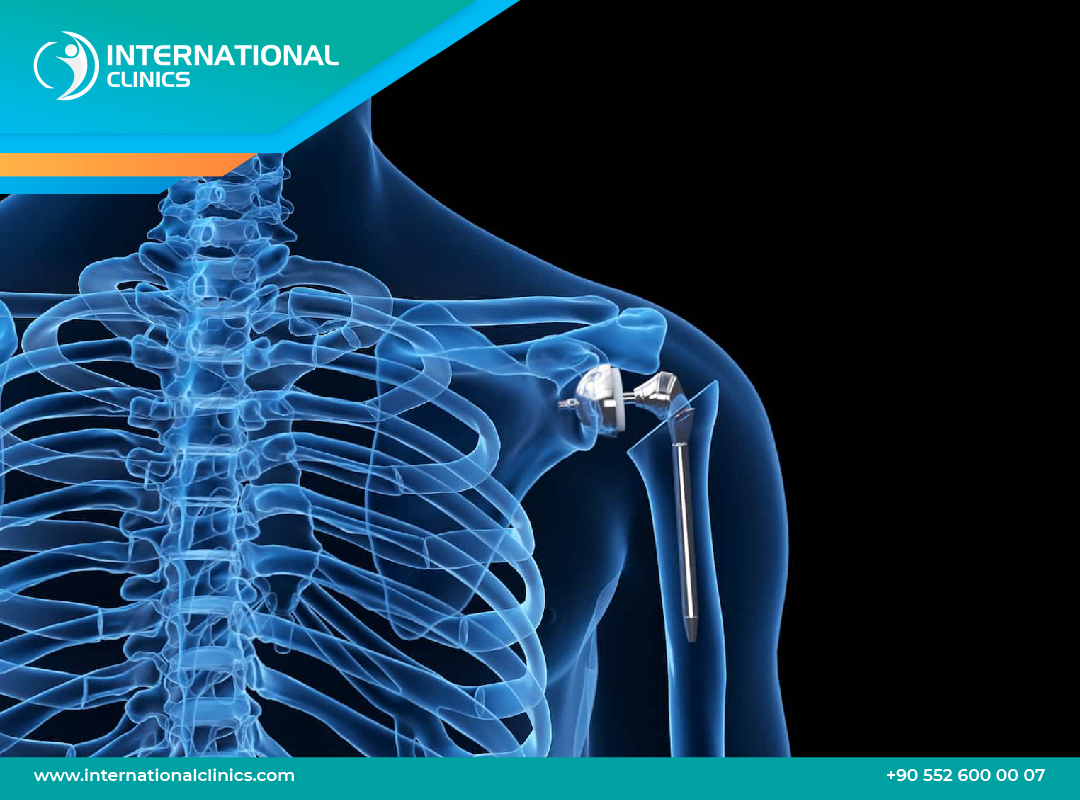
Facing the prospect of joint replacement can be fearsome, especially when you’re grappling with the complex medical terminology. Understanding the science behind a Total Shoulder Replacement in Turkey is the first step toward feeling in control of your health journey. This procedure, medically known as total shoulder arthroplasty,a surgical procedure that replaces the damaged ball and socket of the shoulder joint with artificial components, often to relieve pain and restore function, is not just about managing pain; its about restoring function by replacing a damaged joint with a highly engineered prosthesis.
Why Do You Need a Shoulder Replacement?

Your shoulder, or glenohumeral joint, is a remarkable ball-and-socket joint that allows for a wide range of motion. The "ball" is the head of your upper arm bone (humerus), and the "socket" is the glenoid cavity of your shoulder blade (scapula). According to the Oxford Textbook of Medicine, both surfaces are covered with smooth articular cartilage that allows for frictionless movement.
Conditions that necessitate a shoulder replacement typically involve the severe degradation of this cartilage.
The most common indications include:
Glenohumeral Osteoarthritis: This is the age-related "wear-and-tear" arthritis. As cartilage breaks down, bone grinds against bone, causing severe pain, stiffness, and inflammation. The Merck Manual describes this as a progressive disease leading to significant functional limitation.
- Rheumatoid Arthritis: An autoimmune disease where the body’s immune system attacks the joint lining (synovium), leading to inflammation that destroys cartilage and bone.
- Rotator Cuff Tear Arthropathy: A complex condition where a massive, irreparable tear of the rotator cuff tendons leads to instability. The humeral head migrates upward, causing abnormal wear and cartilage destruction, as detailed in Grays Anatomy.
- Avascular Necrosis (Osteonecrosis): The death of bone tissue due to a lack of blood supply, causing the humeral head to collapse and the cartilage to deteriorate.
- Severe Fractures: Complex fractures of the shoulder joint that cannot be repaired may require a replacement.
Surgical Codes for Insurance and Medical Records
When discussing the procedure with insurance providers or your home doctor, using standardized medical codes is crucial.
- CPT (Current Procedural Terminology) Code: The primary code for this surgery is 23472 (Arthroplasty, glenohumeral joint; total shoulder [glenoid and proximal humeral replacement]).
- ICD-10 (International Classification of Diseases) Codes: These codes identify your diagnosis. Common examples include M19.011 (Primary osteoarthritis, right shoulder) or M19.012 (Primary osteoarthritis, left shoulder).
Understanding your condition is the first step toward a solution.
Why a Total Shoulder Replacement in Turkey Is Your Ideal Choice
Concerns about quality and safety are paramount when considering surgery abroad. You may wonder if the standards in Turkey can truly match those in Western countries. The reality is that for Total Shoulder Replacement in Turkey, the medical infrastructure is not just comparable but often exceeds international benchmarks, providing a superior patient experience.
Turkey’s commitment to excellence in healthcare is proven by its accreditations and the caliber of its medical professionals.
Internationally Accredited Hospitals: Turkey boasts one of the highest numbers of JCI-accredited hospitals in the world. This accreditation is the gold standard in global health care, signifying that a facility meets rigorous standards for patient safety, quality of care, and infection control. These hospitals are equipped with state-of-the-art operating rooms, advanced diagnostic imaging (MRI, CT scans), and dedicated orthopedic wards.
Board-Certified Surgeons: Turkish orthopedic surgeons undergo extensive training. They are certified by the Turkish Society of Orthopaedics and Traumatology (TOTBID), which upholds standards equivalent to those of the American Academy of Orthopaedic Surgeons (AAOS) or the British Orthopaedic Association (BOA). Many surgeons have completed fellowships in the USA, UK, or Germany, specializing in joint replacement and bringing global expertise back to Turkey.
Regulatory Oversight: The Turkish Medicines and Medical Devices Agency (TİTCK) provides stringent regulatory oversight, similar to the FDA in the US or the EMA in Europe. This ensures that all prosthetic implants and medical equipment used are of the highest quality and have been approved for safety and efficacy.
Choosing Turkey means putting your health in the hands of a system designed for excellence. Schedule a video call to meet a Turkish orthopedic surgeon and discuss their credentials and your treatment plan.
Cost of Total Shoulder Replacement in Turkey
The financial burden of major surgery can be a significant source of stress. The high cost of orthopedic procedures in countries like the US and UK can be prohibitive, even with insurance. This is where a Total Shoulder Replacement in Turkey offers a compelling and logical solution, providing exceptional value without compromising on quality.Inturkey you should expect to pay between $4,000 to $15,000 USD.
Cost in Turkey & Worldwide Comparison
The cost disparity for total shoulder replacement is staggering. The price difference is not due to a lower quality of care but rather the lower cost of living, operational expenses, and favorable exchange rates in Turkey.
Country | Average Cost of Total Shoulder Replacement |
United States | $30,000 - $50,000+ |
United Kingdom | £15,000 - £25,000 ($18,000 - $30,000) |
Germany | €18,000 - €28,000 ($19,000 - $30,000) |
Turkey | $7,000 - $12,000 |
Note: These are estimates and can vary. Turkish packages often include accommodation, airport transfers, and translator services.
Medical Insurance, CPT/ICD Codes, and Financing
Navigating insurance for treatment abroad can feel complex, but it’s manageable. While most domestic insurance plans (e.g., Medicare, NHS) do not cover elective surgery abroad, its always worth checking with your private insurance provider.
Partial Reimbursement: Some private insurers may offer partial reimbursement for out-of-network or overseas procedures. When you inquire, be sure to provide them with the CPT code (23472) and your ICD-10 diagnosis code.
Financing Options: Even without insurance coverage, the procedure in Turkey is affordable. Many clinics partner with medical financing companies that offer loans specifically for medical tourism. These plans often have competitive interest rates and flexible repayment terms, making the upfront cost much more manageable.
The immense savings allow you to access world-class care without the financial strain.
Request a personalized, all-inclusive quote for your Total Shoulder Replacement in Turkey today.
Who Qualifies for a Total Shoulder Replacement in Turkey?

Deciding to undergo surgery is a major step, and its crucial to know if you are a suitable candidate. The eligibility criteria for a Total Shoulder Replacement in Turkey are based on globally accepted medical guidelines, ensuring the procedure is performed only when it is safe and offers a high probability of success. The primary goal is to improve your quality of life, not to take unnecessary risks.
An evaluation by a Turkish orthopedic surgeon will determine your candidacy, but general criteria, as recommended by the American Academy of Orthopaedic Surgeons (AAOS), include:
Ideal Candidates:
- Severe, Disabling Pain: Patients experiencing shoulder pain that is not relieved by conservative treatments and significantly interferes with daily activities (e.g., sleeping, dressing, reaching).
- Significant Functional Loss: A considerably limited range of motion and weakness in the shoulder.
- Failure of Conservative Treatments: You have already tried and failed to find relief from options like physical therapy, anti-inflammatory medications (NSAIDs), and corticosteroid injections.
- Radiographic Evidence: X-rays or MRI scans clearly show advanced joint destruction, such as end-stage osteoarthritis or rotator cuff tear arthropathy.
- Good General Health: You are healthy enough to undergo a major surgical procedure and participate in postoperative rehabilitation.
Reasons You May Not Qualify
- Active Infection: Any active infection in the body, particularly in the shoulder joint, is an absolute contraindication as it can lead to prosthetic joint infection.
- Paralysis or Non-Functional Muscles: The deltoid and rotator cuff muscles must be functional to support and operate the new joint.
- Severe Osteoporosis: Very poor bone quality may prevent the secure fixation of the prosthetic components.
- Certain Neurological Conditions: Conditions that severely impair muscle control could compromise the surgical outcome.
The decision is always made in your best interest after a thorough medical review. Submit your medical records for a free evaluation by our orthopedic team to see if you are a candidate for Total Shoulder Replacement in Turkey.
The Step-by-Step Total Shoulder Replacement in Turkey Procedure
Walking into an operating room can be intimidating. Knowing exactly what will happen during your Total Shoulder Replacement protocol in Turkey can demystify the process and alleviate anxiety. The procedure is a highly refined surgical art, following a precise, step-by-step protocol to ensure safety and optimal outcomes.
As referenced in the Sabiston Textbook of Surgery, the procedure typically lasts about two hours and involves these stages:
- Anesthesia: You will be placed under general anesthesia, meaning you will be asleep for the entire procedure. This is often supplemented with a regional nerve block (interscalene block), which numbs the shoulder and arm for excellent postoperative pain control.
- The Incision: The surgeon makes an incision, typically 4-6 inches long, at the front of your shoulder. This is known as the deltopectoral approach, which allows access to the joint by working between the deltoid and pectoral muscles, minimizing muscle damage.
- Dislocation and Humeral Head Resection: The surgeon carefully dislocates the "ball" (humeral head) from the "socket" (glenoid). The damaged, arthritic humeral head is then precisely removed using a surgical saw and specialized cutting guides.
- Humeral Preparation and Implant: The hollow center of the humerus (upper arm bone) is prepared. A metal stem is inserted into the bone, and a smooth, polished metal ball is attached to the top of the stem, replicating your natural humeral head.
- Glenoid Preparation and Implant: The surgeon then focuses on the socket. The remaining damaged cartilage is removed from the glenoid, and the bone is shaped to fit the new socket component. A plastic (polyethylene) cup is cemented or press-fit into place.
- Final Checks and Closure: The surgeon places the new humeral head into the new glenoid socket, creating the new joint. They test the range of motion and stability to ensure proper function. The deep tissues are closed with dissolvable sutures, and the skin is closed with sutures or staples. A sterile dressing is applied.
Surgical Variation: Reverse Total Shoulder Replacement
For patients with severe rotator cuff tear arthropathy, a reverse total shoulder replacement is often performed. In this variation, the ball and socket are switched: a metal ball is attached to the glenoid, and a plastic socket is fixed to the top of the humerus. This design alters the joints mechanics, allowing the powerful deltoid muscle to lift the arm instead of the damaged rotator cuff.
Diagram comparing Anatomic and Reverse Total Shoulder Replacement in Turkey.
The surgical team’s expertise ensures the right technique is chosen for your specific anatomy and condition. Connect with a surgeon to discuss which surgical approach is best for your Total Shoulder Replacement in Turkey.
Total vs. Reverse Shoulder ReplacementIndication
Feature | Total Shoulder Replacement | Reverse Shoulder Replacement |
Primary Condition | Severe Glenohumeral Arthritis | Cuff Tear Arthropathy (Arthritis + Torn Cuff) |
Rotator Cuff Status | Intact and Functional (Required) | Damaged or Non-Functional |
Main Goal of Surgery | Relieve pain while preserving natural joint mechanics. | Relieve pain and restore arm elevation by changing joint mechanics. |
Also Indicated For | Primarily for arthritis with a healthy cuff. | Complex fractures, irreparable cuff tears (without arthritis), or failed previous shoulder replacements. |
Recovery & Aftercare for Your Total Shoulder Replacement in Turkey
The success of your surgery depends heavily on your recovery. Patients often worry about managing rehabilitation in a foreign country. However, the aftercare protocols for Total Shoulder Replacement in Turkey are comprehensive and designed for international patients, ensuring a smooth and effective healing process from your hospital bed to your return home.
Your recovery will follow a structured timeline, guided by your surgeon and physical therapy team.
Recovery Timeline:
Hospital Stay (2-4 Days): Immediately after surgery, you will be monitored in a recovery room. Pain will be managed with IV medication and the nerve block. A physical therapist will see you within 24 hours to begin gentle, passive range-of-motion exercises. You will be fitted with a sling, which you will wear to protect the joint.
Weeks 1-6 (Protection and Passive Motion): This is a critical healing period. You will wear your sling for most of the day and night, only removing it for showers and prescribed exercises. The focus is on protecting the repair. Your physical therapy will consist of pendulum exercises and passive motion, where the therapist moves your arm for you. You will be cleared to fly home during this period, typically 1-2 weeks after surgery.
Weeks 6-12 (Active Motion and Strengthening): Around the 6-week mark, as confirmed by your surgeon, you can discontinue the sling and begin active range-of-motion exercises, moving your arm under its own power. Light strengthening exercises will be gradually introduced.
Months 3-6 (Moderate Strengthening): You will progress to more significant strengthening exercises to rebuild muscle and improve function. Most patients can return to many of their normal daily activities during this period.
6 Months to 1 Year (Full Recovery): It can take up to a year to achieve the maximum benefit from your surgery. Continued adherence to your physical therapy program is key to regaining strength, mobility, and function.
Your Turkish surgical team will provide a detailed rehabilitation protocol to share with your physical therapist back home, ensuring a seamless transition of care.
Risks & Safety Standards for Total Shoulder Replacement in Turkey
Every surgery carries risks, and its essential to have an honest discussion about them. The fear of complications can be heightened when youre abroad. However, the safety protocols and risk mitigation strategies for Total Shoulder Replacement in Turkey are world-class, making it one of the safest destinations for orthopedic care.
Potential complications, though rare (typically occurring in less than 5% of cases), are detailed in pathology textbooks like Robbins & Cotran.
They include:
Infection: Can occur deep in the joint or superficially at the incision.
Dislocation: The new ball can come out of the socket.
Nerve or Blood Vessel Damage: Structures around the shoulder could be injured during surgery.
Implant Loosening or Wear: Over many years, the prosthesis can loosen from the bone or wear out.
Fracture: The humerus or glenoid could fracture during or after surgery.
How Turkish Hospitals Minimize Risks:
Top Turkish hospitals combat these risks with evidence-based protocols endorsed by organizations like the WHO and JCI:
- Sterile Operating Theaters: Operating rooms use laminar airflow systems to minimize airborne pathogens.
- Prophylactic Antibiotics: You will receive IV antibiotics before, during, and after surgery to prevent infection, a standard guideline from the AMA.
- Expert Anesthesia Teams: Anesthesiologists are highly skilled in regional blocks, which reduce the need for general anesthesia and manage postoperative pain effectively, lowering systemic risks.
- Advanced Surgical Technique: Surgeons use meticulous techniques to protect nerves and blood vessels. Proper implant positioning and soft tissue balancing dramatically reduce dislocation risk.
- Infection Control: Hospitals have strict hand hygiene protocols, patient screening, and dedicated infection control teams to prevent hospital-acquired infections.
Your safety is the highest priority. The standards of care are designed to deliver outcomes that are as good as, or better than, what you would receive at home. Inquire about the specific safety and infection control rates at our partner hospitals for Total Shoulder Replacement in Turkey.
Financing Options for Total Shoulder Replacement in Turkey
While the cost of a Total Shoulder Replacement in Turkey is significantly lower, we understand that paying for surgery is a major financial decision. To make this life-changing procedure accessible, a variety of straightforward financing options are available, removing the stress of an upfront lump-sum payment.
Medical Tourism Loans: Several international companies specialize in providing loans for medical procedures abroad. They offer competitive rates and repayment plans tailored to your budget. They understand the logistics of paying international hospitals and can often transfer funds directly to the clinic.
Clinic Payment Plans: Many top clinics in Turkey offer in-house installment plans. You may be able to pay a deposit to secure your surgery date and then pay the balance in manageable installments leading up to or even after your procedure.
Credit Cards: Paying with a credit card can be a simple option, especially with cards that offer low international transaction fees or travel rewards. This provides an additional layer of payment protection.
Medical Travel Logistics for Total Shoulder Replacement in Turkey in International Clinics
Planning a trip for surgery might seem overwhelming, but medical travel for a Total Shoulder Replacement in Turkey is a streamlined process. Clinics catering to international patients have dedicated teams to handle all the logistics, allowing you to focus solely on your health and recovery.
Your journey typically includes:
- Free Online Consultation: You will start with a video call with your surgeon to discuss your case, treatment plan, and answer all your questions.
- All-Inclusive Packages: Most clinics offer comprehensive packages that bundle the key components of your trip. This typically includes:
- The full cost of the surgery (surgeon fees, anesthesia, implants, hospital stay).
- VIP airport transfers in a comfortable vehicle.
- Accommodation in a 4 or 5-star hotel close to the hospital for before and after your hospital stay.
- A personal translator and patient host available 24/7.
- All preoperative tests and postoperative check-ups.
- Visa and Flights: Citizens of many countries (including the US, UK, and most of the EU) can enter Turkey for up to 90 days without a visa. Your patient coordinator will advise you on the specific requirements for your nationality. They can also help you find the most convenient flights into major hubs like Istanbul (IST), Ankara (ESB), or Izmir (ADB).
The entire process is designed to be seamless and stress-free, ensuring you feel supported from the moment you land. Let us help you plan your trip.
Patient Testimonials for Total Shoulder Replacement in Turkey
Hearing from others who have walked this path before can provide powerful reassurance. Here are stories from patients who chose to have their Total Shoulder Replacement in Turkey.
"From Constant Pain to Painting Again"
"For years, I couldnt lift my arm to paint, my greatest passion. The arthritis was unbearable. In the UK, the waiting list was over a year, and the private cost was astronomical. A friend recommended Turkey. From the first email, the team was incredible. My surgeon was brilliant, and the hospital was cleaner than any Ive seen at home. Six months later, Im back at my easel, pain-free. Choosing Turkey gave me my life back."
David L., Manchester, UK
"Worth Every Mile"
"Flying from the United States for surgery was a big decision, but my only regret is not doing it sooner. The pain in my shoulder was a 10/10 every single day. The team in Istanbul handled everything—the hotel, the transfers, everything. The level of care was better than I ever received in the US. The cost was less than one-third of what I was quoted in Florida. I can now play with my grandkids without wincing in pain. It was worth every mile."
Susan G., Florida, USA
A Future Free From Pain Awaits
The journey through chronic shoulder pain can be isolating and exhausting. The decision to undergo a Total Shoulder Replacement in Turkey is a decision to reclaim your mobility, your independence, and your quality of life. The fear and uncertainty you may feel now are valid, but they can be overcome with credible information and trust in a proven, world-class healthcare system.
In Turkey, you will find more than just an affordable surgical solution. You will find a culture of compassionate care, surgeons at the forefront of their field, and hospitals dedicated to your safety and comfort. You will join thousands of international patients who have successfully traded their chronic pain for a future of movement and possibility.
Dont let pain define your life for another day. Take the first, definitive step toward recovery.