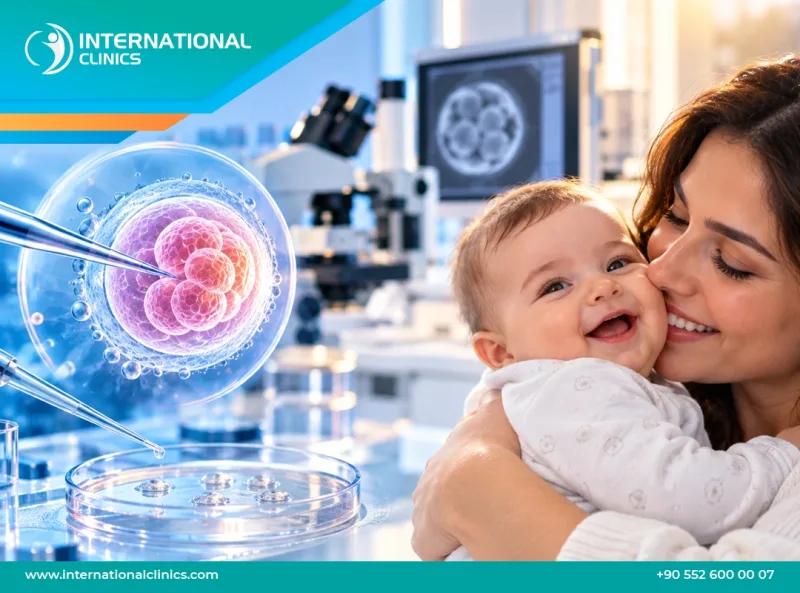
Intracytoplasmic sperm injection (ICSI) is an IVF technique in which a single sperm is injected directly into an egg. It is often used when sperm count, movement or quality is low, with the aim of achieving fertilization and giving a chance of pregnancy where other methods may struggle.
The cycle begins with hormonal stimulation of the ovaries, monitored by ultrasound and blood tests. The eggs are collected through the vagina with an ultrasound-guided needle, under light sedation. In the laboratory, an embryologist injects one suitable sperm into each mature egg, and the embryos are observed for several days before the most suitable one is transferred to the uterus.
Egg collection takes about 15 to 30 minutes, and most women resume routine within a day or two, sometimes with mild bloating. The embryo is often transferred three to five days later. The pregnancy test is done about two weeks after the transfer, and the doctor then confirms the result with an examination and an ultrasound.
The final cost is set after a medical consultant reviews your case and photos.
Our medical consultants review all requests regularly, every three hours.
Get a free consultation and answers to all your questions by completing the form below
It allows fertilization when sperm count, movement or shape is not enough for it to happen on its own in the laboratory, since one sperm per egg is enough. It does not guarantee pregnancy, which also depends on egg and embryo quality and the condition of the uterus.
It usually suits couples with poor semen quality, those whose eggs failed to fertilize in a previous IVF cycle, or men whose sperm are retrieved surgically. The doctor decides after assessing both partners and carrying out the necessary tests.
Before the cycle, hormonal tests, an ultrasound, a semen analysis and general checks are done for both partners. Quitting smoking and keeping a healthy weight are usually advised. Discuss any medication with your doctor, and do not stop it on your own.
The ovaries are stimulated with hormonal medication, then mature eggs are collected with an ultrasound-guided needle. The embryologist injects one sperm into each egg under a microscope, the fertilized eggs are incubated, and one or more embryos are transferred to the uterus through a thin tube.
After egg collection a patient may feel mild cramps and bloating, with slight bloody discharge, which usually settle within days. After the embryo transfer, strenuous effort is usually avoided and the supportive medication prescribed by the doctor should be followed.
A blood pregnancy test is usually done about two weeks after the transfer and followed by an ultrasound a few weeks later. If pregnancy is confirmed, follow-up is similar to any other pregnancy. Extra embryos may be frozen for later use, according to the decision of the couple and the doctor.
The main ones include ovarian hyperstimulation, which may be mild but sometimes needs treatment, along with pain or bleeding after egg collection, rare infection, and multiple pregnancy. The doctor discusses these risks and works to limit them through close monitoring.
Studies generally suggest that most of these children are born healthy, but some risks, such as birth defects or certain genetic conditions linked to the cause of infertility itself, may be slightly higher. Genetic counseling is worth discussing with the doctor when needed.
A patient usually needs to stay about two to three weeks if the visit includes stimulation, egg collection and embryo transfer, and this may be shorter or longer depending on the protocol and the ovarian response. The treating doctor confirms the right time to travel after the transfer.
Yes, good surplus embryos, eggs or sperm can often be frozen for use in later cycles. This depends on the case, the applicable regulations and the couple's consent, and the decision rests with the medical team.